Saudi Arabia’s Voluntary Carbon Market Fuels the Shift to a Low-Carbon

Under UAE President’s directives, UAE launches urgent relief response for Ghana flood victims

Combating Desertification and Drought: Qatar a Model in Preserving Natural Resources, Establishing Environmental Stability
UAE allocates US$30 million for emergency humanitarian response in El Obeid, calls for civilian protection, safe humanitarian aid access in Sudan

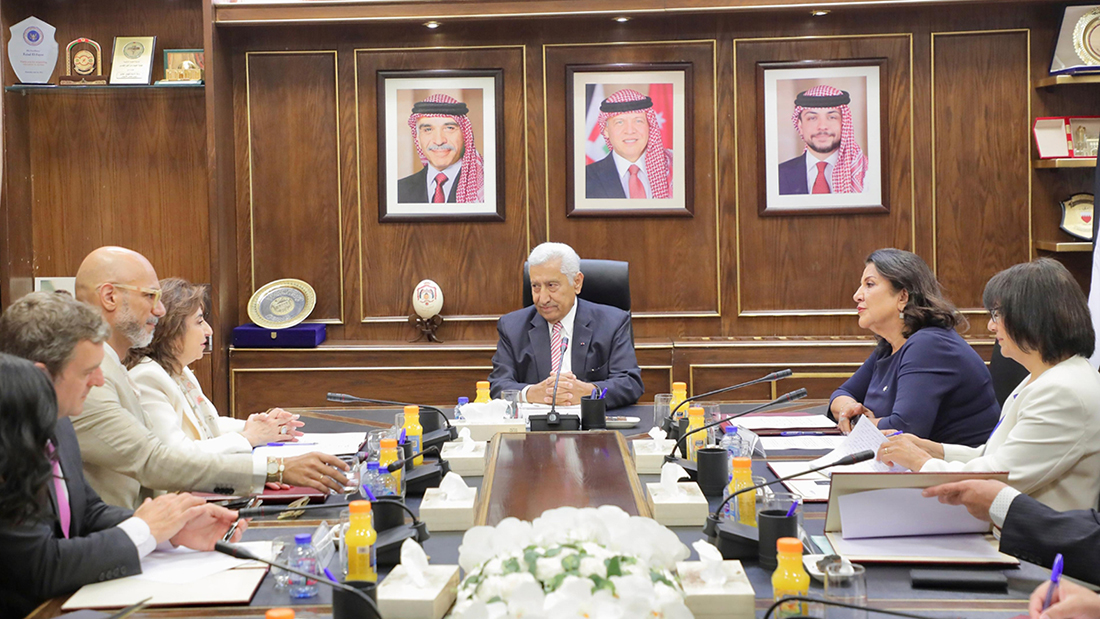
Amman, Sept. 2 (Petra) — Acting Senate President Abdullah Nsour and
a UN Women delegation, headed by UN Under-Secretary-General and UN
Women Executive Director Sima Bahous, discussed Wednesday ways to
strengthen cooperation on women’s empowerment and their participation
in public, economic, and political life.
The meeting, held at the Senate during Bahous’ official visit to
Jordan, was attended by Senate Women’s Committee Chair Kholoud
Armouti and committee rapporteur Naseema Fakhri.
Talking at the meeting, Nsour said cooperation with UN Women should
translate into practical programs and “measurable, sustainable”
outcomes.
He pointed to Jordan’s constitutional amendments and subsequent
legislative and policy reforms related to labour, elections,
political parties, and protection from violence as part of the
Kingdom’s efforts to strengthen women’s rights and participation.
He also called for building on women’s high educational attainment
and identifying remaining priorities and challenges to increase their
economic, social, and political participation.
Armouti, in turn, said the Senate Women’s Committee is following the
integration of women’s issues into Jordan’s political, economic, and
administrative modernization tracks, while reviewing relevant
legislation and policies and promoting women’s participation in
decision-making, economic empowerment, and social protection.
She added that the committee is also monitoring implementation of
policies related to women to link legislation with public budgets to
help translate empowerment objectives into implementable programs.
Bahous praised Jordan’s progress on women’s rights and highlighted
the need to further increase women’s representation in local
councils, leadership positions, and decision-making roles.
As for its goals, she said UN Women’s visit to the Senate aims to
identify practical areas for cooperation, particularly increasing
women’s participation in the labour market in line with their
educational attainment and strengthening their role in the national
economy.
Bahous also emphasized public-private partnerships, women’s
leadership, economic justice, and participation in both formal and
informal labour markets. Discussions also covered violence,
discrimination, and bias against women, with particular attention to
online violence against women on social media, as well as the impact
of security and peace issues on women in the region and globally.
Fakhri proposed possibility of establishing a national observatory to
monitor gaps between legislation and policies and their
implementation in practice, to identify shortcomings and improve
policies related to women’s empowerment.
//Petra// AO