ENV-KUWAIT-SUSTAINABLITYKuwait strengthens environmental sustainability through strategic initiativesBy Zahra Al-Kadhmi

HLT-KUWAIT-SURGERYKuwait advances health sector with robotic, remote surgeryBy Mohammad Al-Moseb

Saudi Arabia’s Voluntary Carbon Market Fuels the Shift to a Low-Carbon

Under UAE President’s directives, UAE launches urgent relief response for Ghana flood victims

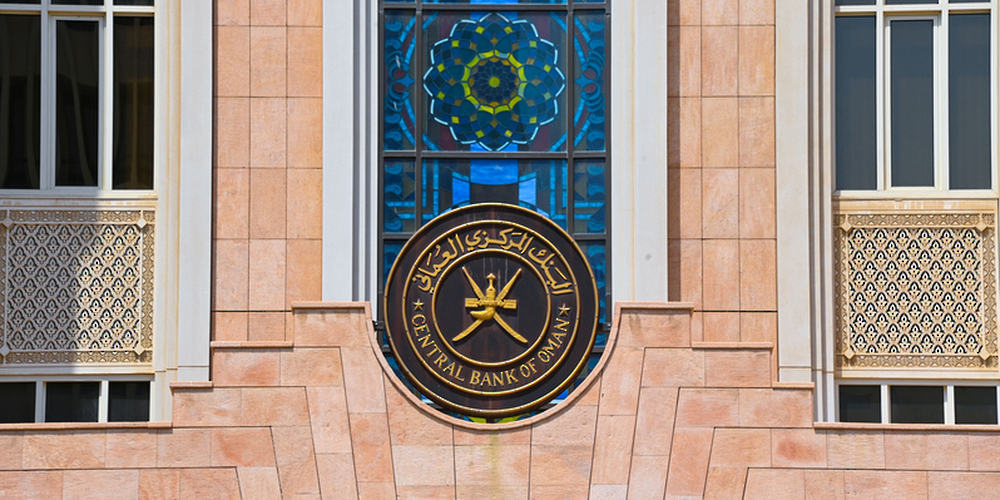
Central
Bank of Oman Issues its Annual Report for 2025
Muscat,
8 Sep 2026 (ONA) — The Central Bank of Oman (CBO) has issued the new edition
of its Annual Report, providing a comprehensive assessment of the Sultanate of
Oman’s macroeconomic and financial developments during 2025, while highlighting
the outlook for 2026. The report reviews the domestic economic environment,
highlighting trends in real activity, inflation, fiscal and external positions,
and the performance of the banking sector.
Oman’s macroeconomic environment remained supportive
in 2025, with economic activity continuing to expand at a robust pace, despite
external headwinds. This provided the Government with the necessary policy
space to advance structural reforms. Investment continued to be an important
driver of growth, supported by continued progress in strategic projects across
both the public and private sectors. Inflation remained low, reflecting the
credibility of the peg and stable domestic conditions. Fiscal and external
balances recorded modest deficits, while public debt continued its declining
path. The banking sector remained well-capitalized, liquid, and resilient,
supported by sound asset quality, prudent risk management practices, and
limited exposure to external shocks.
Real
GDP growth accelerated in 2025 to 2.4 percent (from 1.6 percent in 2024),
supported by both the hydrocarbon and nonhydrocarbon activities.
Non-hydrocarbon activities expanded by 3.1 percent, driven by continued growth
across key sectors. Agriculture and fisheries recorded the strongest growth at
10.2 percent, reflecting ongoing efforts to strengthen food security and expand
domestic production, while construction activity grew by 2.0 percent, on the
back of continued investment and development projects. Services activity continued
to record solid growth at 3.1 in 2025, benefiting from strong domestic demand
and broad-based expansion across key service sectors. Over the medium term,
economic activity is expected to strengthen further, buoyed by continued
expansion across non-hydrocarbon sectors and sustained investment activity.
Inflation
in Oman remained low and well contained, reflecting the effectiveness of the
exchange rate peg as a credible nominal anchor and the relatively limited pass-through
of global price pressures into the domestic economy. Average inflation recorded
a modest increase of 1.0 percent in 2025, up from 0.6 percent in 2024,
indicating the presence of mild inflationary pressures, while remaining at
manageable levels supported by stable domestic demand conditions and strong
coordination between monetary and fiscal policies.
In
2025, Oman’s fiscal position remained resilient, notwithstanding lower oil
prices. The government successfully implemented the State Budget while balancing
fiscal sustainability objectives with continued investment in growth-enhancing
initiatives. Fiscal balance recorded a modest deficit of 1.1 percent of GDP.
Public debt continued its downward trajectory, with debt-to-GDP ratio declined
to 34.6 percent in 2025 from 35.4 percent in 2024. Continued fiscal
consolidation and strengthened macroeconomic fundamentals further improved in
Oman’s sovereign credit profile, contributed to the restoration of
investment-grade status.
The external sector remained broadly resilient despite
a more challenging external environment in 2025. The current account balance
recorded a modest deficit of 1.2 percent of GDP. This shift was primarily
driven by a 15 percent decline in hydrocarbon exports, reflecting lower oil
prices, which fell by 13 percent during the year, as well as stronger import
demand associated with major investment and development projects. Importantly,
Workers’ remittances increased by 3.1 percent in 2025, broadly reflecting the
continued expansion of economic activity and favorable labor market conditions.
Meanwhile, the financial account remained supportive of external stability in
2025, with stable net FDI inflows, while Portfolio outflows largely reflected
increased foreign asset holdings by the financial sector.
The
Exchange rate peg has continued serve as appropriate nominal anchor in light of
Oman economic structure, while supporting investor confidence and FDI. Within
this framework, domestic momentary conditions remained closely aligned to
developments in U.S. monetary policy. In line with the easing U.S. monetary
policy cycle and the requirements of the peg, the CBO lowered its policy rate
to 4.25 percent by the end of December 2025.
Throughout
the year, the CBO continued to ensure that the banking sector effectively
served the needs of the real economy. The sector continued to play a pivotal
role in supporting economic activity through effective financial
intermediation, mobilizing savings and channeling funds to productive sectors
of the economy. Supported by sustained economic activity and strong public
confidence, the sector continued to expand in 2025. Total banking sector assets
increased by 9.2 percent to reach RO 44.6 billion at end-December 2025. Total
credit increased to RO 35.3 billion, showing a growth of 8.8 percent over 2024.
Aggregate deposits of banks increased by 7.0 percent in 2025 to reach RO 34.0
billion by end-December. Credit to the private sector increased by 6.8 percent,
reflecting continued financing demand across key sectors of the economy.
Profitability
indicators continued to reflect healthy earnings performance, while asset
quality remained stable, with the gross non-performing loans (NPLs) ratio
contained at 4.4 percent as of December 2025. Banks also maintained strong
capital buffers, with the capital adequacy ratio reaching 18.8 percent, well
above the regulatory minimum requirement of 13.5 percent. Liquidity conditions
remained comfortable, supported by ample funding and compliance with prudential
liquidity requirements.
Oman’s
outlook remains broadly positive despite global uncertainties. Real GDP is
projected to accelerate to 4.0 percent in 2026, supported by both hydrocarbon
and non-hydrocarbon sectors. Inflation remains contained, average inflation in
Oman is projected at 2.6 percent in 2026, remaining comfortably contained under
the peg.
Supported
by favorable oil prices, continued fiscal discipline, and ongoing structural
reforms, Oman is expected to record sizable fiscal and external surpluses in
2026. Fiscal and current account balances are expected to register surpluses at
about 2.5 percent and 4.1 percent of GDP respectively, on the back of stronger
hydrocarbon revenues and robust growth in nonhydrocarbon exports.
Looking
ahead, continued reform agenda under the Eleventh
Five-Year Development Plan (2026–2030) and Oman Vision 2040 will remain essential
to fostering a more diversified, competitive economy, and supporting
stronger medium term growth prospects.
The
CBO Annual Report provides a detailed macroeconomic analysis of Oman’s major
sectors of the economy through five Chapters namely Current Assessment and
Macroeconomic Outlook (Chapter I); Output, Employment and Prices (Chapter II);
Public Finance (Chapter III); Money, Banking and Financial Institutions
(Chapter IV); and External Sector Developments (Chapter V).
—Ends/AG