
Saudi Arabia’s Voluntary Carbon Market Fuels the Shift to a Low-Carbon

Under UAE President’s directives, UAE launches urgent relief response for Ghana flood victims

Combating Desertification and Drought: Qatar a Model in Preserving Natural Resources, Establishing Environmental Stability

UAE allocates US$30 million for emergency humanitarian response in El Obeid, calls for civilian protection, safe humanitarian aid access in Sudan

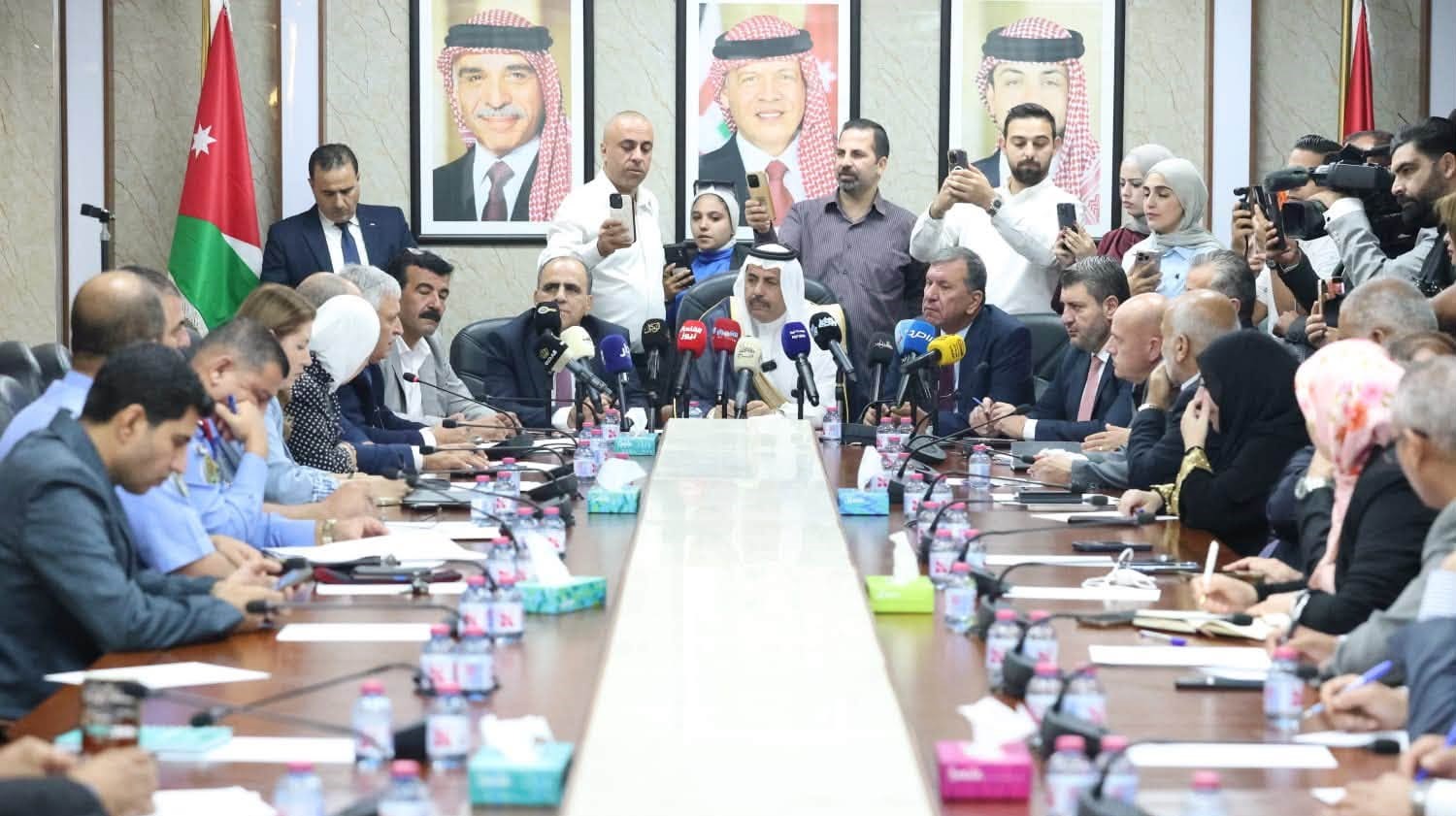
Amman, Sept. 9 (Petra) — The Lower House of Parliament’s Public
Services and Transport Committee discussed a range of problems and
challenges facing international transport vehicle operators, driving
instructors, and delivery riders, as well as obstacles related to
obtaining a Category 6 driving licence.
The meeting, chaired by MP Ayman Al-Badawneh, was held on Wednesday
in the presence of Minister of Transport and Minister of Labour Nidal
Katamine; Director-General of the Land Transport Regulatory
Commission (LTRC) Riyad Al-Kharabsheh; Chairman of the Board of
Commissioners of the Telecommunications Regulatory Commission (TRC)
Lara Al-Khateeb; Secretary-General for Administrative and Financial
Affairs at the Ministry of Digital Economy and Entrepreneurship
Samira Al-Zoubi; Director of the Drivers and Vehicles Licensing
Department Brigadier General Omar Al-Quraan; Traffic Department
Director Brigadier General Raed Al-Assaf; and representatives of the
relevant sectors.
Al-Badawneh said the meeting was part of a series of discussions held
by the committee with workers in various transport sectors to convey
their demands directly to the relevant authorities, identify the
causes of the problems they face, and reach practical, implementable
solutions.
He said the transport sector, in all its forms, was an important
service and economic sector that provided employment and sources of
income for thousands of citizens, requiring a fair legislative and
regulatory framework that protected the rights of workers, operators,
and service recipients while taking public safety requirements into
account.
Al-Badawneh also stressed the importance of reviewing the conditions
and time requirements for obtaining Category 6 driving licenses in a
way that balanced road safety requirements with the needs of workers
in the truck and bus sectors.
Some drivers have practical experience, but the time required to
progress between license categories posed a challenge for some of
them, he said.
Katamine stressed the importance of listening to the demands of
workers in the sector and finding appropriate solutions, noting that
the Category 6 issue had been examined by several committees.
The ministry was keen to develop the transport system and improve the
quality of its services in cooperation with the relevant authorities,
he said.
Al-Quraan said the two-year requirement was part of the graduated
driving license system aimed at ensuring drivers gained the necessary
experience and maturity before operating larger vehicles.
Available data at the department did not indicate a shortage of
Category 6 license holders compared with the number of buses and
trucks, he said.
He added that the driving license classification system was currently
undergoing a comprehensive review ahead of major amendments,
including restructuring the categories, time requirements, and
progression between them, in line with society’s needs while
maintaining safety requirements.
Al-Kharabsheh said work was under way to develop the regulatory
framework in a manner that took into account the nature of the
freight sector and the circumstances of its workers, stressing the
need for practical solutions that kept pace with developments while
maintaining public safety as a key priority.
Al-Assaf said the Traffic Law regulated the entry and overnight
parking of trucks in residential areas, adding that field and
automated monitoring of violations related to freight vehicle
movements was continuing.
He also pointed to the expansion of channels through which citizens
could report traffic violations via the Sanad application, alongside
other available electronic means, stressing the importance of
involving citizens in promoting road safety and reducing violations
and congestion.
Representatives of truck drivers called for a review of the time
required to progress through license categories to Category 6 and for
easier procedures for upgrading licenses, taking into account
drivers’ practical experience and the sector’s needs while
maintaining public safety requirements and protecting workers’
sources of income.
On delivery riders, Al-Badawneh stressed the need for greater
coordination among the relevant authorities to establish a clear
regulatory framework addressing riders’ conditions and their
relationship with companies, providing them with protection and
safeguarding their financial and social rights and the stability of
their sources of income.
The committee had received a complaint signed by about 411 people
regarding the matter, he said.
Katamine said the nature of platform- and app-based work had created
challenges in defining the relationship between workers and
employers.
Discussions had been held with the Social Security Corporation (SSC)
and app companies to develop a framework that provided social
protection for workers while taking into account the nature of their
work, particularly protection related to work injuries and
disability, he said.
Al-Khateeb said the TRC’s mandate focused on regulating and licensing
companies that provide delivery and postal dispatch services and did
not extend directly to the relationship between delivery riders and
companies.
She said coordination with the relevant authorities was continuing to
address overlapping regulatory issues.
Al-Zoubi stressed the importance of providing the necessary
protection for delivery riders, noting continued coordination among
the concerned authorities to address their conditions, as well as the
importance of protecting personal data and the privacy of app users
in accordance with applicable legislation.
Representatives of delivery riders outlined demands for a clear
regulatory umbrella, fair pricing that took operating costs into
account, regulation of their relationship with companies, and
protection from additional financial burdens related to permits and
fees, as well as social and insurance coverage.
On international transport vehicles, Al-Badawneh stressed the
importance of addressing challenges related to vehicle operating age
and financial and operating costs in a way that protected vehicle
owners’ investments and enabled them to continue working.
He stressed the need for solutions to mitigate the effects of
regulatory changes affecting the sector.
Katamine said the ministry was following the demands of international
transport vehicle owners and, in cooperation with the LTRC and other
relevant authorities, was studying possible solutions and
alternatives to ease the challenges they faced and protect their
investments and sources of income.
Al-Kharabsheh said regulatory changes affecting transport operations
had created challenges for a number of operators and vehicle owners.
The commission had taken mitigating measures and provided alternative
operating options for a number of affected vehicles and continued to
examine possible regulatory solutions to maintain the sector’s
sustainability, he said.
International transport vehicle owners called for a review of
vehicles’ permitted operating age and for measures to address the
effects of related restrictions, as well as a reconsideration of the
additional tax and a reduction in financial and operating burdens to
protect their investments and sources of income.
On driving training vehicles, Al-Badawneh stressed the importance of
protecting instructors’ rights and investments in training vehicles
and addressing issues related to registering vehicles in the names of
training centers while safeguarding instructors’ civil and financial
rights.
He said partnerships among a number of instructors and the
establishment of training centers owned by them represented one
possible solution, provided licensing procedures were facilitated and
obstacles to implementation removed.
Al-Quraan said legislation governing the sector required training
vehicles to be registered in the names of licensed training centers.
The department was prepared to facilitate procedures for instructors
wishing to establish partnerships and their own centers and to review
and simplify licensing procedures and requirements to help address
existing problems and protect rights, he said.
Responding to MPs’ questions about driving license tests, Al-Qiuraan
denied the existence of any policy or direction to increase failure
rates to generate additional fee revenues.
The purpose of the test was to ensure that applicants were qualified,
capable of driving safely, and committed to traffic rules and safety
requirements, he said.
The practical driving test was subject to 32 assessment criteria on
which examiners were required to evaluate license applicants, he
said.
Possessing vehicle driving skills alone was not sufficient to obtain
a license, as applicants must comply with driving rules and safety
requirements that qualified them to use the road safely and protect
themselves and others, he added.
Al-Quraan said the department was working on a smart testing project
and electronic monitoring of training vehicles to enhance
transparency and ensure that license applicants received the required
training.
The plan envisaged automated assessment accounting for about 80% of
the evaluation, with human assessment making up no more than 20%,
during the targeted phase for Categories 3 and 4, with the
possibility of expanding the project in the future.
The project relied on technologies including artificial intelligence,
cameras, sensors, and other electronic tools, and work had reached
advanced stages, he said.
Representatives of driving instructors called for a review of the
mechanism for registering training vehicles to preserve instructors’
ownership and investment in their vehicles, address problems that
could arise following the death of a center owner or the transfer of
ownership, simplify conditions for establishing centers, and examine
the regulation of partnerships among instructors to protect the
rights of all parties.
MPs Tareq Bani Hani, Ali Al-Ghazawi, Hussein Kreishan, Hammoud
Al-Zawahreh, Jihad Madanat, Hayel Ayash, Aref Al-Saaydeh, Ismail
Al-Mashaqqaba, Mohammad Al-Mahamid, Tayseer Abu Arabi, Raed Raba’a
Al-Dhahrrawi, Abdul Raouf Al-Rabihat, Nassar Al-Qaisi, Amal
Al-Shaqran and Awni Al-Zoubi also stressed the importance of
addressing the issues raised according to the mandate of each
authority.
They called for simplifying procedures and reviewing instructions
that created obstacles for workers without having a direct impact on
achieving regulatory and safety requirements.
The MPs also called for clearly identifying the competent authorities
and strengthening coordination among the institutions concerned, as
well as clarifying which issues could be addressed administratively
and which required amendments to instructions, regulations, or
legislation.
Such measures should protect employment opportunities, existing
investments, and citizens’ sources of income while maintaining safety
requirements and the rule of law, they said.
At the conclusion of the meeting, Al-Badawneh said the discussions
had resulted in preliminary understandings and solutions, as well as
commitments by the relevant government authorities to follow up on
the issues raised and complete the necessary procedures to address
them.
The committee would follow up on what had been agreed, whether issues
could be resolved administratively or required regulatory or
legislative amendments, he said.
Al-Badawneh said the committee sought to remove unjustified obstacles
and strike a balance between enforcing the law and meeting safety
requirements on the one hand and protecting workers’ rights and
ensuring the sustainability of their sources of income on the other.
He praised the response of the Minister of Transport and Minister of
Labour and government and regulatory bodies, commending the
cooperation of the LTRC, the TRC, the Ministry of Digital Economy and
Entrepreneurship, the Drivers and Vehicles Licensing Department, the
Traffic Department, and other relevant authorities and agencies.
The committee would continue to follow up on commitments and
understandings until they were translated into practical measures, he
said.
//Petra// AF