Saudi Arabia’s Voluntary Carbon Market Fuels the Shift to a Low-Carbon
Under UAE President’s directives, UAE launches urgent relief response for Ghana flood victims
Combating Desertification and Drought: Qatar a Model in Preserving Natural Resources, Establishing Environmental Stability
UAE allocates US$30 million for emergency humanitarian response in El Obeid, calls for civilian protection, safe humanitarian aid access in Sudan

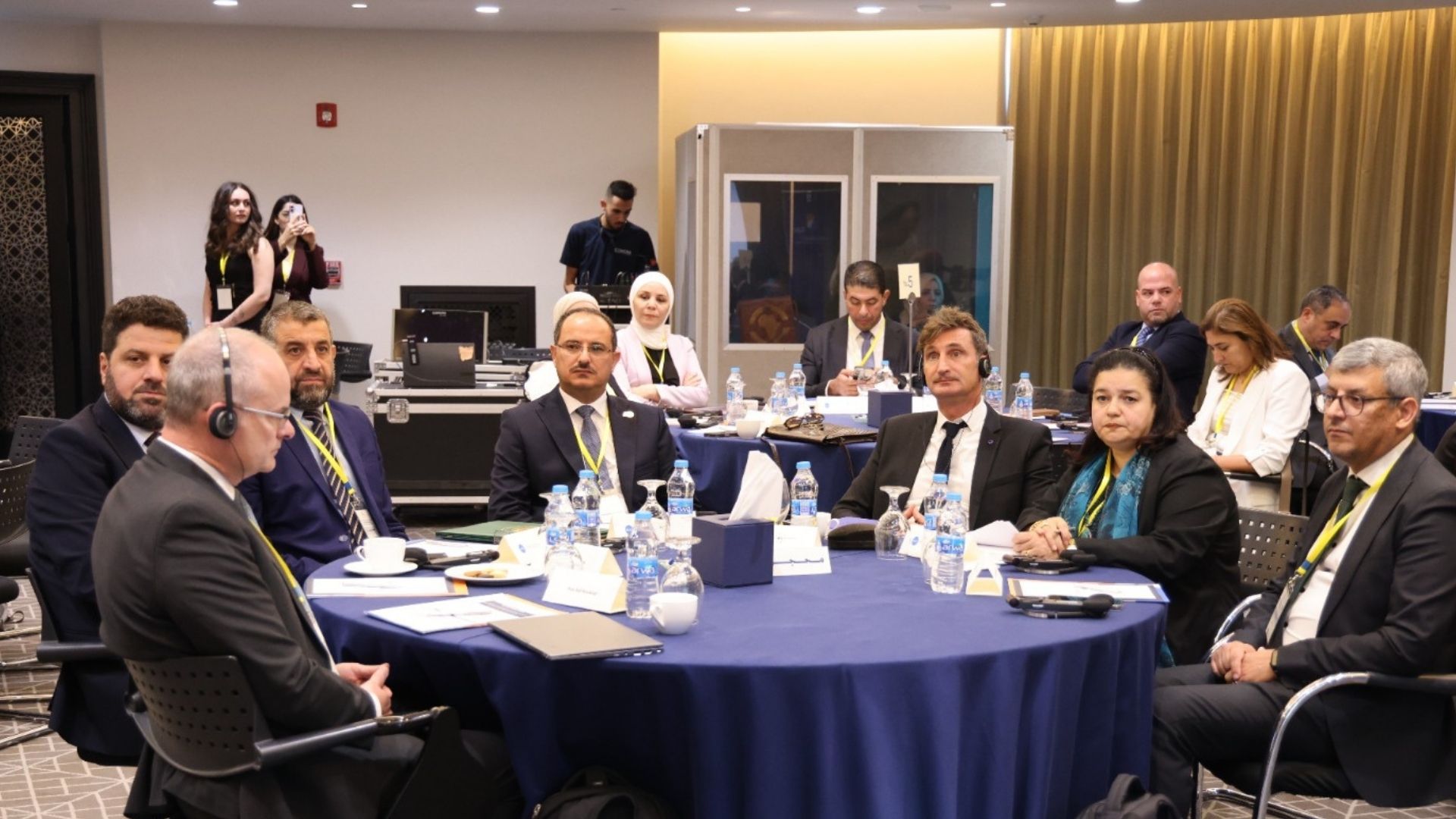
Madaba, Sept. 10 (Petra) — The German Jordanian University (GJU)
hosted the third Jordanian-Syrian Dialogue Forum on Higher Education
Development on Thursday, bringing together representatives of higher
education and research institutions, international organizations and
donor bodies under the Syrian Innovation in Academia (SyrIA) project,
with support from the German Academic Exchange Service (DAAD).
The forum aims to move from assessing the needs of Syrian higher
education institutions to identifying priorities and exploring
cooperation and funding opportunities, to strengthen partnerships
between universities and international donors to support the
recovery, development and sustainability of Syria’s higher education
sector, according to a GJU statement.
GJU Vice President for International Affairs and SyrIA project Ralf
Roßkopf said developing higher education is a cornerstone of recovery
and reconstruction. He noted that a fact-finding review of eight
Syrian universities found clear academic commitment despite
operational challenges.
Roßkopf said Syrian universities identified the top priorities,
including staff development, governance and project management,
digital transformation, the internationalization of scientific
research, stronger labor market links, and physical and digital
infrastructure upgrades.
Director General of Syria’s Higher Commission for Scientific Research
(HCSR) Nabil Kochaji outlined key needs and proposed projects,
focusing on infrastructure and laboratory rehabilitation, digital
transformation and governance, human capacity building, innovation
and entrepreneurship, labor market integration, and the health,
agriculture, and food security sectors.
Participants also discussed DAAD funding and support opportunities
and the potential to convert the forum’s priorities into
implementable projects and partnerships.
SyrIA Co-Principal Investigator and project manager Dhiah Abou-Tair
stressed the importance of continuing to translate the dialogue’s
outcomes into sustainable academic partnerships and practical
initiatives.
Representatives of the Jordanian-Syrian Business Council also took
part in efforts to strengthen dialogue between the higher education
sector and the economic and professional sectors and support future
cooperation.
//Petra// NQ