Saudi Arabia’s Voluntary Carbon Market Fuels the Shift to a Low-Carbon

Under UAE President’s directives, UAE launches urgent relief response for Ghana flood victims
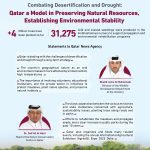
Combating Desertification and Drought: Qatar a Model in Preserving Natural Resources, Establishing Environmental Stability
UAE allocates US$30 million for emergency humanitarian response in El Obeid, calls for civilian protection, safe humanitarian aid access in Sudan

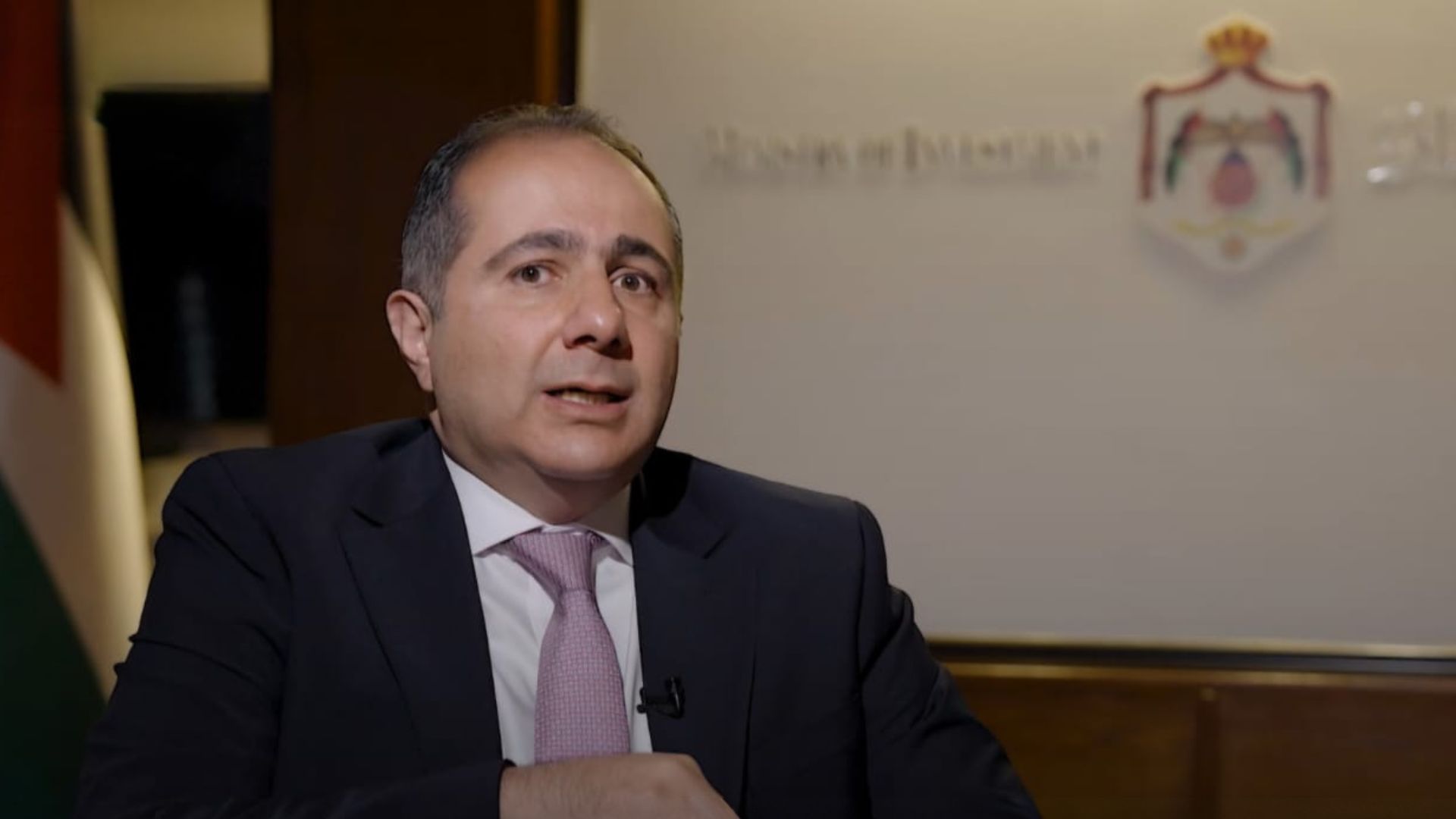
Amman, Sept. 10 (Petra) — Jordan offers investors a stable business
environment, a skilled and educated workforce, strong digital
capabilities, and access to regional and global markets, Investment
Minister Tareq Abu Ghazaleh said Thursday.
In an interview with CNBC Arabia, Abu Ghazaleh said global policies
and developments have made investors more cautious, increasing the
importance of stability and a clear economic vision.
He noted that the Economic Modernization Vision serves as a national
compass for successive governments, providing a clear and stable
trajectory for economic and investment policies, as well as defined
priorities and programs.
Despite regional and global challenges, Jordan continues to achieve
growth, particularly in the services sector, while seeking to turn
challenges into opportunities and translate plans into investment
projects, he said.
Abu Ghazaleh described the Jordan-Europe Investment Conference, held
next November under the Royal patronage of His Majesty King Abdullah
II and with the follow-up of His Royal Highness Crown Prince Hussein,
as a strategic milestone and a practical step toward strengthening
Jordan-Europe economic partnerships.
The conference brings together investors, investment funds, financial
institutions, and companies to present bankable opportunities
offering potential returns, partnerships, and implementation
prospects, particularly in infrastructure, energy, transport, trade
corridors, and technology.
He said the conference is intended to establish long-term
partnerships linking Jordanian investment opportunities with European
financing, expertise, and markets, while strengthening Jordan’s
competitiveness and regional economic role.
Abu Ghazaleh also said Arab economic integration and intra-regional
trade remain below their potential, noting that Jordan’s stability,
strategic location, free trade agreements, and interconnectedness
with regional and global markets position it to play a greater role.
He highlighted the capabilities of Jordanian workers, citing their
education, skills, entrepreneurial spirit, and dedication. Jordan, he
noted, can serve as a production, export, and regional management
hub.
The minister noted that foreign companies are increasingly
reassessing their operations and choosing Jordan as a base, with the
number of companies establishing centers in the Kingdom rising 23%
during the first half of the year.
He emphasized that investment contributes not only to capital
formation, but also to job creation, household income, provincial
economic output, exports, and the expansion of local supplier
networks.
Abu Ghazaleh said Jordan’s resilience is supported by monetary
stability, controlled inflation, reliable supply chains, and
developed infrastructure and services.
He added that the government has shifted from broad, general
incentives toward more targeted solutions, including exemptions,
investment incentives, lower tax rates, and simplified and automated
government services.
The Invest.jo platform serves as a unified gateway for investors,
offering more than 120 investment opportunities across the Kingdom’s
governorates, along with an investment calculator and an artificial
intelligence-powered “Ask Me” service. Plans are also underway to
integrate the platform with “Sanad for Business,” he said.
Regarding reconstruction efforts in Syria, Abu Ghazaleh said Jordan
is well positioned to serve as a regional hub, creating opportunities
for Jordanian service, logistics, and industrial companies while
supporting employment, exports, and regional economic cooperation. He
stressed that maximizing these opportunities will require coordinated
efforts among the government, private sector, and financial
institutions.
//Petra// AJ