Saudi Arabia’s Voluntary Carbon Market Fuels the Shift to a Low-Carbon

Under UAE President’s directives, UAE launches urgent relief response for Ghana flood victims

Combating Desertification and Drought: Qatar a Model in Preserving Natural Resources, Establishing Environmental Stability
UAE allocates US$30 million for emergency humanitarian response in El Obeid, calls for civilian protection, safe humanitarian aid access in Sudan

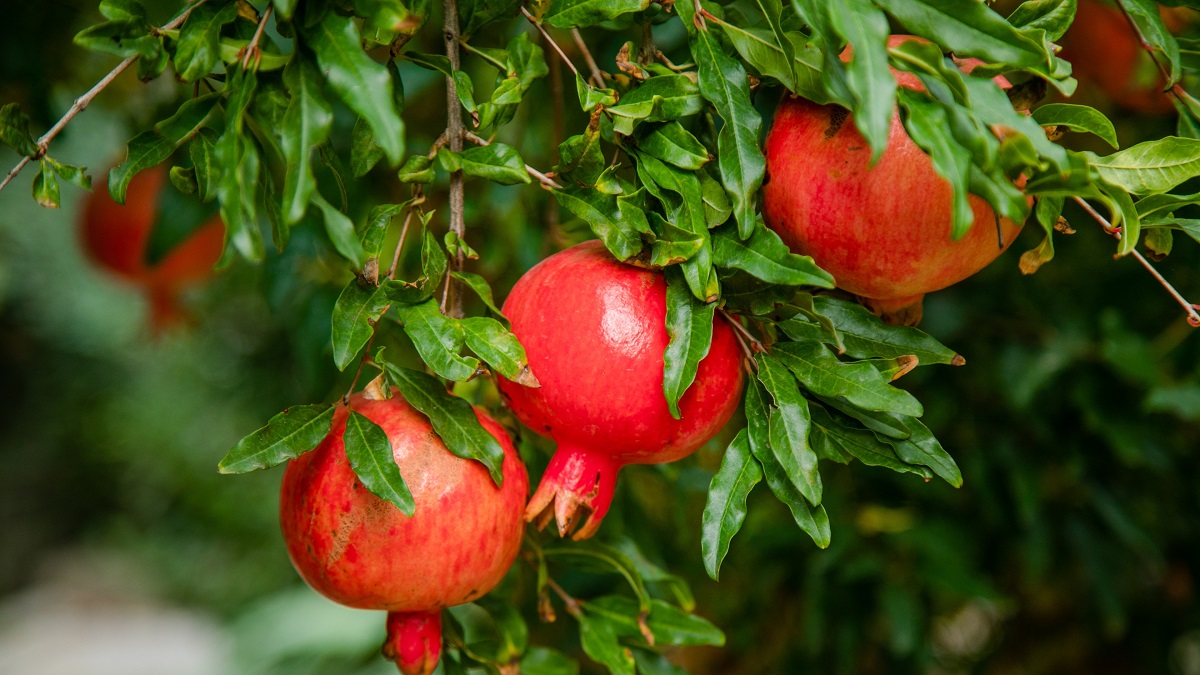
Irbid, Sept. 14 (Petra) — Pomegranate harvesting is underway across
Koura District, where some 2,000 dunums of orchards support both
local farmers and a growing range of small-scale food and
natural-product businesses.
Koura Agriculture Director Abdelilah Obeidat said Monday that the
harvest, which began in the district’s warmer valleys, will continue
through mid-December as fruit ripens at different times across the
area.
Koura is one of the Kingdom’s main pomegranate-producing areas, with
orchards concentrated along perennial waterways, particularly Wadi
Ziglab, Wadi Abu Ziad and Wadi Al-Rayyan in Judaita.
Picking began first in Wadi Abu Ziad and Wadi Ziglab, where climatic
conditions are similar to those of the Jordan Valley. The season runs
later in Wadi Al-Rayyan, where harvesting is expected to continue
until mid-December.
The district produces several pomegranate varieties, including
Halawi, Hammadi, Laffani, Mawardi, Sharabi, Mawani and Ziqlabi.
The crop also feeds into a local processing industry that extends its
economic value beyond the sale of fresh fruit.
Pomegranates grown in the area are used to produce natural juice,
traditionally prepared molasses, vinegar and jam, as well as
pomegranate seed oil, soap, peel powder, tea and nougat.
Obeidat said fresh fruit sales provide an important source of income
for growers, while processing creates additional earning
opportunities for productive families that manufacture
pomegranate-based products.
Local farmers said agricultural extension programs offered by the
Koura Agriculture Directorate have helped them improve orchard
management and increase production.
The programs cover pruning and tree preparation, soil management and
pest control, as well as cultivation methods designed to improve
yields.
Growers said applying the guidance throughout the production cycle
has helped them better protect their orchards from pests and adopt
farming practices aimed at raising productivity.
//Petra// RZ