Saudi Arabia’s Voluntary Carbon Market Fuels the Shift to a Low-Carbon

Under UAE President’s directives, UAE launches urgent relief response for Ghana flood victims

Combating Desertification and Drought: Qatar a Model in Preserving Natural Resources, Establishing Environmental Stability
UAE allocates US$30 million for emergency humanitarian response in El Obeid, calls for civilian protection, safe humanitarian aid access in Sudan

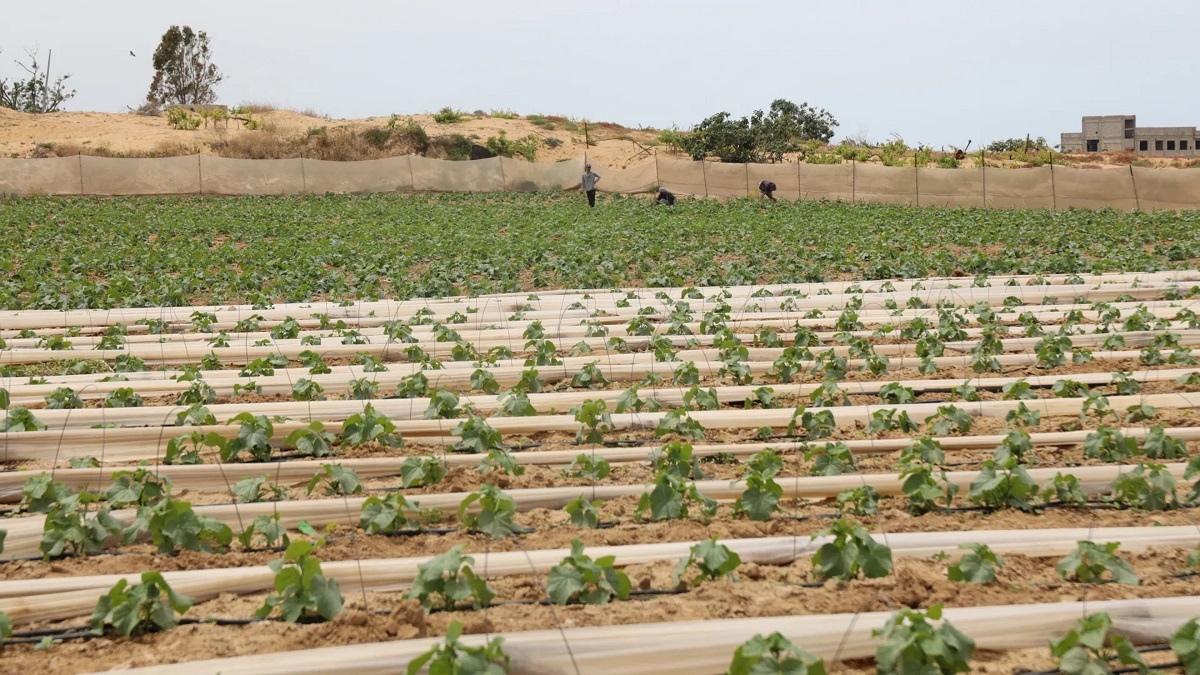
Amman, Sept. 14 (Petra) — Israel’s war has devastated Gaza’s
agricultural sector, with approximately 87.6 percent of agricultural
land damaged and livestock and fish production sustaining losses of
85 to 90 percent, according to Bahaa Agha, Director of Policies and
Planning at the Ministry of Agriculture in the Gaza Strip.
In a press statement Monday, Agha said the destruction has extended
to agricultural soil, water wells, irrigation networks, and
pipelines, severely undermining the sector’s ability to resume
production.
Citing a recent Food and Agriculture Organization of the United
Nations (FAO) report, he said only about 3 percent of Gaza’s open
agricultural land is safely accessible, equivalent to approximately
4,480 dunams of undamaged land.
About 2,240 dunams of greenhouses, or 16 percent of the total, are
also accessible, he said, adding that the combined area of open
farmland and greenhouses that is safely accessible and cultivated
does not exceed 4 percent of Gaza’s total agricultural land.
More than 70 percent of agricultural land is now located in areas
controlled by the Israeli occupation east of the so-called “Yellow
Line,” while restrictions on the entry of agricultural inputs,
including fertilizers, seeds, seedlings, and pesticides, are further
limiting production.
Agha said the shortage of inputs is hindering the resumption of
agricultural activity and driving up the prices of agricultural
products, which increasingly depend on imported materials and produce
and have become unaffordable for large segments of the population.
He described the autumn planting season as particularly important
because it depends on rainfall, but said the area that can be
cultivated this season remains unclear. In the previous season, only
about 3,100 dunams were cultivated despite the urgent need for
agricultural production.
Farmers are also struggling with widespread agricultural pests,
including the tomato leafminer, or Tuta absoluta, which has caused
significant damage to tomato crops amid the lack of necessary
pesticides, resulting in substantial losses for farmers.
Agha warned that continued Israeli occupation and blockade policies,
combined with the destruction of farmland and shortages of
agricultural inputs, could bring agricultural production in Gaza to a
complete halt as devastation continues to affect the Strip’s economic
and productive sectors.
//Petra// AJ