Saudi Arabia’s Voluntary Carbon Market Fuels the Shift to a Low-Carbon

Under UAE President’s directives, UAE launches urgent relief response for Ghana flood victims

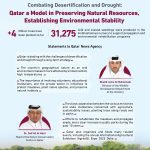
Combating Desertification and Drought: Qatar a Model in Preserving Natural Resources, Establishing Environmental Stability
UAE allocates US$30 million for emergency humanitarian response in El Obeid, calls for civilian protection, safe humanitarian aid access in Sudan

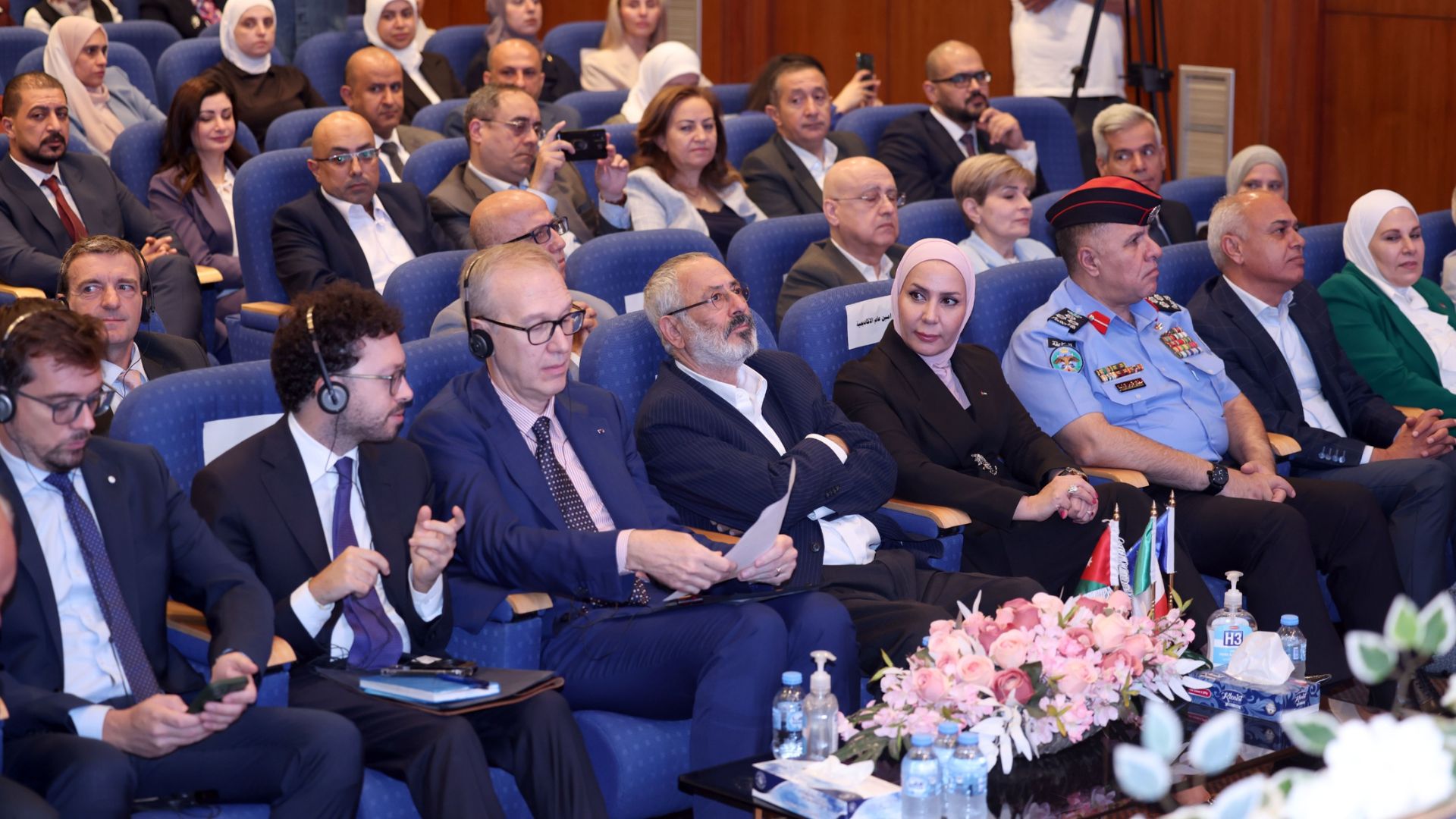
Amman, Sept. 14 (Petra) — The Jordanian Government Administration
Academy on Monday graduated 76 participants from its “Irtiqa” Future
Leaders track and Professional Diploma in Public Policy and
Administration, as part of efforts to develop qualified government
leaders and strengthen public-sector capabilities.
Academy President Mustafa Hamarneh said the academy is focusing on
developing administrative leadership and organizing senior state
management programs in cooperation with public-sector institutions
and international partners.
He highlighted the academy’s strategic partnership with Italy in
developing leadership programs, expressing hope that such programs
would be expanded to accommodate more public-sector employees in the
coming years.
Academy Secretary-General Siham Khawaldeh stated that the academy
launched several government leadership development programs last
year, including the Advanced Government Leadership Program, the
Women’s Leadership Development Program in the Public Sector, and the
Professional Diploma in Public Policy and Administration.
She said 11 participants graduated from the Advanced Government
Leadership Program, while 20 women completed the first phase of the
women’s leadership program. The first cohort of the professional
diploma, which comprised 500 training hours across four stages,
graduated 45 participants representing 25 government institutions.
Khawaldeh said the academy will continue working to develop leaders
capable of improving institutional performance and the quality of
services provided to citizens.
Italian Ambassador to Jordan Pier Luigi Zamporlini praised the strong
partnership between Italy and Jordan, particularly in public-sector
development and leadership capacity building.
He said joint training initiatives have provided specialized training
to more than 700 public employees in areas including digital
transformation, project management, change management, and strategic
communications, while more than 1,500 government employees have
benefited from accompanying training programs and courses.
Zamporlini also highlighted a field visit to Italy by participants in
the government leadership program, saying it provided an opportunity
to exchange expertise and build partnerships with Italian ministries
and institutions, contributing to the transfer of successful
practices and improved institutional performance.
He stressed that investing in human resources and developing
leadership capabilities is fundamental to economic and administrative
growth and to providing efficient, citizen-focused public services.
Mohammad Hamed, Director of the Consultancy and Training Center at
the German Jordanian University, said the professional diploma
reflects the strategic partnership between the university and the
academy, combining academic expertise with practical knowledge in
policymaking, public administration, and decision-making.
Lian Katinis, head of the expert team of the Public Administration
Reform Support Project in Jordan and representative of the European
Public Law Organization, said the programs were designed under a
rigorous quality and evaluation system to achieve tangible
improvements for participants and their institutions and support the
implementation of government plans and the Public Sector
Modernization Road Map.
Katinis praised cooperation with the academy and thanked Italy, its
embassy, the Italian Agency for Development Cooperation, and the
Italian Foreign Ministry for their support and for facilitating
training visits, which, he said, reflected the depth of relations
between the two countries’ public administrations.
//Petra// AJ