Saudi Arabia’s Voluntary Carbon Market Fuels the Shift to a Low-Carbon

Under UAE President’s directives, UAE launches urgent relief response for Ghana flood victims

Combating Desertification and Drought: Qatar a Model in Preserving Natural Resources, Establishing Environmental Stability
UAE allocates US$30 million for emergency humanitarian response in El Obeid, calls for civilian protection, safe humanitarian aid access in Sudan

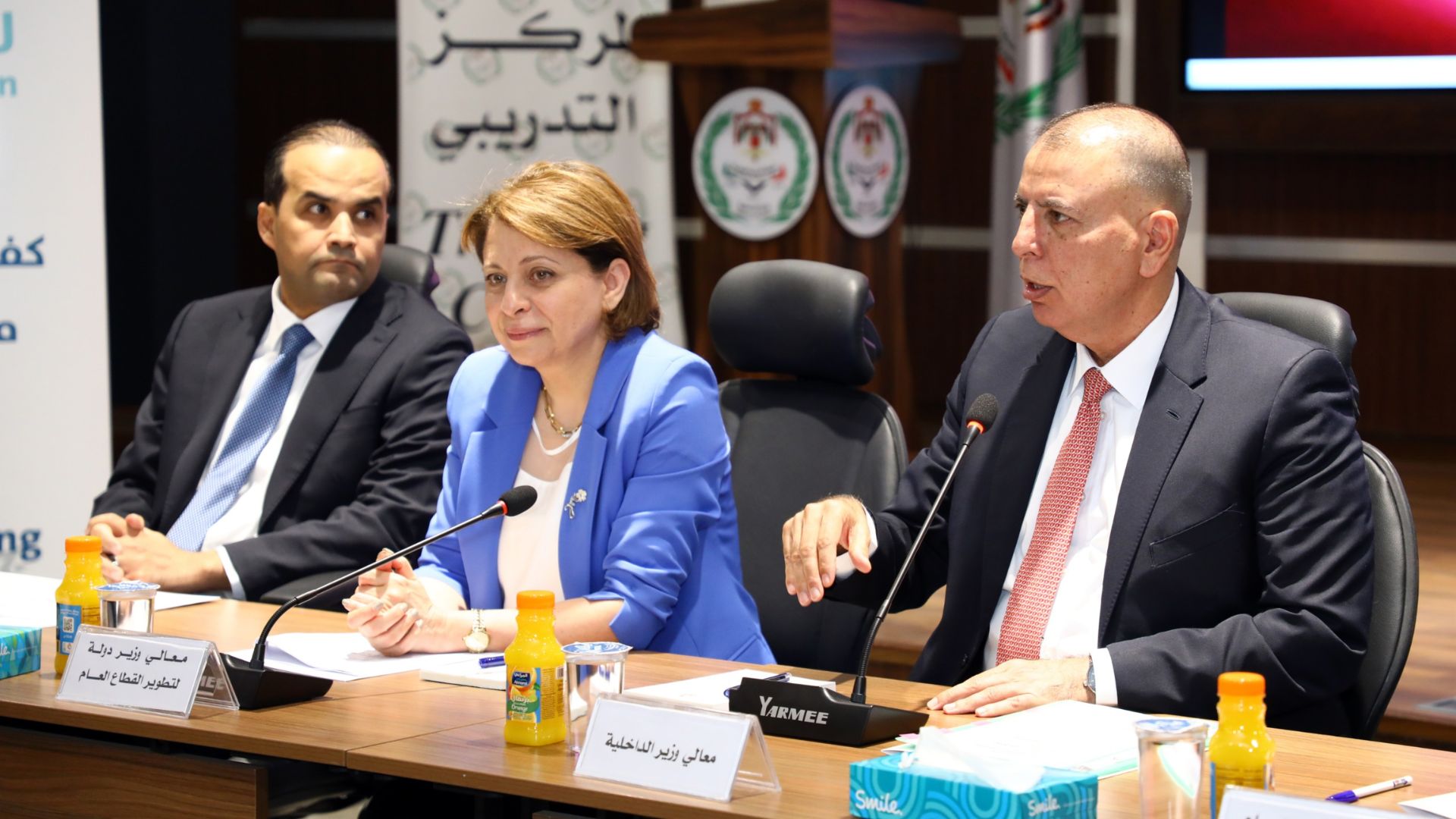
Amman, Sept. 14 (Petra) – Minister of Interior Mazen Farrayeh and
Minister of State for Public Sector Development Badria Balbisi on
Monday reviewed the institutional culture assessment at the Ministry
of Interior as part of the second phase of the public sector
institutional culture assessment project.
Farrayeh called for advancing public sector modernisation in all its
components in line with the Royal vision and alongside the political
and economic modernisation tracks.
He urged institutionalising and developing a strong organisational
culture across the public sector, describing it as a key component of
modernisation.
He said it would ensure operational continuity and sustainability
through standardised procedures and an institutional approach that is
not dependent on individual employees’ preferences.
Farrayeh said the Interior Ministry is committed to implementing the
assessment requirements objectively and effectively to identify
strengths and weaknesses, determine areas for improvement and
development and develop appropriate plans to address them.
Balbisi, in turn, said the methodology underpinning the public sector
institutional culture assessment project seeks to assess the current
situation and develop plans for improvement and development,
ultimately enhancing performance and the quality of public services.
She added that the methodology is not based on ranking government
institutions against one another to determine which is the “best.”
Balbisi explained that institutional culture is a component of the
second executive programme of the Public Sector Modernisation
Roadmap. The component seeks to transform daily behaviour within
public institutions and translate the values and principles on which
these institutions are founded, including integrity and transparency,
into practical practices that serve Jordanians.
She said that one of the key outcomes of the second executive
programme is a citizen-centric government, explaining that this
objective extends beyond service providers to include those
responsible for drafting legislation and developing plans, ensuring
that all government efforts are directed toward serving citizens and
providing the best possible services.
Balbisi called for a cohesive government that operates as one unit to
serve citizens, service recipients and investors in line with the
programme’s outcomes.
She urged establishing this approach as a core value and culture
across all public institutions, from frontline employees to senior
leadership.
Abu Hammour outlined the current state of institutional culture at
the Ministry of Interior, noting the Ministry’s early efforts to
foster such a culture through various mechanisms, particularly
training programmes.
Yasser Nsour, Secretary-General of the Civil Service and Public
Administration Commission, said institutional culture seeks to
transform the approach to service delivery and reinforce positive
values in the behaviour and performance of public sector employees.
He noted that the first phase of the organisational culture
assessment project began last year and covered 28 government
departments. The second phase covers 24 departments and seeks to
develop an organisational culture assessment model.
Nsour explained that the assessment process takes two days and
includes field visits to service delivery sites, as well as meetings
with directorate managers, section heads and a sample of employees.
The second phase of the project, implemented by the Civil Service and
Public Administration Commission in cooperation with the Public
Sector Modernisation Programme Management and Implementation Unit,
aims to diagnose organisational culture and behavior across 24
government departments.
The assessment seeks to identify gaps between current practices and
the target culture and develop interventions tailored to the specific
needs of each institution.
The review was attended by the Ministry’s Secretary-General, Khaled
Abu Hammour, and directorate heads.
//Petra// AK