Saudi Arabia’s Voluntary Carbon Market Fuels the Shift to a Low-Carbon

Under UAE President’s directives, UAE launches urgent relief response for Ghana flood victims

Combating Desertification and Drought: Qatar a Model in Preserving Natural Resources, Establishing Environmental Stability
UAE allocates US$30 million for emergency humanitarian response in El Obeid, calls for civilian protection, safe humanitarian aid access in Sudan

Dhofar, Sept. 16 (Petra) — Jordan is expanding community-based
services for persons with disabilities, with plans to increase early
intervention and day-care units and centers from 74 in 2026 to 128 by
2028, Social Development Minister Wafa Bani Mustafa said Wednesday.
Family inclusion programs are also set for a significant expansion,
with the number of cases targeted to rise from 700 to 4,134 over the
same period as the Kingdom advances a broader transition from
institutional care toward family- and community-based alternatives.
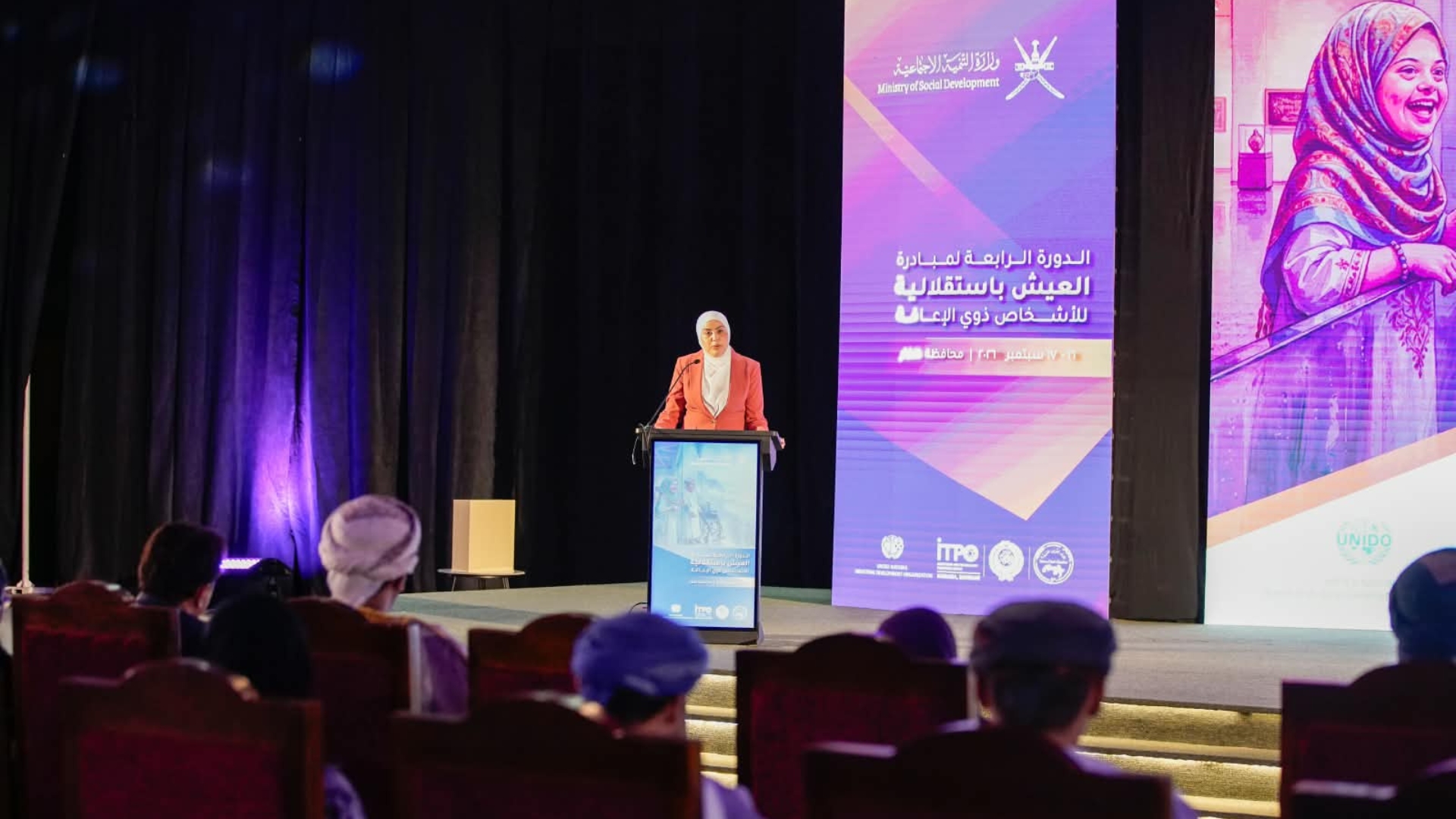
Bani Mustafa outlined the plans at the opening of the fourth session
of the “Independent Living for Persons with Disabilities” initiative
in Oman’s Dhofar Governorate, where she is participating in her
capacity as chair of the 45th session of the Arab Social Affairs
Ministers Council.
The Sept. 16-17 event is jointly organized by the Arab League and the
Union of Arab Chambers in partnership with the United Nations
Industrial Development Organization (UNIDO), under the patronage of
Sayyid Marwan bin Turki bin Mahmoud Al Said.
Bani Mustafa said independent living should not be viewed solely in
terms of care and service provision, but as the ability of persons
with disabilities to make their own decisions and participate equally
in social, economic and cultural life.
That approach requires access to education, employment, services,
technology and accessible environments, alongside policies designed
to remove barriers to full participation, she said.
She highlighted the growing role of artificial intelligence,
assistive technologies and other digital innovations in improving
independence and accessibility, while stressing the need to protect
personal data and privacy. These technologies can also widen
opportunities for entrepreneurship and economic participation, Bani
Mustafa said, particularly when skills development and vocational
training are aligned with labor market demand.
She stressed that persons with disabilities should be directly
involved in designing the policies and solutions that affect them.
Greater labor market inclusion will also require accessible and
flexible workplaces, stronger public-private partnerships and
corporate social responsibility initiatives that support employment
and economic opportunities, she added.
Bani Mustafa said Arab countries have made progress in developing
legislation and policies protecting the rights of persons with
disabilities, but translating those rights into practical outcomes
remains a key challenge.
She pointed to the Arab Decade of Persons with Disabilities 2023-2032
as a framework for strengthening protection, empowerment and
participation, noting that Jordan’s presidency of the Arab Social
Affairs Ministers Council is also prioritizing responses to violence,
exploitation and abuse affecting persons with disabilities.
At the national level, Bani Mustafa said Jordan’s approach is
grounded in equality, non-discrimination and inclusion, supported by
the Law on the Rights of Persons with Disabilities and the national
strategy for alternatives to residential institutions.
Alongside the expansion of early intervention, day-care and family
inclusion programs, the Kingdom is developing social services through
digital transformation and the Jordanian Social Registry, improving
accessibility in public facilities and advancing inclusive education
through the Royal Academy for Inclusive Education.
Bani Mustafa said Jordan would use its presidency of the Arab Social
Affairs Ministers Council to support greater regional cooperation and
promote practical policies that strengthen the independence, dignity
and full participation of persons with disabilities.
//Petra// RZ