Saudi Arabia’s Voluntary Carbon Market Fuels the Shift to a Low-Carbon

Under UAE President’s directives, UAE launches urgent relief response for Ghana flood victims

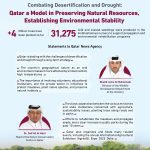
Combating Desertification and Drought: Qatar a Model in Preserving Natural Resources, Establishing Environmental Stability
UAE allocates US$30 million for emergency humanitarian response in El Obeid, calls for civilian protection, safe humanitarian aid access in Sudan

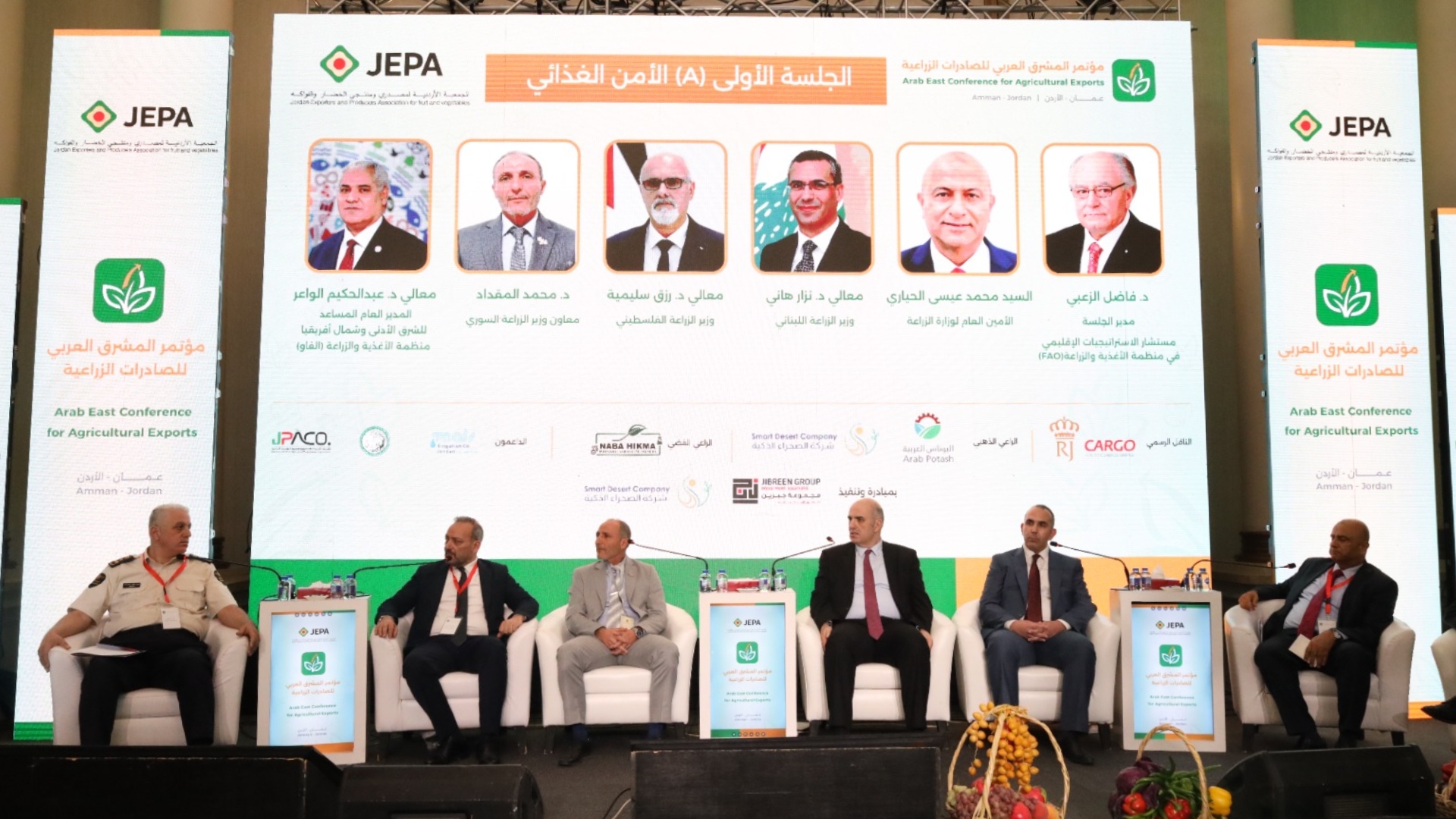
Amman, Sept. 16 (Petra) – The Arab East Conference for Agricultural
Exports 2026 ended on Wednesday by adopting the “Amman Declaration
for Agricultural Integration and Exports.”
Held September 15–16 under the patronage of Agriculture Minister Saeb
Khreisat, the summit brought together Lebanese Agriculture Minister
Nizar Hani, Palestinian Agriculture Minister Rizq Salmiya, and Syrian
Deputy Agriculture Minister Mohammad Miqdadi, alongside diplomats,
international organizations, and private sector representatives.
The two-day conference drew over 1,000 agricultural and business
leaders, importers from 25 countries, and 35 expert speakers.
Attendees participated in 218 direct business-to-business (B2B)
sessions, securing agency agreements, trade contracts, and new
channels for regional cooperation.
Participants agreed on eight core action items:
– Establish a permanent regional committee to oversee the transition
of recommendations into a formal roadmap.
– Build an executive administrative office, create a comprehensive
regional database, and launch a dedicated trade portal.
– Adopt an initiative to harmonize or grant mutual recognition for
agricultural, health, and technical certificates.
– Create a shared regional agricultural calendar to track seasonal
crop cycles.
– Form three specialized technical committees focused on transport
and logistics, investment and finance, and quality certification and
technology.
– Conduct a feasibility study on founding a unified regional company
for agricultural marketing.
Track B2B agreements and host follow-up trade meetings throughout the
year.
– Establish the conference as an annual event, with plans to expand
Iraqi participation in the next edition.
Khreisat credited national carrier Royal Jordanian in driving the
Kingdom to become a regional logistics hub through new cargo routes,
expanded fleets, and a modern freight facility.
Backed by government air freight subsidies, these efforts expanded
Jordanian exports to Europe, boosted contract farming, and brought
high-demand crops to new global markets, he said.
//Petra// HA