Saudi Arabia’s Voluntary Carbon Market Fuels the Shift to a Low-Carbon

Under UAE President’s directives, UAE launches urgent relief response for Ghana flood victims

Combating Desertification and Drought: Qatar a Model in Preserving Natural Resources, Establishing Environmental Stability

UAE allocates US$30 million for emergency humanitarian response in El Obeid, calls for civilian protection, safe humanitarian aid access in Sudan

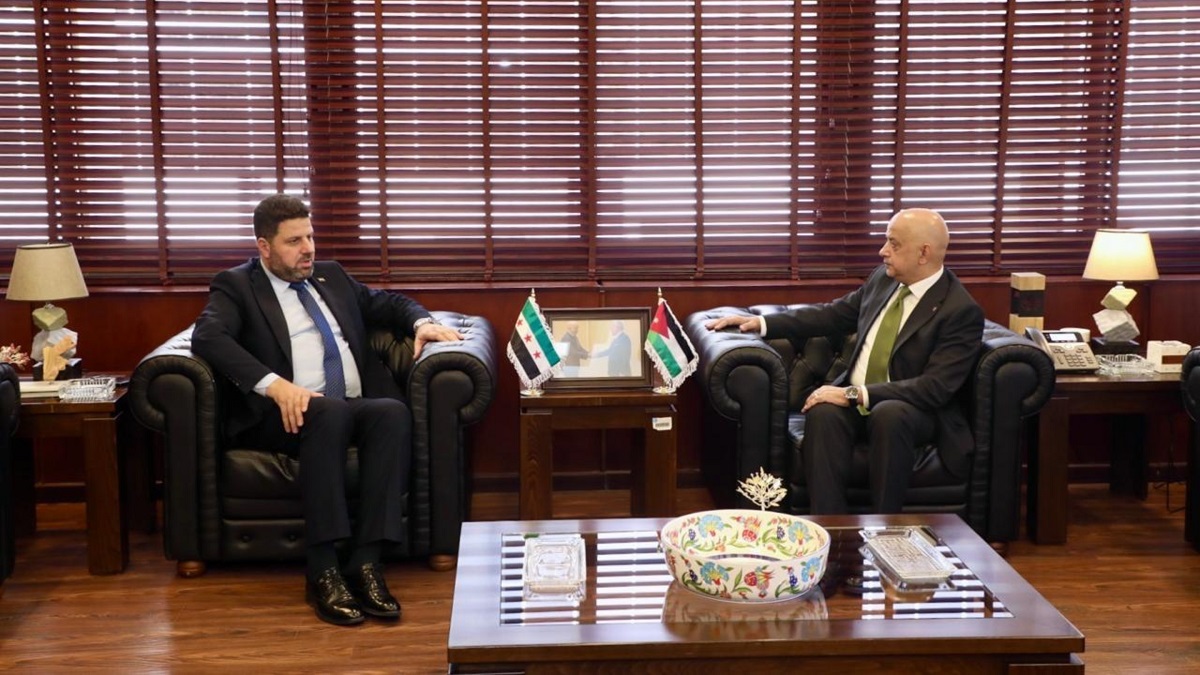
Amman, Sept. 17 (Petra) — Chairman of the Amman Chamber of Commerce
(ACC) Khalil Al-Hajj Tawfiq and Chargé d’Affaires of the Syrian
Embassy in Jordan Ihsan Al-Rumman discussed ways to strengthen
economic and trade cooperation between the two countries and
facilitate transport and transit.
According to a chamber statement issued Thursday, Al-Hajj Tawfiq said
the current stage requires cooperation between the two countries to
strengthen economic relations, overcome challenges, move toward
implementation, and turn understandings into joint programs and
projects that serve their interests.
He said Syria’s economic relationship with Jordan is distinctive,
given the historical ties between the two countries and their
interconnected interests. He stressed the importance of using
available resources to develop partnerships across several economic
sectors, particularly food security, information technology,
agriculture, contracting, consultancy, transport and infrastructure.
Al-Hajj Tawfiq also said the Amman Chamber is ready to provide the
training and capacity-building services needed by the Syrian side.
For his part, Al-Rumman said the embassy is ready to cooperate with
the chamber and support steps aimed at developing the economic
relations between the two countries. He said the “new Syria” is open
to cooperation with Jordan in all economic fields.
Al-Rumman praised Jordan’s efforts, under the leadership of His
Majesty King Abdullah II, to support Syria at various international
forums, particularly in providing training and capacity-building for
Syrian personnel, benefiting from Jordan’s experience and
transferring it in administrative and other areas, as well as in laws
governing economic affairs.
He expressed hope that the next phase would see renewed economic
cooperation and more communication and meetings between the two
countries’ business communities.
//Petra//WH