Jordan’s Q2 2026 GDP Expands 3.0%, Outperforming Regional Headwinds, International Forecasts
ENV-KUWAIT-SUSTAINABLITYKuwait strengthens environmental sustainability through strategic initiativesBy Zahra Al-Kadhmi

HLT-KUWAIT-SURGERYKuwait advances health sector with robotic, remote surgeryBy Mohammad Al-Moseb

Saudi Arabia’s Voluntary Carbon Market Fuels the Shift to a Low-Carbon

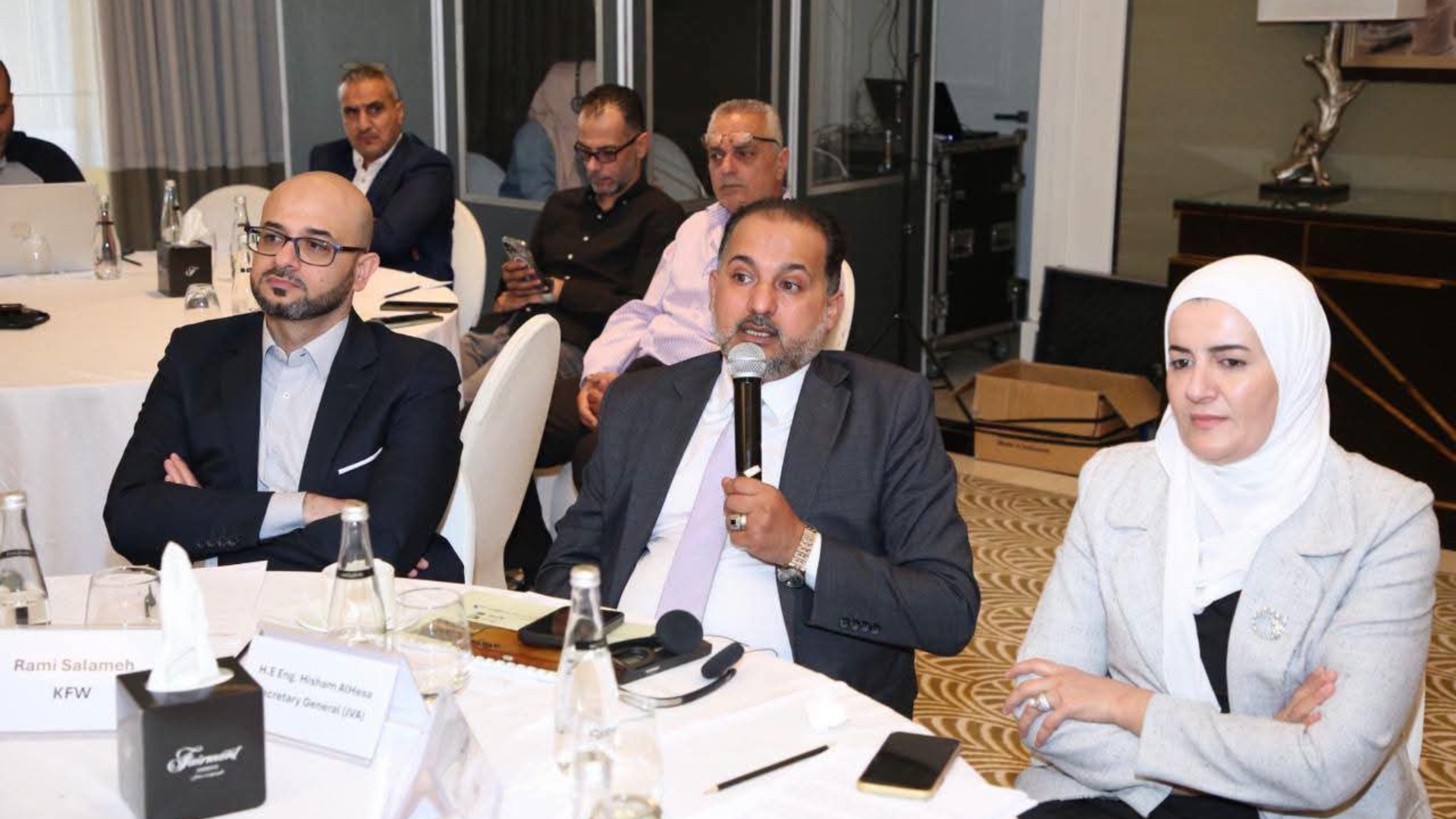
Northern Jordan Valley, Oct. 8 (Petra) – The Jordan Valley Authority
(JVA) on Thursday held a technical workshop to review detailed design
criteria for a project to rehabilitate about 52 kilometers of the
northern section of the King Abdullah Canal and reduce water losses.
The project, titled: “Climate Protection in the Water Sector: Water
Loss Reduction of King Abdullah Canal,” is funded by Germany’s
Federal Ministry for Economic Cooperation and Development through the
KfW Development Bank.
Implemented by a consortium of consulting firms, planned works aim to
reline sections of the canal and rehabilitate associated
infrastructure to reduce leakage, improve the reliability of water
conveyance, and strengthen the system’s resilience to climate-related
pressures.
In their discussions, representatives of the JVA, the German
Development Bank, water user associations, and other stakeholders
discussed design strategies, project findings, outstanding issues,
and key elements of the detailed design.
JVA Secretary-General Hisham Hayseh said reducing water losses and
optimizing the use of available water resources are “national
priorities given Jordan’s limited water supply.”
He said the project is intended not only to rehabilitate the canal
but also to improve water-transfer reliability for agricultural and
drinking-water needs.
Hayseh called for involving water user associations throughout the
project, saying their operational experience could help identify
practical technical solutions and improve implementation.
Director of Irrigation and Infrastructure Projects Jumana Duwairi
said water losses from the King Abdullah Canal are linked “mainly” to
leakage, deteriorating infrastructure, evaporation, illegal tapping,
and unregulated use.
The project forms part of broader efforts to reduce water losses,
rehabilitate water infrastructure, and improve the efficiency of
available water resources.
//Petra// AO