Jordan’s Q2 2026 GDP Expands 3.0%, Outperforming Regional Headwinds, International Forecasts

ENV-KUWAIT-SUSTAINABLITYKuwait strengthens environmental sustainability through strategic initiativesBy Zahra Al-Kadhmi

HLT-KUWAIT-SURGERYKuwait advances health sector with robotic, remote surgeryBy Mohammad Al-Moseb

Saudi Arabia’s Voluntary Carbon Market Fuels the Shift to a Low-Carbon

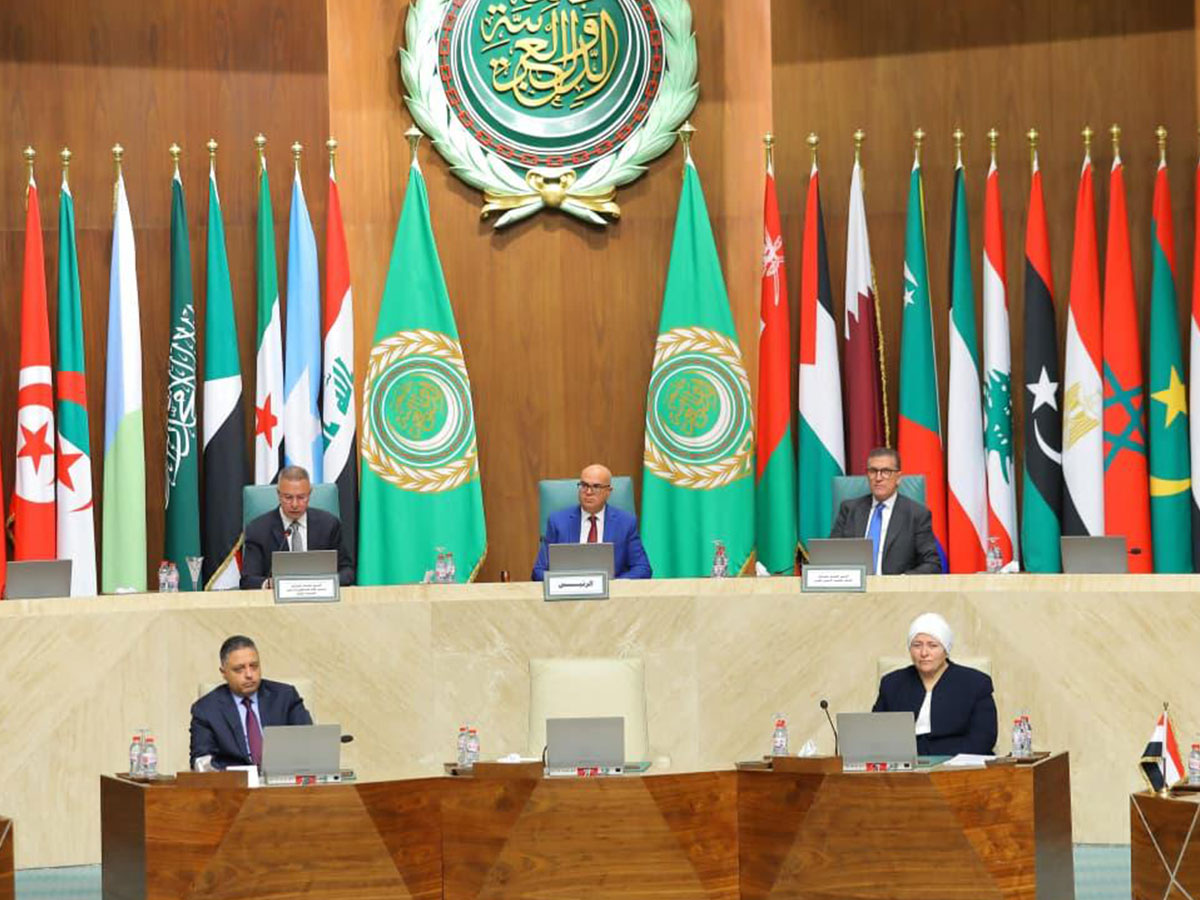
Cairo, October 13 (QNA) – The Arab League Council has called on the UN Security Council (UNSC) to shoulder its responsibilities for maintaining global peace and security and adopt a resolution to ensure international protection for the Palestinian people.
The call came in resolutions adopted at an extraordinary session held Tuesday at the League’s General Secretariat in Cairo at the request of the State of Palestine.
The Council also urged the UNSC to ensure the enforcement of relevant UN resolutions, including Resolutions 904 (1994) and 605 (1987), which affirm the applicability of the Fourth Geneva Convention to the occupied Palestinian territory, including Jerusalem, and Resolution 2334 (2016), concerning Israel’s settlement policy.
The Council further called on the UNSC to adopt a resolution under Chapter VII of the UN Charter requiring Israel, the occupying power, to comply with relevant resolutions on the Palestinian question, halt its aggression against the Palestinian people in all its forms, and implement the orders and advisory opinions of the International Court of Justice (ICJ).
Israel’s ongoing aggression against and occupation of the Palestinian people and the territory of the State of Palestine, along with other occupied Arab territories, undermine Arab national security and erode international peace and security, the Council said.
It stressed the importance of strengthening joint Arab action to protect the Palestinian people by activating and expanding joint Arab defense mechanisms, including the Joint Defense and Economic Cooperation Treaty among the Arab League’s member states, in accordance with international law and the UN Charter.
The Council stressed that Arab efforts at the bilateral and multilateral levels remain an overriding priority in establishing an effective international protection system for the Palestinian people through an emergency special session of the UN General Assembly (UNGA) under the “Uniting for Peace” framework.
It emphasized that nothing short of effective international protection would adequately address the threats facing the Palestinian people. This effort would advance the implementation of relevant UN resolutions, including UNGA Resolution ES-10/20 (2018) on protecting Palestinian civilians.
The Council called on the High Contracting Parties to the Fourth Geneva Convention to intervene immediately to shield the Palestinian people from Israeli atrocities and acts of terror committed by Israeli settlers, which put Palestinian civilians in harm’s way, in accordance with international law, relevant international resolutions, and applicable international and regional agreements and treaties.
It reaffirmed the importance of enforcing Arab summit resolutions calling for a boycott of companies operating in Israeli colonial settlements in the occupied Palestinian territory and the blacklisting of Israeli settler terrorist organizations and entities on Arab national terrorism lists.
The Council strongly condemned escalating acts of terrorism and rampages by Israeli settlers against Palestinian farmers during the olive harvest season in the occupied West Bank, stressing that these assaults include the destruction of olive trees, theft of crops, and the blocking of farmers’ access to their land.
The Arab body said such acts infringe on the Palestinian people’s rights to their land and natural resources and disregard the historical significance of olive trees as an enduring symbol of Palestinian steadfastness.
Any unilateral decision that breaches the legal status of the Holy City of Jerusalem, including the opening of offices or diplomatic missions there, is utterly unacceptable, the Council said.
It added that such moves are at variance with international law and relevant UNSC resolutions, including Resolutions 476 and 478 (1980), as well as the advisory opinions of the ICJ and the Vienna Convention on Diplomatic Relations.
The Council described such decisions as an assault on Palestinian rights and an affront to the sentiments of Muslim and Christian communities, stressing that they are null and void.
It cautioned that they would set dangerous precedents, encourage further violations of international law, substantially undermine peace efforts, and threaten global peace and security. The Council’s position makes clear that unilateral attempts to alter Jerusalem’s legal status are a non-starter under the framework of international law and relevant UN resolutions.
The Council further condemned Colombia’s intention to open an embassy in Jerusalem, describing the move as a grave violation of international law and an unlawful step that could undermine Arab-Colombian ties at the political, diplomatic, and economic levels.
It called on Colombia to reverse its decision and urged that Colombia’s ambassadors to member states of the League of Arab States and the Organization of Islamic Cooperation (OIC) be summoned and formally presented with a protest over the planned embassy opening and its implications for bilateral ties.
The Council reaffirmed that member states intend to take all necessary practical measures at the political, diplomatic, and economic levels to counter Colombia’s decision, or similar decisions by any other country that recognizes Jerusalem as Israel’s capital, transfers its embassy there, or otherwise violates the city’s legal status.
These measures, the Council said, would implement successive Arab summit and ministerial council resolutions. It also called for continued monitoring of the implementation of League resolutions concerning violations by certain countries of Jerusalem’s legal status.
The Council further called on the Arab Parliament and national Arab parliaments to engage urgently with Colombia’s parliament and urge it to press the Colombian government to reverse the unlawful move, which undermines the legal status and spiritual and historical significance of occupied Jerusalem.
The Council also condemned Israeli measures against the British Consulate General in occupied Jerusalem, reaffirming that East Jerusalem is occupied Palestinian territory over which Israel has no sovereignty.
It commended Britain’s position on Jerusalem’s legal status, its support for a two-state solution, and its backing for sanctions on Israeli settlements, in keeping with international law and relevant international resolutions.
The Council reaffirmed the right of Palestinian refugees to return under UNGA Resolution 194 (1948). It also underscored the role of the United Nations Relief and Works Agency for Palestine Refugees in the Near East (UNRWA), given the challenges it faces and the need to ensure the continuity of its services throughout its areas of operation, particularly in the occupied Palestinian territory, including Jerusalem.
The Arab resolutions stressed that respect for international law and relevant UN resolutions is common sense as well as a legal obligation. It asked the Arab Group in New York to follow up on implementation of the resolution at the UN and the UNSC. It also called on the League’s secretary-general to oversee implementation and submit a report at the Council’s next session. (QNA)