Jordan’s Q2 2026 GDP Expands 3.0%, Outperforming Regional Headwinds, International Forecasts
ENV-KUWAIT-SUSTAINABLITYKuwait strengthens environmental sustainability through strategic initiativesBy Zahra Al-Kadhmi

HLT-KUWAIT-SURGERYKuwait advances health sector with robotic, remote surgeryBy Mohammad Al-Moseb
Saudi Arabia’s Voluntary Carbon Market Fuels the Shift to a Low-Carbon

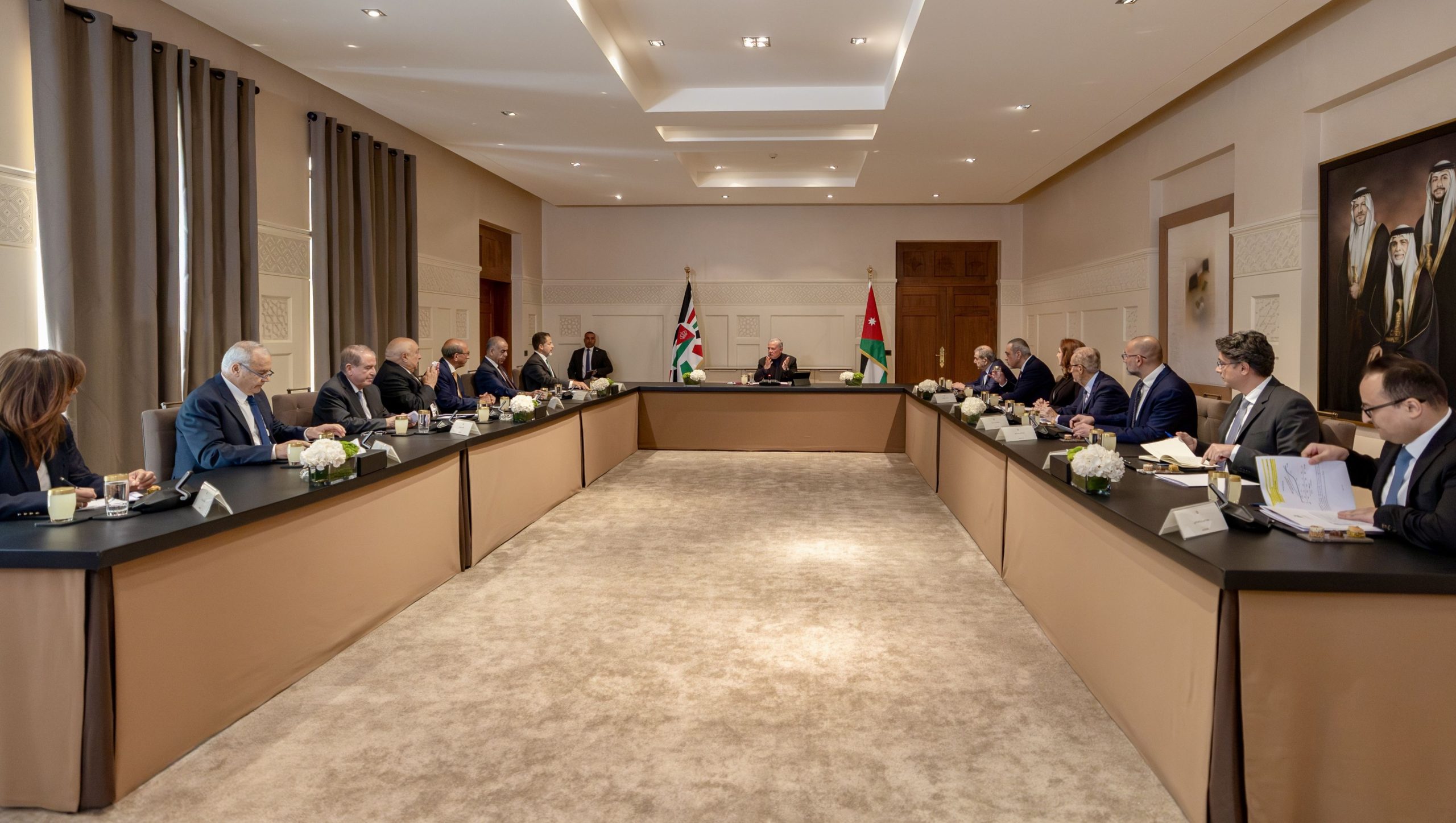
Amman, June 8 (Petra) — Economists praised the substance of His
Majesty King Abdullah II’s remarks during a meeting with economic
figures on Monday, stressing the need to capitalize on opportunities
available within the national economy.
They told the Jordan News Agency (Petra) that the King’s comments
provide a strategic roadmap for generating economic growth and
sustaining positive indicators despite ongoing regional tensions.
During the meeting, His Majesty the King said the national economy
had demonstrated its ability to confront and overcome crises
efficiently. He noted that Jordan, despite regional instability, has
consolidated its stability and strategic standing, adding that the
Kingdom’s stability remains a key factor in attracting investment.
The economists said strengthening regional connectivity in energy,
transport, trade and digital transformation would reinforce Jordan’s
role as a transit economy linking regional and global markets.
The King also emphasized the importance of leveraging opportunities
offered by future regional connectivity projects to enhance economic
cooperation and integration with countries across the region and
beyond.
Former Minister of Industry, Trade and Supply Maha Ali said the
King’s remarks were highly significant in reaffirming the resilience
of the Jordanian economy and its ability to withstand challenges
despite regional tensions.
Ali said the King’s vision, together with Jordan’s economic, monetary
and fiscal policies, provides a strong foundation for enhancing
competitiveness, stimulating investment and advancing sustainable
development. She pointed to economic indicators showing growth and a
roughly 10% increase in exports in 2025 as positive signs.
She added that the King’s emphasis on expanding local participation
in major projects and focusing on technological developments is
important for creating economic opportunities and generating
employment for young Jordanians.
For his part, Jordan Investors Association Chairman Mujahid Al-Rajabi
said the King’s remarks represent a clear and comprehensive roadmap
for improving the investment climate and strengthening the
foundations of the national economy.
He said the Jordanian economy, under the King’s leadership and
through the determination of its institutions, has demonstrated
exceptional resilience and a strong ability to transform challenges
into opportunities while remaining steadfast in the face of regional
crises.
Al-Rajabi noted that Jordan’s stability and strategic position amid
regional tensions provide the strongest guarantee for enhancing
investor confidence and attracting domestic and foreign capital.
He said investors are closely following the Kingdom’s development and
technological transformation, particularly efforts to implement the
Economic Modernization Vision.
According to Al-Rajabi, initiatives and projects stemming from the
Economic Modernization Vision serve as a key engine for job creation,
reducing unemployment and driving sustainable growth.
He welcomed the King’s emphasis on increasing local participation in
major projects and adopting a collaborative approach involving
experts, saying this gives the private sector a leading role in
development.
Al-Rajabi also expressed the readiness of industrial investors to
seize opportunities arising from future regional connectivity
projects, stressing that the association would continue working
alongside all stakeholders to translate the King’s directives into
tangible outcomes that support Jordan’s economic integration with its
regional environment.
Economic analyst Munir Diyyah said the Jordanian economy achieved a
number of positive indicators during the past year and the beginning
of this year, demonstrating its ability to confront challenges
despite regional tensions that have affected both the global economy
and economies across the region.
He said endorsements from leading international financial and credit
institutions show that Jordan has successfully adapted to
developments in the region, implemented economic reforms and promoted
greater stability and growth across economic and investment sectors.
Diyyah added that, despite significant regional challenges, Jordan
has continued to advance implementation of the Economic Modernization
Vision and its executive programs while launching major projects in
partnership with local and foreign investors.
He said these efforts have strengthened confidence in the national
economy and its capacity to attract investment, citing projects in
water, energy, transport and infrastructure. He highlighted the
National Water Carrier Project, the Aqaba railway project, the Risha
gas transport project, and Amra City as examples that have boosted
confidence in the Kingdom’s economy and its ability to manage crises
effectively.
Diyyah also noted Jordan’s extensive experience in dealing with
crises and adopting policies that mitigate their impact on economic
sectors and living conditions. He said this was reflected in keeping
inflation within manageable levels, maintaining supplies of essential
goods and services, preserving supply chains and ensuring that ports,
airports and land border crossings continued operating around the
clock to keep inventories stable and secure.
Economic expert Adli Qandah said the King’s remarks reaffirm the
strength of Jordan’s economy and its ability to adapt to crises
despite regional instability and rapidly evolving challenges.
He said the King’s assertion that the economy has proven capable of
overcoming crises reflects more than a century of Jordanian economic
experience and demonstrates the institutional resilience and
adaptability of the country’s economic model.
Qandah explained that the King’s focus on stability as a driver of
investment reflects the concept of a “risk premium,” whereby
stability lowers perceived investment risks, increases private
investment flows and stimulates economic activity.
He described the Economic Modernization Vision as a significant
transition toward a more productive economy, moving from crisis
management to growth generation through restructuring the
relationship between the public and private sectors and empowering
the private sector to become the primary engine of growth.
Qandah added that the King’s call to strengthen local participation
in major projects addresses a long-standing challenge in Jordan’s
economy the implementation gap between planning and execution arguing
that involving national expertise improves efficiency and enhances
the quality of development projects.
He said the King’s comments on regional connectivity projects
underscore the strategic importance of Jordan’s geographic location,
noting that stronger links in energy, transport, trade and digital
transformation would reinforce Jordan’s role as a gateway economy
connecting regional and international markets.
Yarmouk University Professor of Tourism and Hospitality Management
Hakam Shatnawi said the King’s confidence in the economy’s ability to
overcome challenges and crises reflects trust in its resilience and
capacity to continue growing despite regional circumstances.
Shatnawi added that the King’s focus on stability, investment
attraction and implementation of the Economic Modernization Vision
carries important implications for economic sectors, particularly
tourism, which is among the sectors most capable of stimulating
investment and creating jobs.
He said Jordan’s stability provides a fundamental pillar for tourism
growth and gives the Kingdom a competitive advantage in attracting
visitors and tourism-related investment amid regional challenges.
According to Shatnawi, the major development and regional
connectivity projects highlighted by the King open promising
opportunities for the tourism sector by improving mobility and access
to regional and international tourism markets.
He noted that tourism has a significant multiplier effect on the
national economy, benefiting transport, hospitality, trade and
service industries, making it a key partner in achieving the goals of
the Economic Modernization Vision.
Shatnawi said the coming phase requires continued development of
Jordan’s tourism product and greater investment in human resources,
technology and tourism services to strengthen Jordan’s position as a
leading tourism and investment destination and support sustainable
economic development across the Kingdom.
//Petra// AF