Saudi Arabia’s Voluntary Carbon Market Fuels the Shift to a Low-Carbon

Under UAE President’s directives, UAE launches urgent relief response for Ghana flood victims

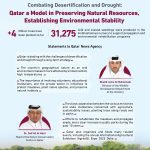
Combating Desertification and Drought: Qatar a Model in Preserving Natural Resources, Establishing Environmental Stability
UAE allocates US$30 million for emergency humanitarian response in El Obeid, calls for civilian protection, safe humanitarian aid access in Sudan

The First Hope Forum on Mining Issues concluded its activities in Khartoum on Saturday evening and issued the National Document on Mining Issues, which was handed over to Prime Minister Dr. Kamil Idris. The forum was held under the patronage of President of the Transitional Sovereignty Council (TSC), General Abdel Fattah Al-Burhan, and organized by the Ministry of Minerals, with the participation of the Ministers of Defence, Federal Governance and Rural Development, and Finance, as well as representatives from the Ministries of Justice and Interior, the Director of Economic Intelligence at the General Intelligence Service, state walis and regional governors, security agencies, and other relevant stakeholders. Held under the theme “Responsible Mining Towards Balanced and Sustainable Development,” the forum reviewed the challenges facing the mining sector and extensively discussed issues of regulation, security, oversight, and marketing, with the aim of reaching solutions to advance and develop the sector. The forum recommended harmonizing state-level legislation and regulations with federal policies and laws governing the mining sector, emphasizing the importance of coordination and integration between the Ministry of Minerals and regional and state governments to ensure sound management of mineral resources. It called for supporting the ongoing comprehensive geological survey project being implemented across Sudan’s regions and states, considering it a key pillar for exploring mineral potential, reducing unregulated and illegal mining activities, and transforming them into organized operations, while providing a safe and sustainable working environment and supporting the Ministry’s vision for regulating traditional mining. Regarding social responsibility and environmental development, the recommendations stressed the state’s commitment to establishing a clear strategy that involves local communities and identifies priorities for social responsibility projects. They also called for establishing a unified national framework for developing mining communities that defines priorities, implementation mechanisms, and follow-up procedures, in addition to reducing conflicts, achieving stability, and strengthening the authority of the state. The forum emphasized the need to ensure balanced distribution of development projects at all levels and the mandatory implementation of socially responsible projects in an agreed-upon and productive manner. It also called for conducting a comprehensive environmental impact assessment of the mining industry to develop mechanisms for addressing its effects and ensuring compliance with international standards across all mining activities. In the area of governance and digital transformation, participants highlighted the need to establish gold processing and extraction complexes according to the technical standards set by the Ministry of Minerals. They also stressed that no fees or levies should be imposed outside the legal framework and called for adopting a digital transformation project in the mining sector to facilitate procedures and achieve the highest standards of governance and transparency. The forum recommended developing legislative frameworks in line with global developments while safeguarding the rights of the state, investors, and local communities. It also called for preparing a unified framework for fees that balances government revenues with investment attraction, supporting all stakeholders in implementing the strategy for traditional mining, activating all mining councils at national, state, and local levels, as well as councils for processing and extraction complexes, and curbing mining activities outside legal frameworks. Regarding investment and sector development, the forum called for encouraging local and foreign investment, simplifying procedures, and providing guarantees for investors. It also stressed directing part of mining revenues toward supporting development projects and basic services in local communities, in addition to supporting training, qualification, capacity-building programmes, improving the conditions of workers, and attracting qualified expertise. On security and combating smuggling, the forum recommended strengthening coordination between the Ministry of Minerals, states, and relevant authorities to ensure oversight of mineral production, combat smuggling, and secure companies and extraction complexes. It also called for establishing a minerals exchange and a minerals bank to support producers and investors and build gold reserves at the Central Bank. The forum further stressed the need to combat smuggling and its links to counterfeit currencies recently issued by the militia, establish cooperatives and producer associations, and issue identification cards to facilitate the opening of bank accounts. The recommendations concluded with a call to hold a specialized workshop to discuss the laws and regulations governing the sector in coordination with the Ministry of Justice, provide technical support to state mining blocks and assist them in promotion through the Ministry and the Geological Research Authority, as well as establish a national coordination and monitoring mechanism to ensure implementation of all outcomes.BH/BH