Saudi Arabia’s Voluntary Carbon Market Fuels the Shift to a Low-Carbon

Under UAE President’s directives, UAE launches urgent relief response for Ghana flood victims

Combating Desertification and Drought: Qatar a Model in Preserving Natural Resources, Establishing Environmental Stability
UAE allocates US$30 million for emergency humanitarian response in El Obeid, calls for civilian protection, safe humanitarian aid access in Sudan

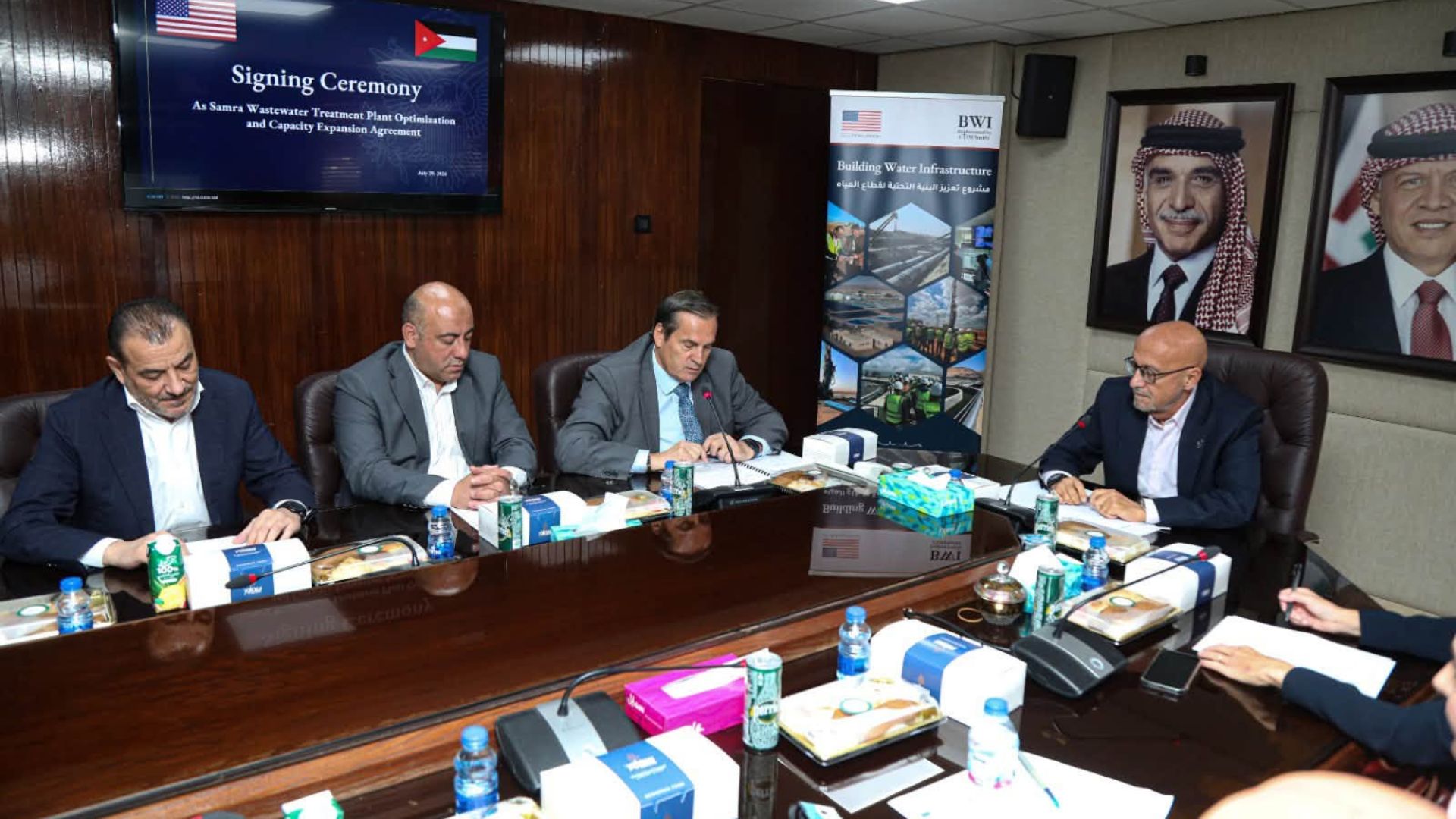
Amman, July 29 (Petra) — Water and Irrigation Minister, Raed Abu
Soud, Wednesday signed an agreement with the operating company of the
As-Samra Wastewater Treatment Plant for an additional expansion
project, aimed at strengthening Jordan’s water security and expanding
the kingdom’s capacity for reusing treated water.
According to a Water Ministry statement, Abu Soud said the $28
million project is backed by the U.S. government and will improve the
plant’s operational efficiency and increase its treatment capacity to
keep pace with rising volumes of wastewater flowing from the
Amman-Zarqa basin.
The signing ceremony was attended by Water Authority
Secretary-General Sufian Batayneh and representatives of the U.S.
Embassy in Amman.
Abu Soud said As-Samra is Jordan’s “largest” wastewater treatment
plant, which currently processes nearly 70% of the country’s total
wastewater. He said the plant plays a “central” role in protecting
public health, reducing pollution and supporting the agricultural
sector by supplying treated water for irrigation.
As-Samra was Jordan’s first project built under a
build-operate-transfer (BOT) system and remains one of the region’s
“most successful” public-private partnerships, he added.
The minister said the expansion will draw on “advanced solutions and
innovative technologies” to boost the plant’s capacity and generate
additional volumes of treated water suitable for reuse.
As for its goals, the project is expected to support agriculture
across thousands of hectares of surrounding land, ease pressure on
Jordan’s scarce freshwater resources and increase water flows into
the King Talal Dam.
Scheduled for completion in 2028, officials say the expansion will
advance goals of the Economic Modernization Vision by expanding
reliance on non-conventional water resources, strengthening
resilience to water challenges and supporting a more sustainable and
secure water future for the kingdom.
//Petra// NQ