Saudi Arabia’s Voluntary Carbon Market Fuels the Shift to a Low-Carbon

Under UAE President’s directives, UAE launches urgent relief response for Ghana flood victims

Combating Desertification and Drought: Qatar a Model in Preserving Natural Resources, Establishing Environmental Stability
UAE allocates US$30 million for emergency humanitarian response in El Obeid, calls for civilian protection, safe humanitarian aid access in Sudan

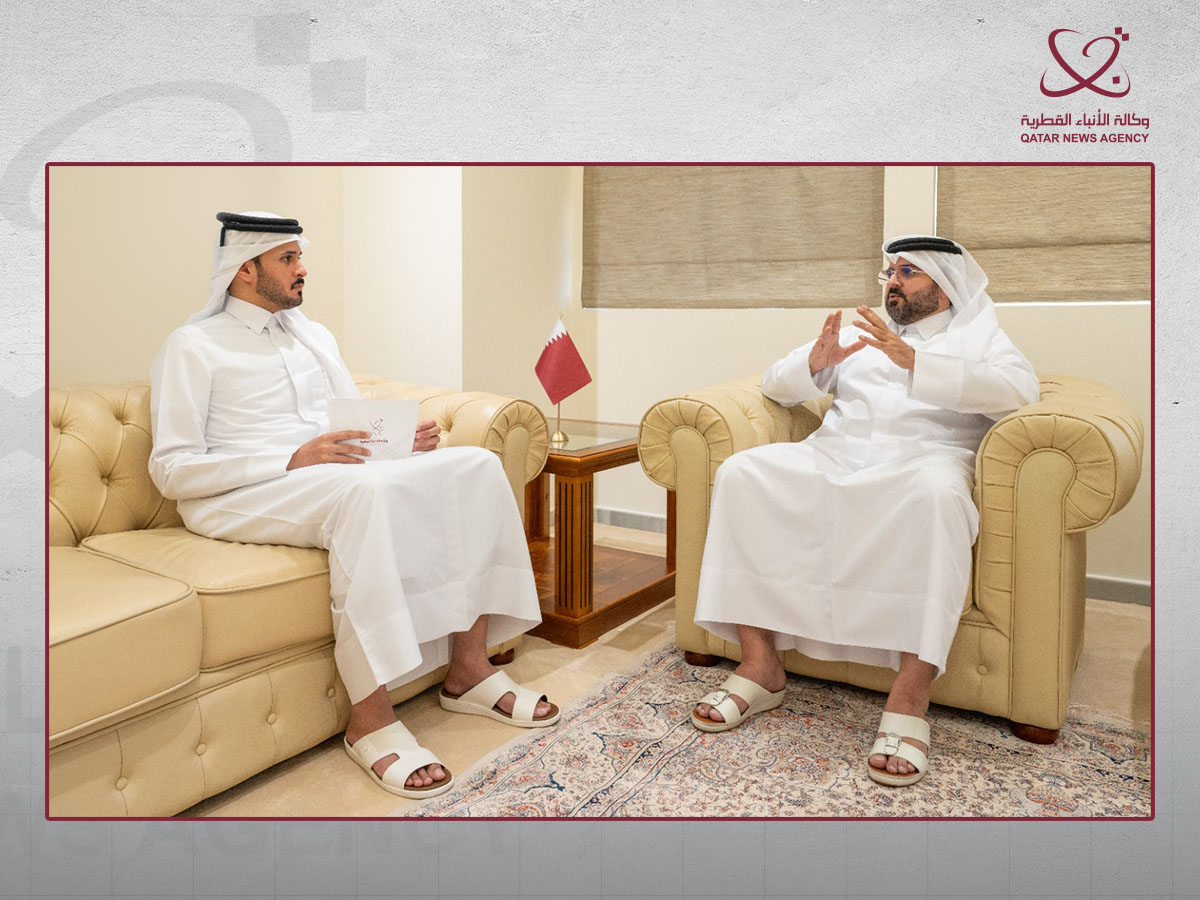
Doha, June 09 (QNA) – Qatar News Agency conducted a special interview with HE Undersecretary of the Ministry of Municipality, Eng. Ali bin Mohammed Al Ali, on the latest updated requirements regarding the villas and mansions of citizens in the State of Qatar.
His Excellency explained that the updated planning and architectural requirements for residential villas and mansions were introduced in response to the needs of Qatari families and the social and urban transformations witnessed by the State in recent years.
The updates provide greater flexibility in design and construction, enhance family stability, ensure the optimal utilization of land, and preserve the quality of the urban environment and the residential identity of neighborhoods, he outlined.
HE Eng. Al Ali said the updates were based on an extensive study and periodic reviews of the comprehensive master plan approved in 2018, in addition to feedback from citizens, consultancy offices, and relevant authorities.
The objective, he shared, is to keep up with state-of-the-art construction and development practices while meeting the current and future needs of society, noting that the updates are in sync with the objectives of Qatar National Vision 2030 (QNV 2030), which strives to achieve sustainable urban development and improve quality of life.
His Excellency pointed out that the new updates encompass more than 20 standards reflecting a realistic understanding of changes in family size and modern lifestyles.
They provide more flexible design options capable of accommodating the present and future needs of Qatari families while offering practical solutions to maximize the use of interior spaces and advance architectural designs in line with modern developments and technologies in the construction and housing sector, he clarified.
His Excellency further explained that the newly laid out requirements allow expansion through several options, foremost of which are expanding the ground floor without setbacks on the neighboring or rear side, expanding above accessory buildings or detached Majlis structures, and providing an internal suite within the villa, thereby meeting family needs and keeping abreast of their residential aspirations.
HE Eng. Al Ali further shared that allowing the establishment of an independent internal suite for a family member is intended to strengthen tight-knit families and enable members of the extended family to reside within the same home while maintaining an appropriate degree of privacy and independence.
The measure also provides “practical solutions” for the needs of children and senior family members within a unified and harmonious residential setting, HE the Undersecretary of the Ministry of Municipality underlined.
Regarding the foremost new advantages, he affirmed that the permitted height of residential villas has been increased to 16 meters, while an internal mezzanine floor with a coverage ratio of 35% has been rolled out for the first time.
The height of Majlis buildings has also been increased to 10 meters, he highlighted, including the workshop level, with the addition of a mezzanine floor permitted at a coverage ratio of up to 80%. These measures provide designers and developers with greater flexibility to meet family needs and achieve the optimal utilization of land.
HE Eng. Al Ali noted that the updates concerning mansions include elevating building heights to range between 17 and 22 meters where designs do not include domes or architectural elements, and between 20 and 25 meters as a maximum where such features are included, depending on plot size.
The regulations, he said, also permit the addition of an internal mezzanine floor with a coverage ratio not exceeding 35% in accordance with approved planning and regulatory requirements.
HE the Undersecretary of the Ministry of Municipality stressed that the amendments seek to strike a balance between granting citizens greater flexibility in construction and preserving residential privacy and the quality of the urban environment through clear planning and architectural controls that ensure no adverse impact on neighboring properties or the broader urban landscape.
He highlighted that the updates include reducing side and rear setbacks to 1.5 meters where no windows are provided, while permitting windows within those setbacks provided their height is not less than 1.8 meters. The height of villa boundary walls has also been increased to 3.4 meters.
The updates further included examining a number of setbacks and requirements related to buildings, accessory structures, and Majlis structures, HE Eng. Al Ali noted, emphasizing that this will allow better utilization of the available space within residential plots.
Among the most notable measures is the permission of a two-meter front projection for the first floor and roof level, in addition to reducing the front setback requirement for 50% of the roof-floor facade length to zero meters, he suggested.
His Excellency explained that the benefits of the newly introduced standards are available to all properties, whether construction has already been completed, remains under development, or is still at the licensing stage.
Property owners may submit development or modification applications through accredited engineering consultancy offices via the AI-supported electronic building permit system, where applications are vetted and evaluated in accordance with approved regulations and procedures before the issuance of the necessary permits, HE Eng. Al Ali pointed out.
He added that these updates were prepared following a thoroughgoing review of existing practices, an analysis of feedback received from citizens, consultancy offices, and relevant public entities, as well as an assessment of the challenges that emerged during the implementation of previous requirements.
This process, HE Eng. Al Ali said, helped forge ahead with practical and balanced solutions that address the realistic needs of Qatari families and support the efficiency of construction and development procedures.
Finally, HE the Undersecretary of the Ministry of Municipality asserted that the updates will play a pivotal role in developing a more flexible and sustainable urban environment that responds to community needs and supports the stability of the Qatari family.
They will likewise foster the efficiency of land utilization and provide more suitable housing options, he suggested, indicating that they will bring together the requirements of modern development with the preservation of identity and societal values, while supporting the objectives of QNV 2030 in achieving sustainable development and improving quality of life. (QNA)