ENV-KUWAIT-SUSTAINABLITYKuwait strengthens environmental sustainability through strategic initiativesBy Zahra Al-Kadhmi

HLT-KUWAIT-SURGERYKuwait advances health sector with robotic, remote surgeryBy Mohammad Al-Moseb

Saudi Arabia’s Voluntary Carbon Market Fuels the Shift to a Low-Carbon

Under UAE President’s directives, UAE launches urgent relief response for Ghana flood victims

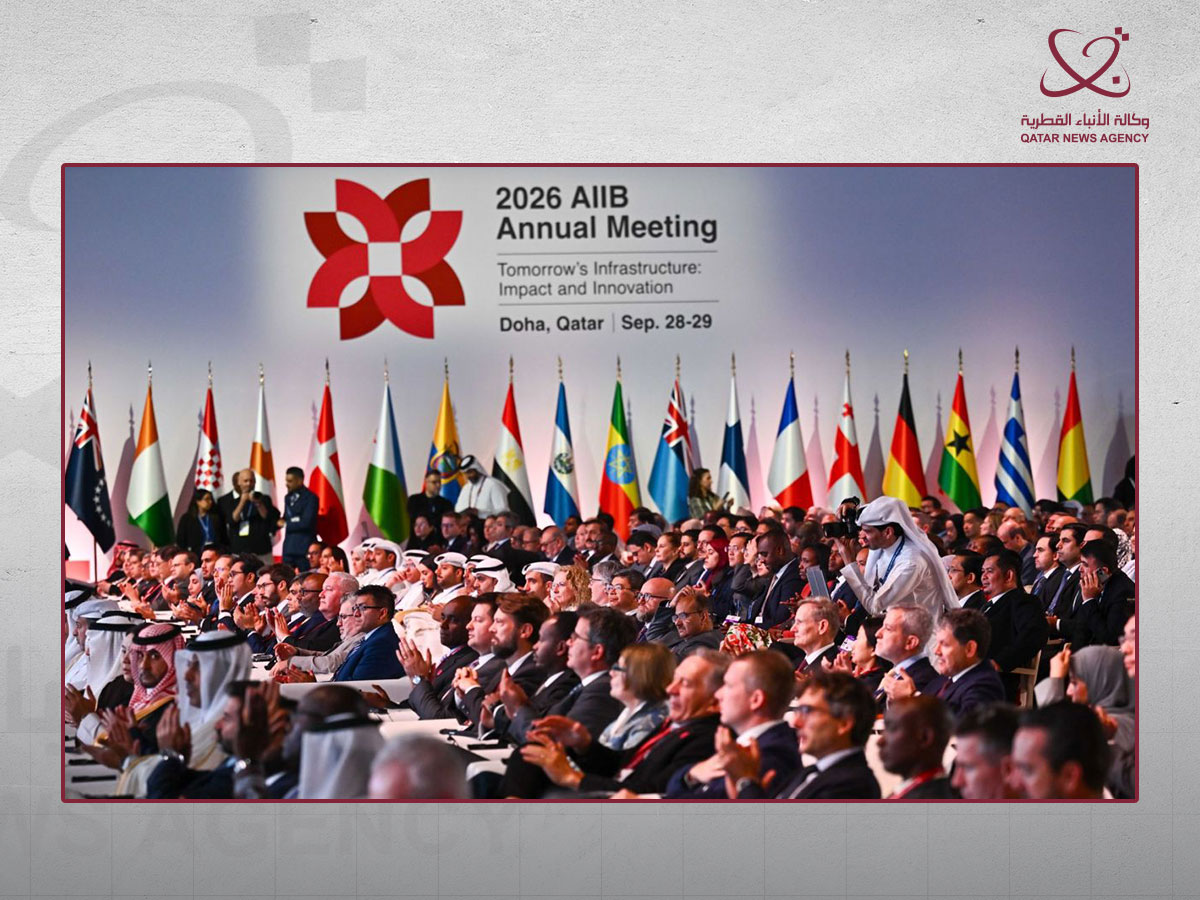
Doha, September 29 (QNA) – Officials and experts stressed the need to translate commitments on gender equality into practical measures that strengthen the role of partnerships in development projects and ensure that gender considerations are incorporated throughout all stages of investment operations.
This came during a panel discussion held today as part of the second day of the 11th Annual Meeting of the Board of Governors of the Asian Infrastructure Investment Bank (AIIB) hosted by Qatar.
The session brought together HE Minister of Finance of the United Republic of Tanzania Khamis Mussa Omar, AIIB Board Member and Minister-Counsellor at the Department of the Treasury of the Commonwealth of Australia Cosimo Thawley, founder of Ethno Media Samar Khan, and Associate Director for Gender and Economic Inclusion at the European Bank for Reconstruction and Development (EBRD) Maud de Vautibault.
During the session, the speakers affirmed that the AIIB Gender Action Plan reflects the Bank’s commitment to promoting gender-inclusive investments through effective risk management and value creation. They noted that the plan seeks to improve economic opportunities for women, strengthen their ability to influence decisions, develop their skills and increase their participation.
They stressed the need for multilateral development banks, governments, the private sector and civil society organizations to translate gender-related commitments into tangible results, emphasizing the importance of partnerships, knowledge sharing and evidence-based approaches in expanding the scale of impact.
They highlighted the importance of incorporating gender considerations into infrastructure investments, including measuring outcomes and strengthening cooperation to achieve sustainable and transformative development results. They also noted that gender mainstreaming has evolved from a project-level consideration into a strategic driver of infrastructure quality and inclusive growth.
They noted that the AIIB’s decision to hold a dedicated panel discussion on gender issues annually since 2023 reflects an important evolution in this dialogue, particularly given that infrastructure is not gender-neutral. They added that the way infrastructure is planned, financed and implemented affects women and men differently. These differences are reflected in access to education, employment opportunities and markets, and are also evident in areas such as safety, mobility and public access to essential infrastructure. The experts said the question extended beyond how risks should be managed to how the value and positive impact of projects can be preserved and how opportunities can be seized to generate greater benefits by incorporating gender considerations into infrastructure financing. They said that advancing gender equality in the development process begins with identifying gender gaps, followed by setting national priorities and then moving to the planning and budgeting stages. These are followed by project design, financing, implementation and monitoring, and finally the measurement of outcomes, covering the entire value chain.
The experts highlighted the importance of encouraging greater ambition in enhancing positive impact in this area through the Bank’s projects, including by using financing mechanisms and measurement practices to improve gender-related outcomes in those projects.
They also pointed to the importance of intensifying the Bank’s internal efforts to achieve better gender outcomes, while stressing the need to move beyond merely managing risks toward identifying opportunities capable of delivering greater impact. (QNA)