ENV-KUWAIT-SUSTAINABLITYKuwait strengthens environmental sustainability through strategic initiativesBy Zahra Al-Kadhmi

HLT-KUWAIT-SURGERYKuwait advances health sector with robotic, remote surgeryBy Mohammad Al-Moseb

Saudi Arabia’s Voluntary Carbon Market Fuels the Shift to a Low-Carbon

Under UAE President’s directives, UAE launches urgent relief response for Ghana flood victims

Permanent
Technical Committee for Statistics of Arab League Holds Meeting in Jeddah
Jeddah,
28 Sep 2026 (ONA) — The 44th meeting of the Permanent Technical Committee for
Statistics of the Arab League was held today in Jeddah, the Kingdom of Saudi
Arabia, with the participation of representatives of Arab statistical agencies
and Arab, regional and international organisations concerned with statistical
work.
The
meeting discussed a number of items on the Committee’s agenda, foremost among
them follow-up on the implementation of the recommendations of the 43rd meeting
and a review of the activities of the Statistics and Data Management Division
of the Arab League. It also reviewed the statistical activities of Arab
statistical agencies and areas of cooperation among them during 2026, as well
as reports and recommendations of the subcommittees.
The
meeting reviewed a number of statistical experiences and initiatives presented
by Arab countries. The Sultanate of Oman delivered a presentation on the
implementation of the Household Income and Expenditure Survey using artificial
intelligence, along with a presentation on the mechanism for implementing the
Digital Economy Survey. The General Authority for Statistics (GASTAT) of the
Kingdom of Saudi Arabia presented an AI-based classification platform, while
the Kingdom of Morocco presented a review of migration statistics.
The
meeting also addressed the 2030 Sustainable Development Goals indicators and
environmental indicators related to the Sustainable Development Goals, as well
as developments in censuses and the use of modern technology in statistical
work. It also reviewed the work of the team tasked with preparing a unified
strategic model for developing Arab statistical work, the 2027 work programme
of the Statistics and Data Management Division, and statistical coordination
with specialised Arab organisations.
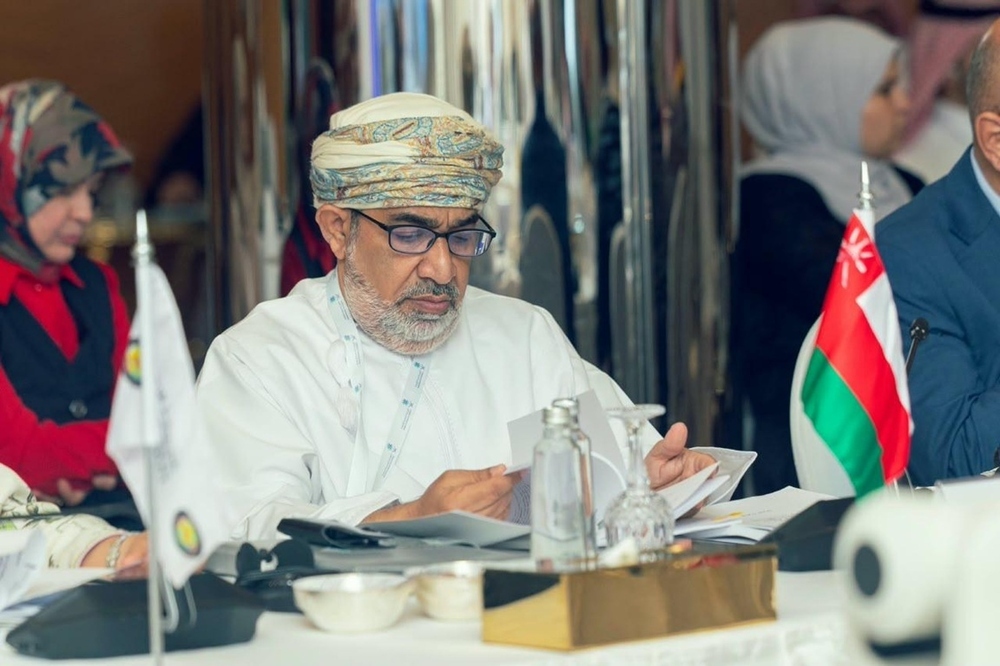
Dr.
Khalifa Abdullah Al Barwani, Chief Executive Officer of the National Centre for
Statistics and Information (NCSI), said the Sultanate of Oman’s participation
in the meeting reaffirms its commitment to supporting and strengthening joint
Arab statistical cooperation and exchanging expertise and experiences among
Arab statistical agencies, thereby contributing to the development of the
statistical system and enhancing the quality and efficiency of official data.
He
added that rapid developments in data technologies and artificial intelligence
are opening broad opportunities for statistical agencies to develop working
methods, accelerate the production of statistical indicators and enhance their
efficiency. He stressed the importance of strengthening Arab cooperation in
exchanging successful experiences and benefiting from modern technologies to
support development requirements and decision-making.
Al
Barwani noted that the efforts of the Arab League to strengthen coordination
among statistical agencies in member States and facilitate the exchange of
expertise and knowledge represent an important pillar in developing national
statistical capabilities. He also stressed the importance of the
recommendations and joint initiatives emerging from the Committee’s meetings in
keeping pace with rapid transformations in statistical work at the regional and
international levels.
The
agenda also included discussion of a proposal to develop a unified Arab measure
of human security, alongside the regional project to assist Arab countries in
transitioning to the System of National Accounts 2025 (2025 SNA). The meeting
is scheduled to conclude with discussion of the report and recommendations.
The
Permanent Technical Committee for Statistics is one of the specialised
committees within the framework of the Arab League. It plays a role in
strengthening statistical coordination and cooperation among Arab countries,
discussing technical and methodological issues of common interest, and
submitting recommendations aimed at developing the Arab statistical system.
—Ends/AG