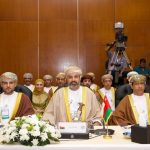




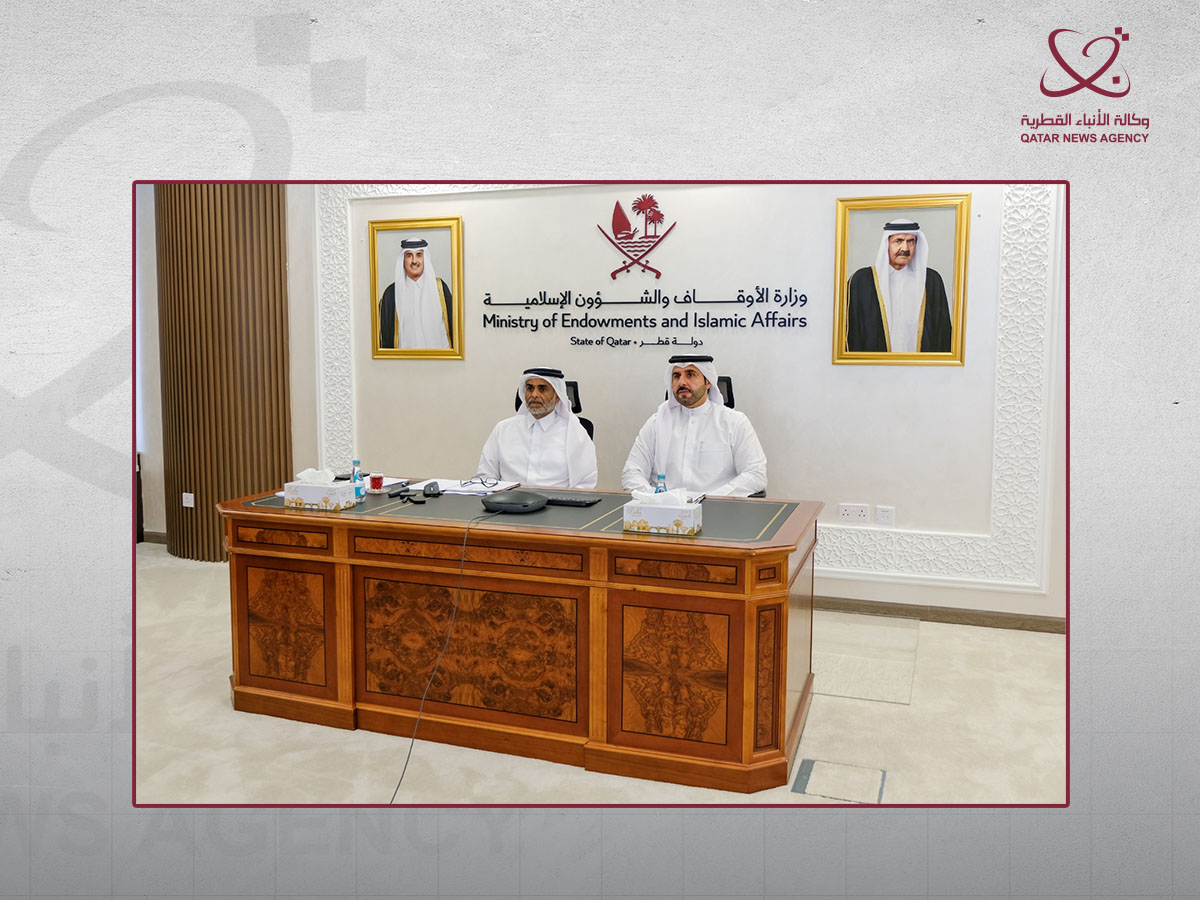
Doha, July 08 (QNA) – The State of Qatar, represented by the Ministry of Endowments and Islamic Affairs, participated in the 42nd meeting of the Standing Committee of Experts in Islamic Affairs and Endowments in the Gulf Cooperation Council (GCC) countries, and the 13th meeting of the committee tasked with studying the presentation of the true image of Islam and confronting campaigns of hatred, intolerance, extremism and sectarianism, which were held via video conferencing, with the participation of representatives of ministries and bodies of Islamic affairs and endowments in the GCC countries.
Director of the Department of Islamic Affairs Mohammed Jabr Al Mannai led the delegation of the Ministry of Endowments and Islamic Affairs at the two meetings. Assistant Director General of the General Department of Endowments Eng. Abdullah bin Mohammed Al Meer also participated in the meetings, along with representatives of the competent authorities from the member states, within the framework of strengthening the joint Gulf action and developing cooperation and integration in the fields of Islamic affairs, endowments and intellectual security.
The 42nd meeting of the Standing Committee of Experts in Islamic Affairs and Endowments in the GCC countries discussed a number of working papers, initiatives and proposals submitted by member states, which aim to develop the Islamic and endowment work system and enhance its societal and developmental impact.
The topics discussed included the “Gulf Endowment Week” initiative as a joint awareness platform that contributes to highlighting the civilizational and developmental role of Endowment, in addition to the “Mafaz Competition” project aimed at spreading awareness of Endowment, charitable and voluntary work, and a proposal to create a national index to measure the impact of Endowment in society in a way that enhances governance and transparency and raises the efficiency of Endowment management.
Participants also discussed the developed concept for a mechanism to present and exchange experiences and expertise in the field of Islamic affairs among member states, which supports the transfer of knowledge and benefit from successful practices. In addition, they discussed the proposal for the architectural identity of mosque minarets between authenticity and renewal, and the Arab cultural dialogue between East and West, which reflects the civilizational role of Islamic institutions in promoting cultural communication and civilizational openness.
In a related context, the Ministry of Endowments and Islamic Affairs participated in the 13th meeting of the committee tasked with studying the presentation of the true image of Islam and confronting campaigns of hatred, intolerance, extremism and sectarianism, which comes within the framework of joint Gulf efforts aimed at consolidating the values of moderation, tolerance and coexistence, and promoting moderate Islamic discourse in the face of campaigns of distortion, hatred and extremism.
The meeting discussed the memorandum of the GCC General Secretariat regarding the establishment of a Gulf scientific observatory concerned with monitoring manifestations of abuse of Islam, hate speech and extremism in various media and digital platforms, and benefiting from relevant international and regional experiences, in order to contribute to the development of monitoring and analysis tools and enhance joint efforts to highlight the correct image of Islam.
Participants also addressed the developments and procedures related to the proposal, and discussed ways of cooperation and coordination with observatories and specialized centers in confronting extremism and hate speech, in addition to exchanging visions and experiences regarding best practices in this field.
The meeting also addressed the working paper on developments related to confronting deviant ideas, which aims to enhance preventive and awareness efforts to protect societies from renewed intellectual challenges, and to protect young people and adolescents from being influenced by extremist and deviant ideas, through the use of awareness programs, institutional partnerships and the exchange of experiences among member states.
The participants stressed the significance of developing joint initiatives that contribute to consolidating the values of moderation and centrism, enhancing community awareness, and supporting intellectual security, in order to preserve the stability of Gulf societies and their authentic cultural and religious identity.
The two meetings reaffirmed the importance of unifying visions and integrating Gulf efforts in the fields of Islamic affairs, endowments, and intellectual security, and working to develop joint initiatives and projects that respond to contemporary changes, contribute to enhancing endowment development, highlight the true image of Islam, and consolidate the values of tolerance, coexistence, and peace, in line with the strategic directions of the GCC countries and enhance the Gulf integration process in various fields. (QNA)