
Saudi Arabia’s Voluntary Carbon Market Fuels the Shift to a Low-Carbon

Under UAE President’s directives, UAE launches urgent relief response for Ghana flood victims

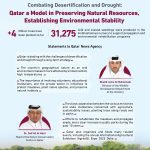
Combating Desertification and Drought: Qatar a Model in Preserving Natural Resources, Establishing Environmental Stability
UAE allocates US$30 million for emergency humanitarian response in El Obeid, calls for civilian protection, safe humanitarian aid access in Sudan


Doha, February 3 (Petra) – The value of Jordanian agricultural exports to Qatar in 2024 reached approximately 200 million Qatari riyals ($55 million), marking a 7.2 percent increase from 185.6 million riyals ($51 million) in 2023, according to data published by the Qatar Planning and Statistics Authority.
Vegetables and fruits account for 22 percent of the trade balance between the two countries, which totaled $250 million in 2024. Bilateral trade between Jordan and Qatar grew to around 910 million riyals ($250 million) last year, up from 860 million riyals ($236.2 million) in 2023 and 800 million riyals ($219.7 million) in 2022.
The expansion of Jordan’s agricultural exports to Qatar reflects a broader trend of increasing demand for Jordanian food and consumer goods, a pattern observed since 2020. While Qatar’s domestic agricultural production covers about 50 percent of local vegetable consumption, fruit imports are entirely sourced from Jordan and other international markets.
Jordan remains a preferred supplier due to its geographical proximity, which ensures the freshness and quality of products upon arrival. Additionally, Jordanian produce is competitively priced compared to similar imports from other foreign markets.
Jordan exports a variety of agricultural products to Qatar, including zucchini, potatoes, cucumbers, tomatoes, eggplants, peppers, carrots, green beans, watermelon, cherries, peaches, apricots, and leafy greens such as parsley, spinach, mint, coriander, grape leaves, mallow, and watercress.
Despite Qatar’s arid climate, characterized by low rainfall and high temperatures, the country is investing in sustainable and smart agricultural techniques, such as hydroponics and advanced irrigation systems, to enhance food security and optimize land use.
//Petra// AJ
03/02/2025 13:12:03