Saudi Arabia’s Voluntary Carbon Market Fuels the Shift to a Low-Carbon

Under UAE President’s directives, UAE launches urgent relief response for Ghana flood victims
Combating Desertification and Drought: Qatar a Model in Preserving Natural Resources, Establishing Environmental Stability
UAE allocates US$30 million for emergency humanitarian response in El Obeid, calls for civilian protection, safe humanitarian aid access in Sudan

Amman, Aug. 5 (Petra) –Energy security is among the priorities
emphasized by His Majesty King Abdullah II as a key factor in
supporting sustainable development, national stability, and economic
growth amid global changes.
This falls within a comprehensive vision that places sustainability
at the center of the Economic Modernisation Vision, focusing on
strengthening Jordan’s energy security and increasing reliance on
national resources through diversifying energy sources, reducing
dependence on imports, and implementing strategic projects and
proactive plans to address regional and global developments.
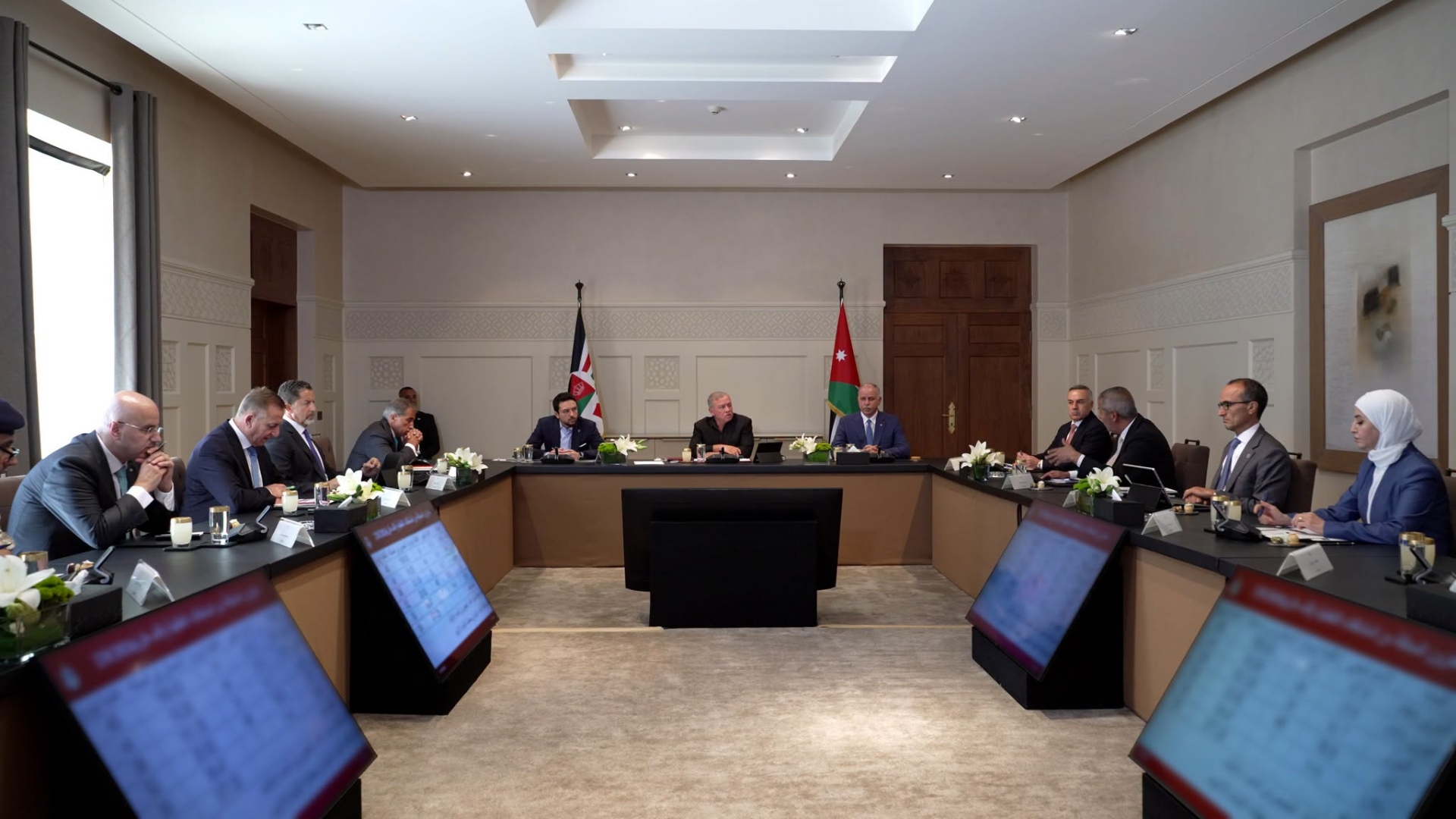
During a meeting to follow up on government measures to enhance
energy and food security, His Majesty stressed the importance of
continuing efforts to diversify energy sources and expand the use of
local and renewable energy resources to improve self-reliance and
support the competitiveness of economic sectors and essential
services.
The King directed the government to continue developing and
implementing plans to strengthen strategic energy reserves, enhance
the readiness of the national system, and ensure its sustainability
and ability to respond to various developments.
The Jordan Petroleum Refinery Company reflects these directives
through its role in ensuring the continuity of petroleum product
supplies, maintaining strategic reserves, and supporting the
resilience of the national energy system.
The company’s Chief Executive Officer, Engineer Hassan Al-Hayari,
said the company, in coordination with relevant government entities,
is working to strengthen strategic reserves of petroleum products and
liquefied petroleum gas (LPG) to ensure continued supplies and meet
local market needs efficiently and reliably.
He added that, as part of the company’s strategic plan, work is
underway to construct five spherical tanks for storing LPG with a
total capacity of 10,000 tonnes at the refinery site in Zarqa, along
with another project to build two spherical tanks with a storage
capacity of 4,000 tonnes in Aqaba.
He said these projects would contribute to strengthening supply
security, reducing reliance on external sources, and improving
Jordan’s ability to deal with emergencies.
Al-Hayari said the company continues to invest in infrastructure
development, improving energy efficiency, and studying opportunities
related to renewable energy and emissions reduction in line with the
objectives of the Economic Modernisation Vision and energy sector
plans.
He affirmed that the Jordan Petroleum Refinery Company continues to
develop its strategic projects and operational capabilities to
support Jordan’s energy security and sustainable economic
development.
Energy expert Hashem Aql said Jordan is working to enhance its energy
security through strategic reserves and greater private-sector
participation.
He said Jordan’s approach to energy security and strategic reserves
is based on diversifying sources and involving the private sector in
investment, mining, transportation, and storage activities.
Aql explained that Jordan relies on an integrated system for securing
petroleum products and gas supplies, led by The Jordan Oil Terminals
Company (JOTC) in cooperation with marketing companies. He noted that
the Kingdom has strategically distributed storage facilities,
including the storage complex in Al-Madouna, Amman, and facilities in
Aqaba.
He said this system supports continued supply of petroleum products,
including gasoline, diesel, kerosene, and aviation fuel, for periods
generally ranging between 60 and 90 days.
Regarding the liquefied natural gas (LNG) unit in Aqaba, Aql said it
provides flexibility through the import of LNG by vessels, its
processing at King Sabah Port in Aqaba, and its supply through the
Arab Gas Pipeline to support electricity generation plants.
He stressed that private-sector participation remains an important
element in implementing the energy sector strategy, including
storage, transportation, electricity interconnection, exports, energy
storage, and smart grid development.
He explained that the petroleum products market has been opened to
competition through licensed marketing companies, which maintain
operational and strategic reserves in accordance with requirements
set by the Ministry of Energy and Mineral Resources.
Aql said international and local companies are involved in operating
and developing oil and gas facilities at Aqaba Port to support supply
chain efficiency.
Regarding electricity interconnection and exports, he said Jordan is
working to strengthen its role in regional energy exchange through
cooperation with companies developing transmission networks. He noted
that projects include strengthening existing connections with Egypt,
Iraq, and Palestine, as well as future plans for connection with
Saudi Arabia to improve grid flexibility and manage available
generation capacity.
He also highlighted investments in energy storage projects, including
pumped-storage and large-scale battery systems, to help manage
fluctuations in renewable energy generated from wind and solar
sources.
Aql said Jordan has the world’s fifth-largest oil shale reserves,
which are being developed through cooperation with investment
companies. He noted that the Attarat Power Plant project uses direct
combustion of oil shale to generate electricity with a capacity of
around 470 megawatts, contributing to the use of a local energy
source.
He added that the government has signed memorandums of understanding
and concession agreements with international companies to develop oil
shale extraction technologies, while focusing on technologies that
limit carbon emissions and meet environmental requirements.
Aql highlighted the importance of diversifying electricity generation
sources through a mix that includes natural gas, renewable energy,
and oil shale, while reducing reliance on a single source.
He also pointed to efforts to develop the national electricity
transmission network through smart grid projects, improve regional
electricity exchange, update energy sector regulations to encourage
investment, and promote energy efficiency in industrial and
residential sectors.
He stressed the need to accelerate the development of the Risha gas
field and domestic pipeline networks, expand storage capacity through
partnerships with the private sector, strengthen electricity links
with Egypt, Iraq, and Saudi Arabia, and support private-sector
involvement in storage, transportation, and logistics.
Secretary-General of the Renewable Energy Authority Engineer Mohammad
Al-Taani said the coming phase requires translating royal directives
into practical programs and projects focused on expanding investment
in local and renewable energy sources and increasing self-generation
of electricity.
He said these efforts would contribute to improving self-reliance,
reducing energy costs, enhancing economic competitiveness, attracting
investment, and creating employment opportunities.
Al-Taani called for accelerating Arab electricity interconnection
projects and establishing specialized companies in areas including
digital energy, energy storage, smart grid management, and the use of
artificial intelligence in the energy sector.
He said the establishment of three smart cities in the north, center,
and south of Jordan based on renewable energy, digital technologies,
and innovation would support sustainable development efforts.
He stressed the importance of developing a national roadmap involving
government institutions, the private sector, universities, research
centers, and civil society organizations to coordinate efforts and
support the objectives of the Economic Modernisation Vision.
Al-Taani said Jordan has important components for developing its
energy sector, including renewable energy resources, electric
vehicles, energy storage capabilities, and regulatory frameworks.
He noted that Jordan has made progress in renewable energy investment
compared with energy demand, and stressed that energy security
requires cooperation among all stakeholders to maintain reliable
electricity supplies and continue developing infrastructure.
He added that diversifying energy sources and adopting a balanced
energy mix are important steps toward strengthening national energy
security. He also highlighted the importance of developing green
transport infrastructure and adopting modern technologies, including
artificial intelligence, to support energy supply and regional
electricity cooperation.
//Petra//WH