ENV-KUWAIT-SUSTAINABLITYKuwait strengthens environmental sustainability through strategic initiativesBy Zahra Al-Kadhmi
HLT-KUWAIT-SURGERYKuwait advances health sector with robotic, remote surgeryBy Mohammad Al-Moseb

Saudi Arabia’s Voluntary Carbon Market Fuels the Shift to a Low-Carbon

Under UAE President’s directives, UAE launches urgent relief response for Ghana flood victims
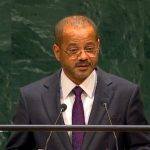
New York, June 27, 2026 (SUNA) — Sudan’s Permanent Representative to the United Nations, Ambassador Al-Harith Idris, has called for the Rapid Support Forces (RSF) militia to be designated a terrorist organization, arguing that it meets the legal elements of terrorism and genocide. He also held what he described as the “negative neutrality” of some international actors responsible for prolonging the war and providing political cover for the militia to continue its violations against civilians. Addressing the UN Security Council, Idris said the continuation of the war despite repeated international condemnations stems from the failure of some parties to fulfil their moral and legal obligations, noting that this approach has encouraged the militia to persist in committing atrocities. He stated that the militia has committed crimes amounting to genocide, including executions, rape, sexual slavery, and the targeting of civilians, including persons with disabilities. He added that the RSF militia has carried out more than 200 drone attacks in North Kordofan, while continuing efforts to advance plans for partition, establish parallel governing structures and a parallel central bank, and receive continued support from the United Arab Emirates (UAE) for the RSF militia and its allied foreign mercenaries. Idris said the militia has opened additional military fronts across the Chadian and Libyan borders and has been enabled to acquire advanced weaponry, including drones, electronic jamming and air defence systems. He added that such support also includes sustained financing, political and media backing, the transfer of militia leaders abroad for medical treatment, and facilitation of gold smuggling operations. Sudan’s Permanent Representative to the United Nations further disclosed the existence of a logistical support centre used to transport Emirati supplies to the militia in violation of UN Security Council Resolution 1591. He noted that the same facility is also used to transport fighters, weapons shipments, combat vehicles, and air defence systems into Sudanese territory in South Blue Nile Region, as well as to establish supply and logistics lines in the town of Al-Kormuk.. He pointed to the presence of a secret training camp in the region under militia control, adding that military convoys and combat vehicles have participated in operations in southern Blue Nile State, while the Central African Republic border is being used as a logistical corridor for foreign fighters. Got it. Here is the revised, polished version without using “alleged”:Idris also revealed complex networks for transporting mercenaries, including Colombian nationals, facilitated through routes passing via the United Arab Emirates, Libya, and Chad before reaching Darfur.He said Nyala Airport has become the militia’s main nighttime supply base, with additional dirt airstrips prepared to support military transport operations. The envoy highlighted the conditions of detainees in militia-held areas, saying they are subjected to serious abuses, including torture and organ trafficking, and called for urgent international intervention.He urged the UN Security Council, the United Nations and the International Committee of the Red Cross to ensure unrestricted access to detention facilities, provide protection and humanitarian assistance, and launch independent investigations to hold perpetrators accountable. Ambassador Al-Harith Idris reaffirmed Sudan’s commitment to facilitating humanitarian access, noting that several airports, including Wad Madani, Kadugli, El Obeid and Al-Damazin, have been opened as humanitarian hubs for aid delivery.He said the government has provided more than 68% of the needs of affected populations, while UN humanitarian funding has reached only 37.2%, creating a major humanitarian gap affecting millions. He also disclosed that criminal cases have been filed against the militia, including thousands of cases of murder, rape and enforced disappearance, with several already referred to courts under Sudan’s policy of ending impunity. He concluded by highlighting the extensive destruction inflicted by the militia on infrastructure, including thousands of government and service buildings, severe damage to the health and electricity sectors, and economic losses estimated at approximately US$771 billion.BH/BH