ENV-KUWAIT-SUSTAINABLITYKuwait strengthens environmental sustainability through strategic initiativesBy Zahra Al-Kadhmi

HLT-KUWAIT-SURGERYKuwait advances health sector with robotic, remote surgeryBy Mohammad Al-Moseb

Saudi Arabia’s Voluntary Carbon Market Fuels the Shift to a Low-Carbon

Under UAE President’s directives, UAE launches urgent relief response for Ghana flood victims

New York, Sept. 29 (Petra) — The United Nations General Assembly
(UNGA) held a high-level meeting Tuesday to commemorate the
International Day for the Total Elimination of Nuclear Weapons,
aiming to raise awareness of the threat posed by nuclear weapons and
contribute to mobilizing efforts toward the shared goal of a world
free of such weapons.
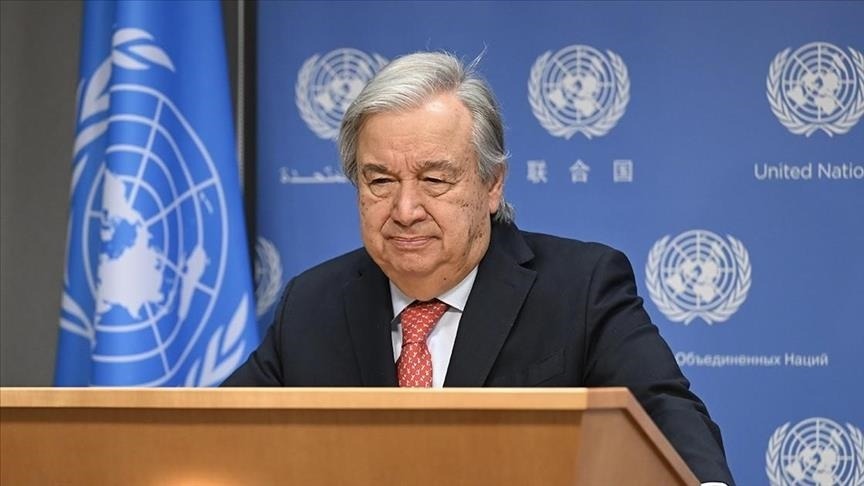
UN Secretary-General Antonio Guterres said in an address to the
meeting that the world is passing through “the most dangerous nuclear
moment since the end of the Cold War,” pointing to the expansion and
modernization of nuclear arsenals, escalating nuclear posturing, and
growing risks of miscalculation due to technological developments.
Guterres expressed concern over the expiration of the New START
Treaty (the New Strategic Arms Reduction Treaty) and the failure of
the 11th Review Conference of the Treaty on the Non-Proliferation of
Nuclear Weapons (NPT) to reach consensus on a substantive outcome,
adding, “At the moment when they are needed most, the guardrails
built over decades to contain these risks are collapsing.”
He added that the UN Disarmament Commission has once again ended its
three-year cycle without reaching substantive recommendations,
stressing that “these are not just diplomatic disappointments, they
are warning signs,” and warning that “escalating risks and collapsing
guardrails are a one-way road to catastrophe.”
He said humanity has lived under the shadow of the nuclear weapon for
more than eight decades, urging states to “choose a future free of
nuclear weapons.”
For his part, General Assembly President Khalilur Rahman said the
global stockpile has reached more than 12,000 nuclear warheads,
compared with a peak of about 70,000 warheads in 1986.
Khalilur Rahman stressed that “particularly alarming is that between
2,100 and 2,200 nuclear warheads are placed on high operational alert
on ballistic missiles, capable of being launched at extremely short
notice,” adding, “For the first time since the end of the Cold War,
the global nuclear stockpile is expected to grow again, as new and
more advanced warheads enter arsenals faster than retired ones are
dismantled.”
He noted that since Feb. 5, 2026, the New START Treaty has expired
without a replacement treaty, saying, “For the first time since 1972,
there are no binding limits imposed on strategic nuclear arsenals.”
//Petra// AF