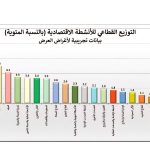
Jordan’s Q2 2026 GDP Expands 3.0%, Outperforming Regional Headwinds, International Forecasts
ENV-KUWAIT-SUSTAINABLITYKuwait strengthens environmental sustainability through strategic initiativesBy Zahra Al-Kadhmi

HLT-KUWAIT-SURGERYKuwait advances health sector with robotic, remote surgeryBy Mohammad Al-Moseb

Saudi Arabia’s Voluntary Carbon Market Fuels the Shift to a Low-Carbon

Speaking at the opening of a roundtable discussion organized by the National Observatory of Migration, Reybet-Degat explained that the choice made by the Kingdom was articulated in 2013 within the framework of the National Strategy for Immigration and Asylum (SNIA), “based on law and a deeply human approach to mobility.”
“It is essential to never lose sight of the choice Morocco has made and this very solid foundation that is reflected […] in the proposal for humane border management,” emphasized the UN official. The SNIA, according to him, carries “strong international, north-south and African potential.”
He noted, in this regard, that the phenomenon of mixed migratory movements remains extremely complex and concerns the entire North African region and sub-Saharan Africa. The UNHCR has, in this context, adopted a policy of supporting protection and assistance along migratory routes, in close collaboration with the International Organization for Migration.