Jordan’s Q2 2026 GDP Expands 3.0%, Outperforming Regional Headwinds, International Forecasts

ENV-KUWAIT-SUSTAINABLITYKuwait strengthens environmental sustainability through strategic initiativesBy Zahra Al-Kadhmi

HLT-KUWAIT-SURGERYKuwait advances health sector with robotic, remote surgeryBy Mohammad Al-Moseb

Saudi Arabia’s Voluntary Carbon Market Fuels the Shift to a Low-Carbon

National Museum Organises Cultural
Event in Collaboration with Chechen State Pedagogical University
Muscat, 15 Oct 2026 (ONA) — The
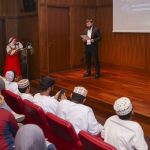
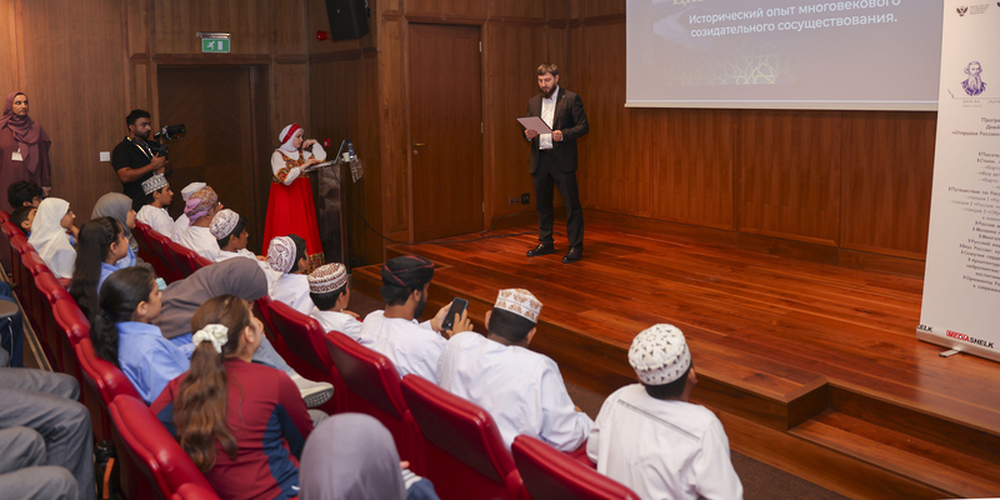
National Museum, represented by its Learning Centre, organised a cultural event
entitled “Russian Language Days” in collaboration with Chechen State
Pedagogical University in the Russian Federation, from 14 to 15 October 2026.
The event was attended by school students, members of the Russian community and
Russian-speaking residents, alongside individuals interested in cultural
affairs.
The event, the third of its kind,
was organised as part of ongoing efforts to strengthen cultural dialogue and
educational and cultural cooperation between the Sultanate of Oman and the
Russian Federation, while expanding partnerships with relevant international
institutions. It aimed to promote communication and mutual understanding
between peoples, provide opportunities to explore various aspects of Russian
culture, including its literature, arts and language, and highlight its
cultural diversity and rich creative and intellectual heritage.
The programme featured a range of
activities, including “Poems Living in the Family”, commemorating the 120th
anniversary of the birth of Russian poet Agnia Barto. The activities included a
video competition entitled “Barto in Our Family”, a children’s drawing
competition inspired by her poems entitled “Barto – the Voice of Childhood”, and
an interactive workshop entitled “My Barto”.
The programme also featured short
theatrical performances inspired by the works of Russian writer Mikhail
Saltykov-Shchedrin, alongside a musical and educational session entitled
“Harmony of Hearts: Native Motifs”, which explored songwriting as a means of
preserving moral values and fostering intercultural dialogue. It also included
a discussion session entitled “Architecture of Multilingualism: Neurolinguistic
Foundations of Raising Bilinguals”, addressing the preservation and development
of the Russian language within families, as well as multilingualism and its
educational and scientific foundations.
The artistic and practical component
of the programme included a series of interactive workshops focusing on
traditional handicrafts. Among these was “Ornaments of Russia: Art in Modern
Design”, which introduced participants to traditional Russian decorative
patterns and their application in contemporary art, as well as a workshop
entitled “Multifaceted Russia”. The programme also featured educational
workshops on Arabic calligraphy and traditional Old Russian script, known as
“Vyaz”. In addition, a discussion session entitled “Islamic Russia: The Path of
Unity” introduced audiences to the history, heritage and contemporary life of
Muslim communities in the Russian Federation, highlighting their role within
its multicultural and multi-faith society.
The programme further included
interactive activities entitled “Mosaic of the Peoples of Russia” and “Taste of
Russia: Cuisine of the Peoples of Russia”, offering visitors an opportunity to
explore aspects of the Russian Federation’s cultural and social diversity
through its identity and inherited traditions. An entertaining competition on
the Russian language and culture, entitled “The Russian Quest”, was also held,
introducing participants to the Russian alphabet and vocabulary associated with
traditional clothing and famous landmarks.
The programme was accompanied by a
dedicated display of Russian publications translated into Arabic, covering
Russian culture, history and traditions, alongside selected works of Russian
literature and art. The display provided visitors with an opportunity to
explore aspects of Russia’s intellectual and creative output in Arabic.
It is worth noting that Chechen
State Pedagogical University is one of the oldest higher education institutions
in Grozny, Russian Federation. Established in 1980, the university has
approximately 30 departments and currently comprises five faculties and institutes.
It offers around 60 educational programmes across various disciplines,
including philology, history, physics, mathematics, physical education,
pedagogy, primary education teaching methodologies, physical geography, foreign
language teaching.
— Ends/Khalid