Saudi Arabia’s Voluntary Carbon Market Fuels the Shift to a Low-Carbon

Under UAE President’s directives, UAE launches urgent relief response for Ghana flood victims

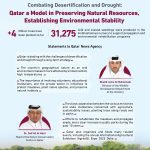
Combating Desertification and Drought: Qatar a Model in Preserving Natural Resources, Establishing Environmental Stability
UAE allocates US$30 million for emergency humanitarian response in El Obeid, calls for civilian protection, safe humanitarian aid access in Sudan

Ramtha, Dec. 23 (Petra) – The King Abdullah University Hospital (KAUH) has performed its first catheter-based cardiac ablation procedures for the treatment of cardiac arrhythmias, using advanced electrophysiology and cardiac catheterization technologies.
In a statement on Tuesday, the hospital said the procedures employed three-dimensional electroanatomical mapping systems under the supervision of Consultant Cardiologist and Cardiac Electrophysiologist Basil Abu El-Haija. All procedures were completed successfully without complications, and patients were discharged in stable condition, Abu El-Haija stated.
He explained that cardiac ablation provides a definitive treatment for selected arrhythmias, reducing the risk of serious complications such as ischemic stroke and cardiomyopathy. The procedures also help alleviate arrhythmia-related symptoms, including dyspnea, dizziness, chest discomfort, and fatigue.
He added that the hospital plans to expand its electrophysiology program to include left-sided ablation procedures for atrial fibrillation and other complex arrhythmias using pulsed field ablation, a cutting-edge technique that allows precise, tissue-selective targeting of abnormal cardiac pathways while enhancing procedural safety. Abu El-Haija said this achievement was made possible by the hospital’s administration, which provided the infrastructure and support necessary to implement advanced cardiac technologies.
Hospital Director General Hassan Balas praised the medical and administrative teams for their ongoing efforts to deliver high-quality patient care. He emphasized that investing in skilled human capital is fundamental to the success of any advanced healthcare system.
Medical Department Director Assem Qudah said the hospital’s achievements in treating complex and rare cardiac conditions reflect the advanced training and professional expertise of the medical staff, contributing to improved clinical outcomes and raising the standard of healthcare services.
//Petra// NQ
23/12/2025 16:13:32