Jordan’s Q2 2026 GDP Expands 3.0%, Outperforming Regional Headwinds, International Forecasts
ENV-KUWAIT-SUSTAINABLITYKuwait strengthens environmental sustainability through strategic initiativesBy Zahra Al-Kadhmi

HLT-KUWAIT-SURGERYKuwait advances health sector with robotic, remote surgeryBy Mohammad Al-Moseb

Saudi Arabia’s Voluntary Carbon Market Fuels the Shift to a Low-Carbon

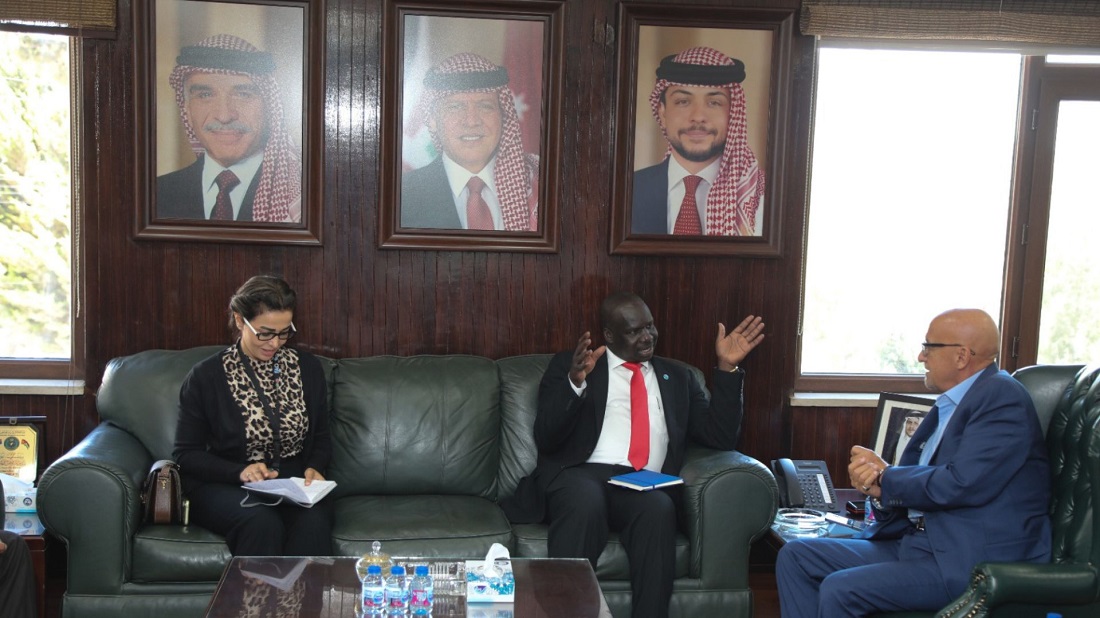
Amman, May 24 (Petra) — Minister of Water and Irrigation Raed Abu
Soud met on Sunday with the Acting Resident Representative of the
Food and Agriculture Organization of the United Nations (FAO) in
Jordan, Paul Obio, to discuss ways to enhance cooperation to address
water challenges and climate change. The talks focused heavily on the
project “Building Climate Change Resilience in Jordan through
Efficiency in Agriculture Water Use” and the regional Water Scarcity
Initiative.
Abu Soud emphasized the project’s strategic importance, noting that
it is Jordan’s first initiative funded by the Green Climate Fund.
Targeting the governorates of Madaba, Karak, Tafilah, and Ma’an, the
project aims to optimize water use efficiency within the agricultural
sector and strengthen the capacity of local communities and
institutions to adapt to the impacts of climate change. The minister
also underscored the pivotal role of the regional Water Scarcity
Initiative in safeguarding water and food security, optimizing water
resource management, and expanding the utilization of
non-conventional water sources, including treated and desalinated
water.
For his part, Obio praised Jordan’s ongoing efforts to manage severe
water scarcity. He highlighted the value of collaboration between the
FAO and the ministry on both national and regional levels,
particularly regarding transboundary water management and fostering
coordination between the water and agricultural sectors.
Obio explained that the climate resilience project is built upon
three primary pillars, which include improving water security and
scaling up the use of non-conventional water resources, supporting
climate-smart agricultural practices and institutional capacity
building, and investing in education and community awareness
regarding modern technologies. He added that this framework
contributes to strengthening Jordan’s climate resilience and ensures
the active engagement of all relevant stakeholders throughout the
execution phases while integrating a gender perspective to guarantee
inclusive participation and equal opportunities.
Furthermore, Obio noted that the FAO’s Water Scarcity Initiative
serves as a strategic framework to address acute water shortages
across the Near East and North Africa region. It achieves this by
improving water resource management, deploying climate-smart farming
and water-harvesting techniques, supporting the reuse of recycled
water in agriculture, and promoting international cooperation to
tackle water deficits in the agricultural sector.
//Petra// AF