Jordan’s Q2 2026 GDP Expands 3.0%, Outperforming Regional Headwinds, International Forecasts
ENV-KUWAIT-SUSTAINABLITYKuwait strengthens environmental sustainability through strategic initiativesBy Zahra Al-Kadhmi

HLT-KUWAIT-SURGERYKuwait advances health sector with robotic, remote surgeryBy Mohammad Al-Moseb

Saudi Arabia’s Voluntary Carbon Market Fuels the Shift to a Low-Carbon

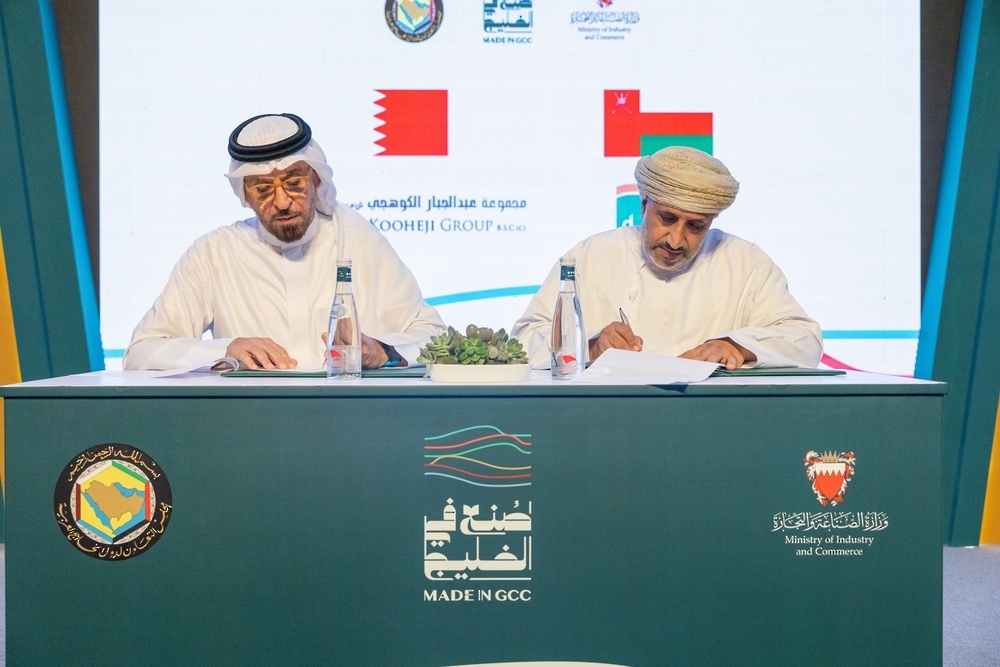
Six
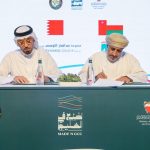
Omani-Bahraini Agreements Signed to Expand Exports, Strengthen Trade
Partnerships
Manama,
7 Oct 2026 (ONA) — Omani companies signed six commercial agreements and
memoranda of understanding with companies from the Kingdom of Bahrain.
The
agreements signed on the sidelines of the Sultanate of Oman’s participation in
the “Made
in the GCC 2026” forum and exhibition, a step reflecting the growing
opportunities for trade cooperation between the two countries and supporting
the access of national products to Gulf markets.
The
move comes within the efforts of the Ministry of Commerce, Industry and
Investment Promotion, represented by “Oman Exports,” to open new
markets for Omani companies and transform their external participations into
export opportunities and sustainable trade partnerships.
These
agreements and the Omani participation in the dialogue sessions come within the
Ministry’s endeavours to maximise the economic and knowledge returns from the
Sultanate of Oman’s presence at exhibitions, forums and regional and
international economic gatherings, by promoting national industries and
products, enabling Omani companies to reach importers, distributors and trade
partners, alongside highlighting national expertise and competencies and
exchanging experiences in the fields of industry, innovation, finance,
logistics services and supply chains.
The
forum witnessed the participation of a number of Omani talents and experts in
the accompanying dialogue sessions, which discussed the future of GCC industry,
human resource development, the transition towards smart factories, the
development of supply chains and financing and industrial partnerships.
In
the session “Gulf Talent between Qualification and Employment,” Eng.
Ali bin Abdullah Al Aysari, Executive Director of the Joint Labour Office at
the Ministry of Labour, participated. The session addressed the development and
qualification of Gulf talent in line with the needs of the industrial sector
and the requirements of the Fourth Industrial Revolution, and the enhancement
of quality employment opportunities.
Dr.
Ayman bin Abdullah Al Fadli, Chief Executive Officer of the Industrial
Innovation Academy, also participated in the session “Smart Factories and
Open Industrial Innovation”. The session focused on the role of advanced
industrial technologies and smart factories in raising productivity, efficiency
and competitiveness, and enhancing innovation and cooperation between the
industrial sector and research entities.
In
the session “Infrastructure and Gulf Supply Chains,” Dr. Mahmoud bin
Sakhi Al Balushi, Chief Executive Officer of Al Madina Logistics Services,
participated. The session discussed ways to enhance connectivity between
industrial cities, economic zones, ports and border crossings, and to
facilitate customs clearance procedures and the movement of products between
the GCC states.
Hamad
bin Salim Al Harthy, Deputy Chief Executive Officer of the Development Bank,
participated in the session themed “Financing Mechanisms and Industrial
Partnerships,” which shed light on the role of financing institutions,
development funds and partnerships in supporting the growth of the industrial
sector, developing appropriate financing solutions, and enhancing the capacity
of industrial projects to grow and attract investments.
Eng.
Khalid bin Saleem Al Qassabi, Director-General of Industry at the Ministry of
Commerce, Industry and Investment Promotion, said that the agreements signed on
the sidelines of the “Made in the GCC 2026” forum and exhibition
reflect the growing ability of Omani industrial products to compete and reach
Gulf markets. He noted that the diversity of the agreements across a number of
industrial sectors confirms the evolution of national industry’s capabilities
in terms of quality, production and meeting the requirements of target markets.
He
added that the Ministry is working to strengthen the industrial sector’s
connection to external markets and to encourage Omani factories to expand into
exports and build sustainable trade partnerships, in a manner that contributes
to raising the added value of national products and diversifying the base of non-oil
exports. He explained that the Gulf market represents an important extension of
Omani industry and an opportunity to enhance industrial and trade integration
among the GCC states.
For
his part, Mahmoud bin Sulaiman Al Yazidi, General Supervisor of the Omani
pavilion participating in the exhibition — Oman Exports at the Ministry of
Commerce, Industry and Investment Promotion, explained that the agreements
represent direct commercial outputs of the efforts exerted by “Oman Exports”
in connecting Omani companies with importers, distributors and trade partners
in target markets, and in transforming participation in exhibitions and
economic forums into export opportunities and actual contracts that contribute
to enhancing the spread of national products.
He
noted that export promotion efforts are not confined to participation in
exhibitions, but also encompass preparing Omani companies for market access,
building direct communication channels with buyers and distributors, holding
bilateral trade meetings and following up on the opportunities arising from
them, helping companies build long-term trade relationships and open new sales
and distribution channels. He affirmed that the agreements signed with Bahraini
companies reflect the promising opportunities for increasing the presence of
Omani products in the Bahraini market and launching from there towards broader
Gulf and regional markets.
The
Ministry continues to work on transforming external participations into
tangible economic results by organising bilateral trade meetings, exploring
promising markets and opportunities, and supporting companies in building
distribution networks and sustainable partnerships and opening new export
channels, thereby enhancing the competitiveness of the Omani product and
contributing to the growth and diversification of non-oil exports and the
entrenchment of the presence of Omani industry in Gulf, regional and
international markets.
—
Ends/Khalid