Jordan’s Q2 2026 GDP Expands 3.0%, Outperforming Regional Headwinds, International Forecasts
ENV-KUWAIT-SUSTAINABLITYKuwait strengthens environmental sustainability through strategic initiativesBy Zahra Al-Kadhmi

HLT-KUWAIT-SURGERYKuwait advances health sector with robotic, remote surgeryBy Mohammad Al-Moseb

Saudi Arabia’s Voluntary Carbon Market Fuels the Shift to a Low-Carbon

Bisya-Salut Archaeological Site’s Visitor Centre in
Bahla Documents 5,000 Years of History, Boosts Cultural Tourism
Bahla, 7 October 2026 (ONA) — The
Bisya and Salut Archaeological Site’s Visitor Centre in the Wilayat of Bahla,
A’Dakhiliyah Governorate, offers researchers and heritage enthusiasts an
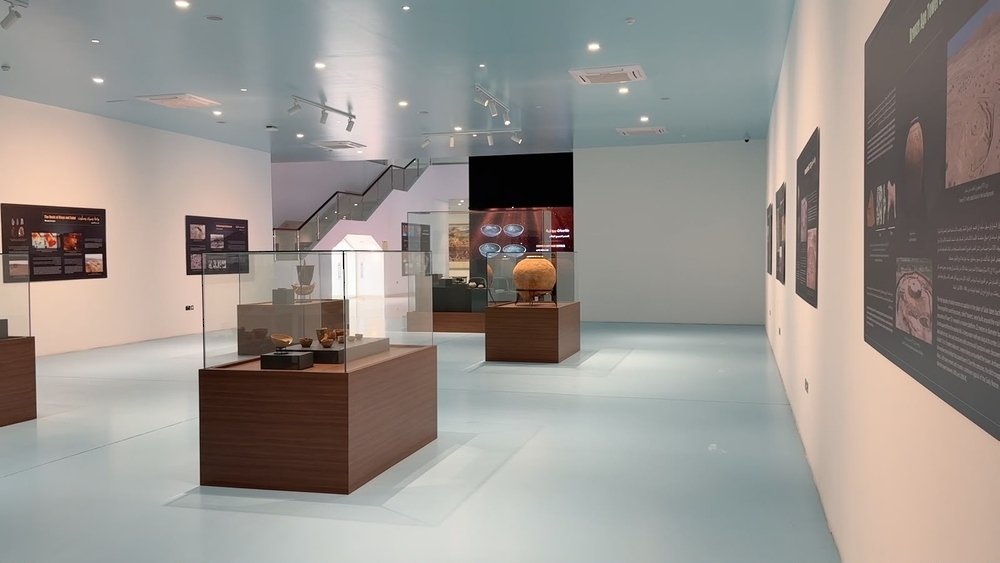
opportunity to explore the history of human settlements in Oman. The centre, which showcases
archaeological finds dating back about 5,000 years, unveils various aspects of
human life and documents the area’s commercial ties rooted in the history of the ancient
world.
The centre houses artefacts that
were unearthed at the archaeological site and offers an opportunity to explore the site’s architectural
features, including forts, towers, cemeteries and the relics of an ancient
village. This offers visitors the options to examine the site’s history through
artefacts and structures that illustrate life during the Bronze Age, the Iron
Age and early Islamic area, while highlighting the knowledge that ancient inhabitants
possessed in terms of landmark construction skills, craftsmanship and management of water resources.
Ali bin Saif Al Shukaili, Director
of the Bisya and Salut Archaeological Site’s Visitor Centre, said that the
site’s historical and archaeological significance stems from its 5,000-year
timeline, as well as the evidence and artefacts it houses. The relics document details
of human life, the settlers’ relationship with the surrounding environment and their ability to utilize its resources.
Al Shukaili pointed out that the discoveries
provide insights into methods of sourcing of water supplies and their use to meet the daily needs of the population during those eras. He added
that some of the discovered archaeological artefacts point to trade links
connecting the region with India, the Sindh (civilization), the Levant and Mesopotamia. This
enables researchers to study aspects of cultural interaction and exchange
between the region and the civilizations of the ancient world, lending the site
a scientific value that transcends its geographical boundaries.
— Ends/Bishara