
Jordan’s Q2 2026 GDP Expands 3.0%, Outperforming Regional Headwinds, International Forecasts
ENV-KUWAIT-SUSTAINABLITYKuwait strengthens environmental sustainability through strategic initiativesBy Zahra Al-Kadhmi

HLT-KUWAIT-SURGERYKuwait advances health sector with robotic, remote surgeryBy Mohammad Al-Moseb

Saudi Arabia’s Voluntary Carbon Market Fuels the Shift to a Low-Carbon

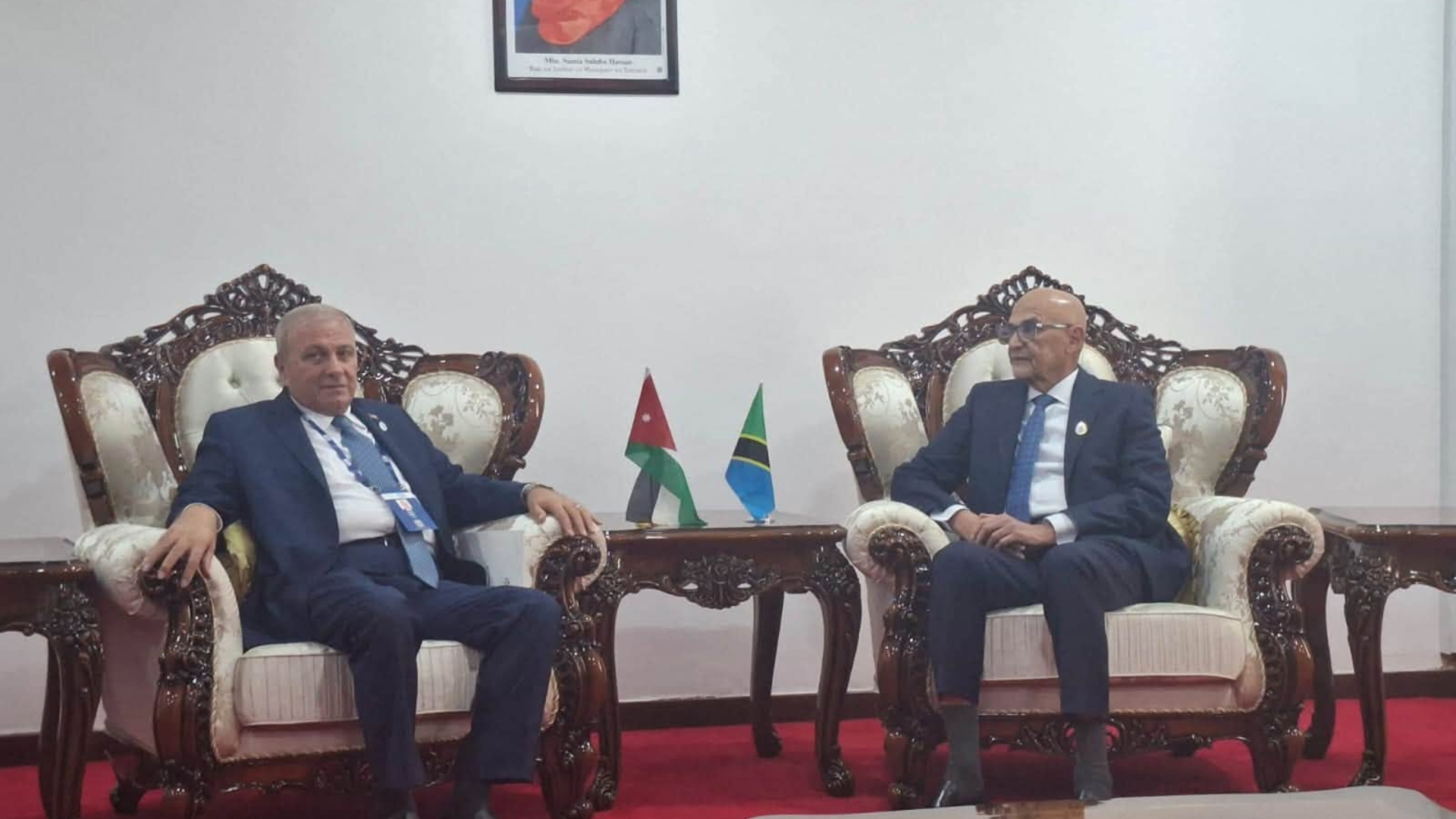
Amman, Oct. 8 (Petra) – First Deputy Speaker of the Lower House
Khamis Atieh met Thursday with Tanzanian National Assembly Speaker
Mussa Zungu on the sidelines of the 153rd Inter-Parliamentary Union
(IPU) Assembly, with talks focusing on parliamentary relations and
developments in Palestine.
Atieh stressed the importance of Jordanian-Tanzanian relations and
said parliamentary engagement has become an important channel for
strengthening understanding between countries and peoples.
Addressing the Palestinian issue, Atieh said the killing,
destruction, and targeting of civilians in the Gaza Strip and the
West Bank constitute a major humanitarian tragedy that must not be
normalized over time.
He said Jordan’s position goes beyond seeking a ceasefire and
includes opposition to policies aimed at displacing Palestinians from
their land. Atieh reiterated that displacement is a “red line” for
Jordan, warning that forcing Palestinians from their land would
undermine the Palestinian cause and the rights of the Palestinian
people.
Atieh also highlighted Jordan’s role in protecting Islamic and
Christian holy sites in Jerusalem and condemned the attacks on
Al-Aqsa Mosque under the protection of Israeli occupation forces and
with the participation of members of the radical Israeli government.
He cited the efforts of His Majesty King Abdullah II to halt the war,
facilitate humanitarian aid, protect civilians, and reject
displacement, the alternative homeland concept, and attempts to
liquidate the Palestinian cause.
Atieh said Jordan continues to bear significant consequences from
regional instability while maintaining its call for peace, stability,
and respect for international law. He stressed that lasting peace
must be based on justice and rights rather than force or imposed
realities.
He also underscored the role of parliaments in defending
international law, peoples’ right to freedom and self-determination,
and efforts to end Palestinian suffering.
Atieh said Jordan and Tanzania, despite their geographic distance,
share an interest in upholding state sovereignty, peoples’ rights,
and rejecting solutions imposed by force, adding that parliamentary
cooperation can provide a platform for dialogue and coordination on
these issues.
He summarized Jordan’s position as calling for an end to the killing,
unhindered humanitarian assistance to Palestinians, the right of
Palestinians to remain on their land, and the realization of their
legitimate rights.
For his part, Zungu praised the Jordanian parliamentary delegation’s
positions during the IPU Assembly and stressed the importance of
building on parliamentary relations between the two countries.
He also praised King Abdullah II’s address to the 81st session of the
United Nations General Assembly and said Tanzania and Jordan share
positions on several issues of common interest.
Zungu described Jordanian-Tanzanian relations as longstanding and
noted that developments in the Middle East have had wider
repercussions, including higher energy prices.
//Petra// AO