Jordan’s Q2 2026 GDP Expands 3.0%, Outperforming Regional Headwinds, International Forecasts

ENV-KUWAIT-SUSTAINABLITYKuwait strengthens environmental sustainability through strategic initiativesBy Zahra Al-Kadhmi

HLT-KUWAIT-SURGERYKuwait advances health sector with robotic, remote surgeryBy Mohammad Al-Moseb

Saudi Arabia’s Voluntary Carbon Market Fuels the Shift to a Low-Carbon

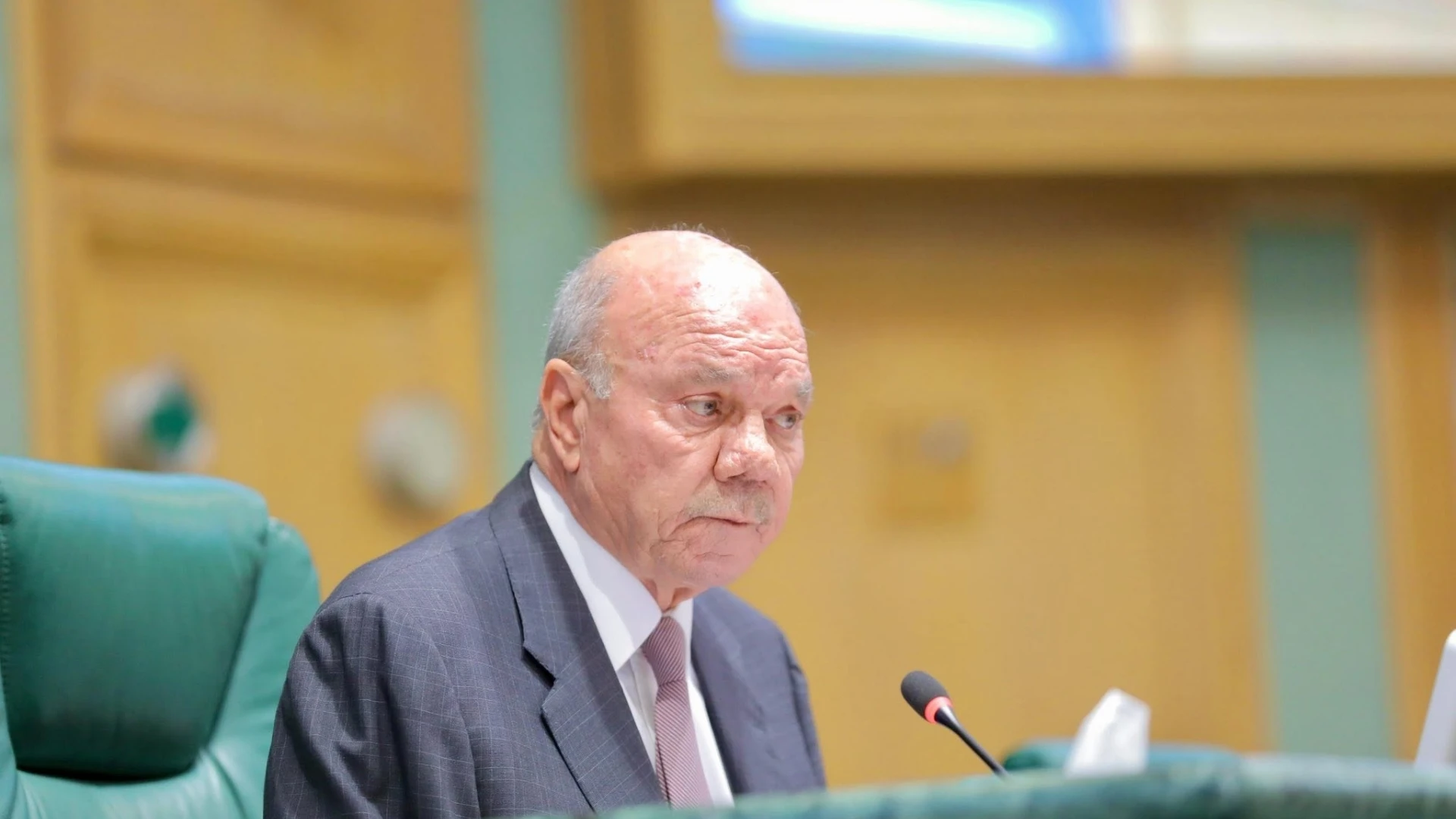
Amman, Oct. 16 (Petra)– Senate Speaker Faisal Al-Fayez on Friday
called on parliaments around the world to play an active role in
responding to contemporary global crises, stressing that the
challenges facing the world require strong parliaments capable of
protecting their peoples and building a more stable future.
Al-Fayez said conflicts and challenges around the world were becoming
increasingly complex, but the key issue was how to address them.
Responding to these challenges, he noted, was not the sole
responsibility of governments but required genuine partnerships among
civil society institutions and various international bodies, with
parliaments playing a central and effective role.
He made the remarks in a speech at the International Conference of
Speakers of Parliaments, which opened in Rome on Friday under the
theme “The Role of Parliaments in Addressing and Responding to
Contemporary Crises.” The conference brought together a broad range
of parliamentary speakers and representatives of international
parliamentary organizations and bodies. Jordan’s Ambassador to Rome,
Qais Abu Diyeh, also attended the event.
Al-Fayez pointed out that, amid the growing number of crises, none
could be considered the exclusive concern of a single country. These
challenges include escalating climate crises, economic and financial
difficulties, conflicts threatening international peace and security,
and emerging digital and cybersecurity threats.
According to a statement issued by the Senate, Al-Fayez briefed
parliamentary speakers and representatives of international
parliamentary organizations on the key messages conveyed by His
Majesty King Abdullah II in his address to the United Nations General
Assembly.
He said the King’s speech had laid bare the realities of the
conflicts, crises and challenges facing the international community,
as well as their political, security and economic consequences and
their impact on international peace, human dignity and people’s right
to live in freedom and security.
Al-Fayez added that the King had urged the international community to
assume its responsibilities in safeguarding international peace and
stability, ending violations and respecting international law. The
King also stressed the need to move from managing crises to
addressing their root causes, and from merely stating positions to
taking practical measures that protect human beings and their right
to life.
“What is the value of international law if it can be ignored for
decades. And what is the value of international institutions if the
rules are not the same, the rights are not the same, and human
dignity is not the same?” Al-Fayez quoted the King as asking.
He said that, as the international community looked on, the Israeli
government had continued for eight decades to commit war crimes
against the Palestinian people in the Gaza Strip and the occupied
West Bank, according to the King’s address. He also pointed to
continued violations against Muslim and Christian holy sites in
Jerusalem, Israeli government efforts to Judaize the Jordan Valley,
and infringements on people’s freedoms and dignity.
Al-Fayez questioned why the international community’s mechanisms for
punishment and accountability remained ineffective when it came to
Israel, and why the Israeli government continued to evade
accountability and defy international legitimacy resolutions and
international humanitarian law.
He also highlighted the King’s assertion that demolishing Palestinian
homes to expand settlements in the West Bank was not law enforcement
but forced displacement, while seizing occupied land was not land
registration but de facto annexation.
Similarly, he said, Israeli checkpoints across the occupied West Bank
were not security infrastructure but a system of repression, while
systematic attacks on Palestinian communities were not merely
“settler riots” but part of an ongoing Israeli policy.
Turning to the challenges facing parliaments, Al-Fayez said rapid
global transformations had created unprecedented pressures on their
legislative and oversight functions. These challenges were no longer
limited to traditional political crises but had expanded to encompass
complex technological, social and environmental issues.
He identified the digital divide and the rapid pace of technological
advancement as major challenges, saying parliaments were facing a
technological surge that required swift responses to keep pace with
change.
Parliaments were also experiencing a widening trust gap with the
public, he said, requiring greater transparency to counter fake news
and attempts to undermine parliamentary work. In addition,
cross-border crises, including climate change, epidemics and economic
instability, required parliamentarians to adopt an international
rather than exclusively domestic perspective.
Al-Fayez stressed that addressing crises and responding effectively
to them required parliaments to become more flexible and better
equipped to mitigate their consequences. Parliaments, he said, were
not merely legislative institutions responsible for enacting laws but
also the voice and conscience of the people.
During times of crisis, he added, their role became even more
important, encompassing efforts to end conflicts, promote social
justice, advance education and healthcare, bridge the digital divide
between the Global North and South, address cybersecurity threats and
ensure the responsible and ethical use of modern technologies to
protect individual privacy. These objectives could be achieved
through appropriate legislation and stronger parliamentary oversight.
He said cooperation, experience-sharing and coordination among
parliaments and executive authorities could help establish
early-warning networks and enable collective pressure to secure
peaceful and just solutions to conflicts through dialogue and
responsible engagement.
Such cooperation could also help address the challenges of asylum and
displacement, climate change, sustainable development in conflict
zones, poverty and hunger, while reinforcing human rights, integrity
and transparency.
Al-Fayez emphasized that stronger partnerships among parliamentary
bodies, built through closer ties of friendship and cooperation,
would enhance their influence, expand their expertise, support
sustainable development and strengthen the foundations of peace and
security.
He added that effective parliamentary responses to crises required
stronger institutional capacities, mechanisms for rapid consultation
with experts, civil society and the private sector, and greater
international cooperation among parliaments.
“Many crises cannot be resolved in isolation from others. The role of
parliaments during crises is not that of a bystander, but of an
active and responsible partner,” Al-Fayez said.
He urged parliaments to take proactive measures and turn crises into
opportunities to strengthen preventive legislation, build more
resilient and equitable systems, and reinforce trust between citizens
and the state.
Concluding his speech, Al-Fayez cited data from the Stockholm
International Peace Research Institute (SIPRI), which estimated that
global military expenditure reached approximately $2.88 trillion in
2025. Estimates for 2026 put the figure at between $3.1 trillion and
$3.3 trillion.
He concluded by asking, “Can we say that we are living in a safe and
stable world?”
//Petra// MF