
Saudi Arabia’s Voluntary Carbon Market Fuels the Shift to a Low-Carbon

Under UAE President’s directives, UAE launches urgent relief response for Ghana flood victims

Combating Desertification and Drought: Qatar a Model in Preserving Natural Resources, Establishing Environmental Stability

UAE allocates US$30 million for emergency humanitarian response in El Obeid, calls for civilian protection, safe humanitarian aid access in Sudan

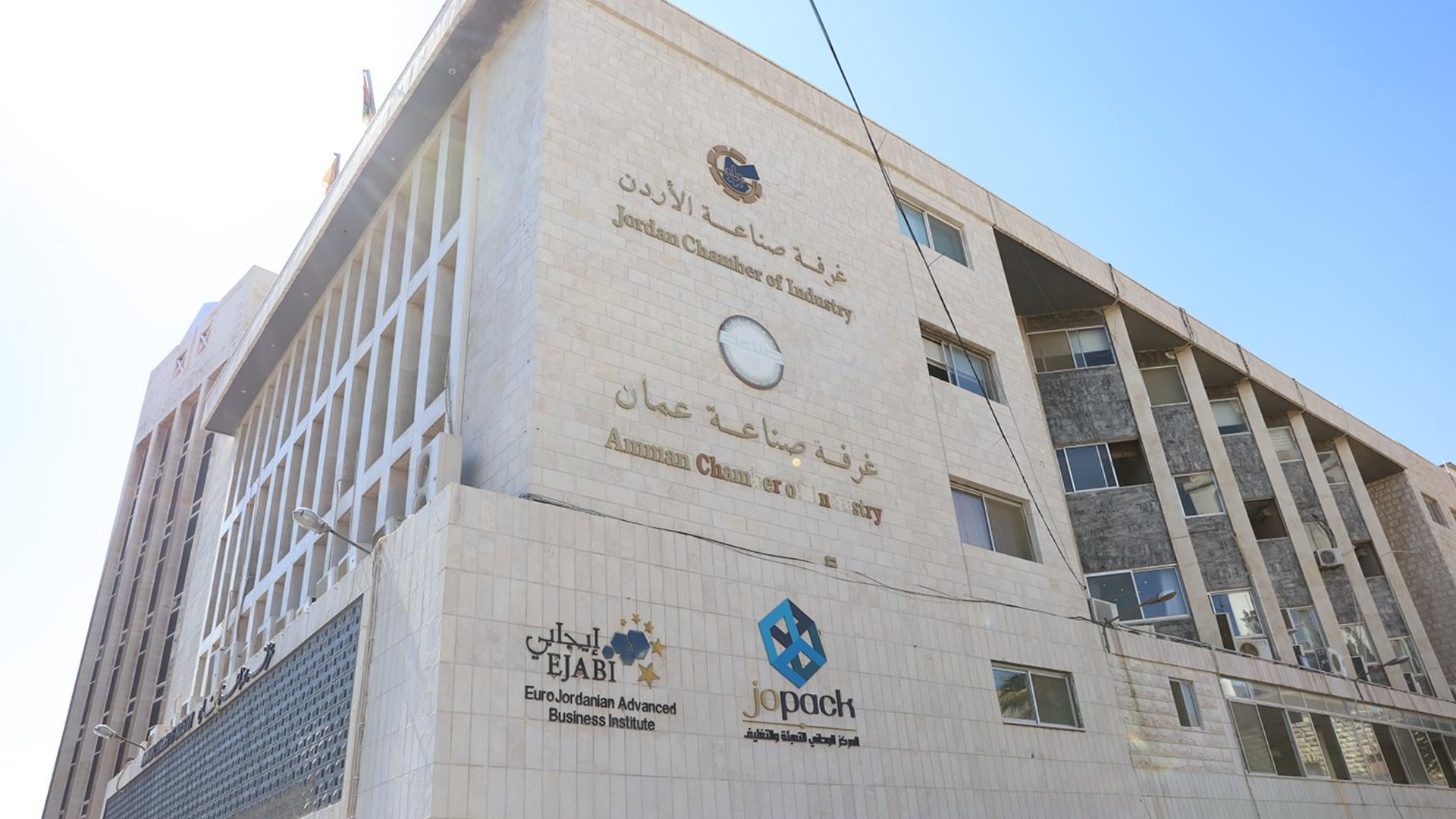
AMMAN, Sept. 12 (Petra) — Amman Chamber of Industry (ACI) exports
crossed the milestone threshold of five billion dinars during the
first eight months of the year, underscoring the resilience and
adaptability of Jordanian manufacturing in the face of regional
headwinds.
According to statistical data released by the chamber, total exports
reached 5.263 billion dinars over the eight-month period, up from
4.822 billion dinars during the corresponding timeframe last year,
marking a robust growth of 9.2 percent.
The data highlights an expanding geographical footprint, with
Jordanian goods penetrating new and non-traditional export
destinations across African, European, and non-Arab Asian nations.
Growth was widespread across nearly all industrial sectors, with the
notable exceptions of the leather and garments sector, alongside
engineering, electrical, and information technology industries, which
dipped by 0.3 percent and 9.4 percent, respectively. Conversely,
packaging, paper, cardboard, and office supplies led sectoral gains
with a 41.1 percent surge, closely followed by chemicals and
cosmetics, which jumped by 28.6 percent.
Four major trading partners–India, Iraq, the United States, and
Saudi Arabia–accounted for over half of total exports, collectively
absorbing goods valued at 2.750 billion dinars.
India retained its position as the top destination for Amman industry
exports, climbing 1.8 percent to 779 million dinars compared to 765
million dinars last year. Exports to Iraq witnessed a sharp 26.2
percent surge to reach approximately 769 million dinars, up from 609
million dinars. Shipments to Saudi Arabia rose 3.8 percent to 577
million dinars, while exports to the United States experienced a 23.4
percent contraction, dropping to 625 million dinars from 816 million
dinars.
Regional trade also saw positive momentum, with exports to Syria
rising 16.4 percent to roughly 266 million dinars, and shipments to
Palestine climbing 20 percent to 134 million dinars. Meanwhile,
exports to China recorded a striking 144.4 percent leap, reaching
approximately 204 million dinars compared to 83 million dinars during
the same period last year.
Additional gains were registered across a diverse array of
international markets, including Armenia, Spain, Australia, Bahrain,
the United Arab Emirates, Scotland, Sudan, Morocco, Somalia, Greece,
and Belgium.
Geographically, Arab countries maintained the lead as the primary
export destination at 2.669 billion dinars, followed by non-Arab
Asian states at 1.250 billion dinars, and North America at 666
million dinars. Exports to European Union member states stood at 337
million dinars, non-EU European nations recorded 186 million dinars,
African markets reached 69 million dinars, South America accounted
for 37 million dinars, and other global destinations absorbed 49
million dinars.
A sectoral breakdown of the exports based on certificates of origin
showed mining industries leading at 1.198 billion dinars, followed by
chemicals and cosmetics at 1.106 billion dinars, and foodstuffs,
agricultural, and livestock supplies at 714 million dinars.
Engineering, electrical, and IT sectors recorded 687 million dinars,
therapeutic and medical supplies reached 511 million dinars, and
leather and garments accounted for 427 million dinars. The remainder
comprised packaging and paper supplies at 248 million dinars,
plastics and rubber at 224 million dinars, construction industries at
131 million dinars, and wood and furniture industries at 16 million
dinars.
Established in 1962, the Amman Chamber of Industry currently
represents approximately 8,600 industrial establishments, which
collectively employ 159,000 workers and operate with a capital base
nearing five billion dinars.
//Petra// AA