ENV-KUWAIT-SUSTAINABLITYKuwait strengthens environmental sustainability through strategic initiativesBy Zahra Al-Kadhmi

HLT-KUWAIT-SURGERYKuwait advances health sector with robotic, remote surgeryBy Mohammad Al-Moseb

Saudi Arabia’s Voluntary Carbon Market Fuels the Shift to a Low-Carbon

Under UAE President’s directives, UAE launches urgent relief response for Ghana flood victims

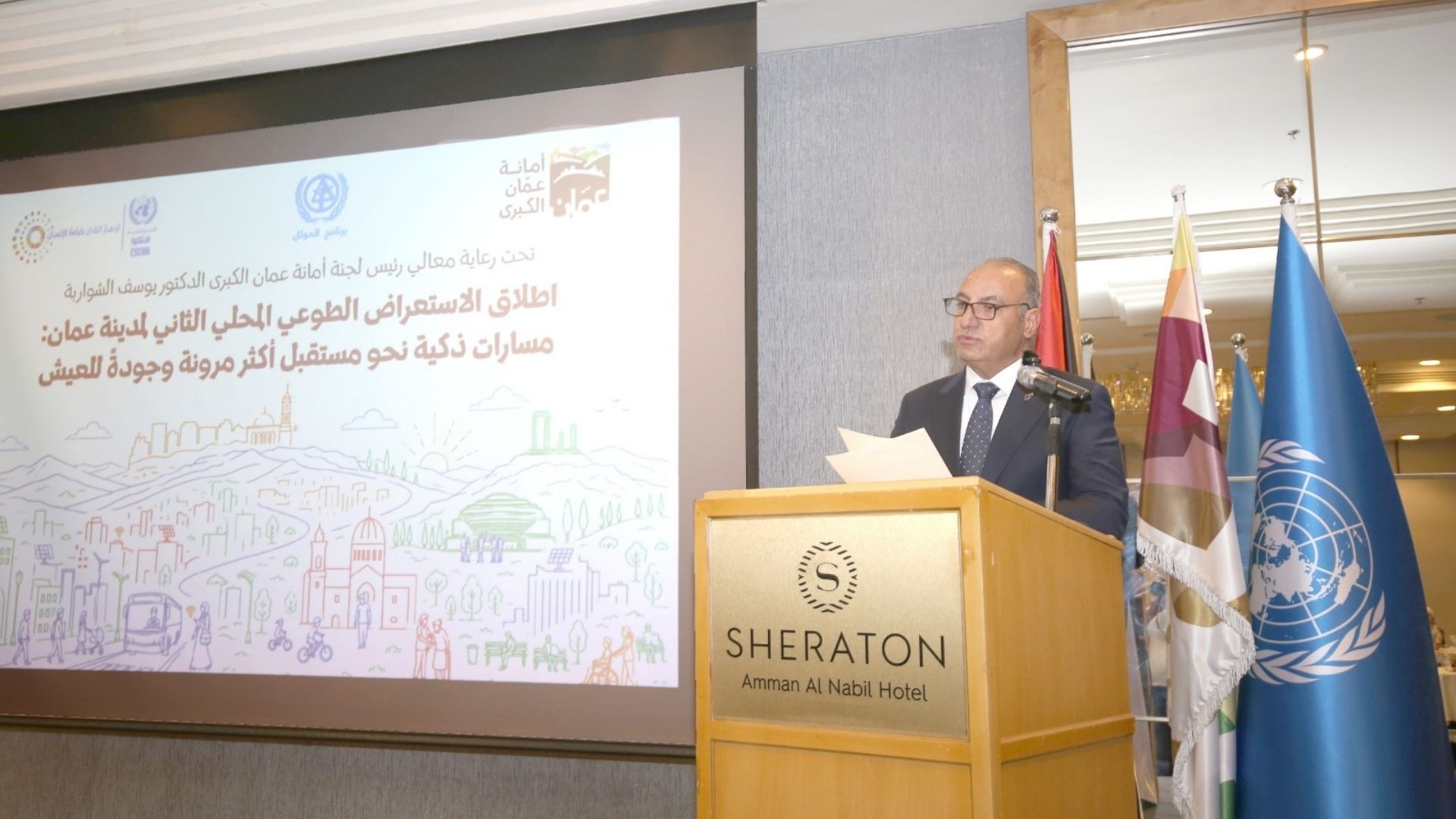
Amman, July 1 (Petra) – Greater Amman Municipality (GAM), in
partnership with the United Nations Human Settlements Program
(UN-Habitat) and the United Nations Economic and Social Commission
for Western Asia (ESCWA), launched Amman’s second Voluntary Local
Review, under the theme “Towards a Smart, Resilient, and Livable
City.”
The review focuses on 8 priority Sustainable Development Goals
covering health and well-being, gender equality, clean energy,
industry, innovation and infrastructure, reduced inequalities,
sustainable cities and communities, peace, justice and strong
institutions, and partnerships.
Addressing the launching ceremony, Amman Mayor Yousef Shawarbeh said
Amman has become the 2nd Arab city and the 10th worldwide to join the
Quality of Life Index platform.
Shawarbeh noted Amman is also the first capital globally to receive
the BSI Kitemark certification under the ISO 37106 international
standard for smart cities and communities.
The review assesses Amman’s progress toward the Sustainable
Development Goals (SDGs), identifies gaps and challenges, and
proposes practical recommendations to support inclusive urban
planning and strengthen the city’s resilience and sustainability.
The effort is launched coinciding with Jordan’s preparation of its
third Voluntary National Review, aimed to strengthen coordination
between local and national efforts to implement the 2030 Agenda and
align urban development with the Economic Modernization Vision and
Jordan’s National Urban Policy.
Shawarbeh said the review marks a “new stage in Amman’s efforts to
promote sustainable urban development, good governance and quality of
life.”
He said the process examines the city’s achievements and links their
axes with development priorities to support decision-making and
direct policies and investments toward projects with the greatest
impact on residents.
Shawarbeh noted Amman became the first Arab city to prepare a
Voluntary Local Review in 2022. The second review, he said, reflects
“institutionalization” of SDG localization and coordination among
local priorities, Royal directives, the 2023-2033 Economic
Modernization Vision, the National Urban Policy, and the third
Voluntary National Review.
The review was prepared under a “broad participatory” process
involving ministries, national institutions, the private sector,
universities, civil society organizations, and international
partners, he added.
In turn, UN-Habitat Jordan Program Manager Dima Abu Thiab said
linking Amman’s local review with Jordan’s national review provides a
leading model for localizing the SDGs and using community data, needs
and priorities to support national planning.
ESCWA Sustainable Urban Development Officer Sukaina Al-Nasrawi said
the review adopts an integrated approach that incorporates urban
resilience and smart-city development across the SDGs while
strengthening alignment between local and national priorities.
The review applies urban resilience and smart-city development as
analytical frameworks, combining innovation, adaptability, digital
transformation and forward-looking planning to address complex urban
challenges.
On its goals, the step is expected to support Jordan’s participation
in the High-Level Political Forum on Sustainable Development and
strengthen Amman’s position as a regional model for linking local
urban planning with national and international development
frameworks.
The review also provides a framework for translating recommendations
into implementable projects, guiding investment, strengthening
partnerships, and mobilizing resources to address current and future
urban challenges.
//Petra// AO