
ENV-KUWAIT-SUSTAINABLITYKuwait strengthens environmental sustainability through strategic initiativesBy Zahra Al-Kadhmi

HLT-KUWAIT-SURGERYKuwait advances health sector with robotic, remote surgeryBy Mohammad Al-Moseb

Saudi Arabia’s Voluntary Carbon Market Fuels the Shift to a Low-Carbon

Under UAE President’s directives, UAE launches urgent relief response for Ghana flood victims

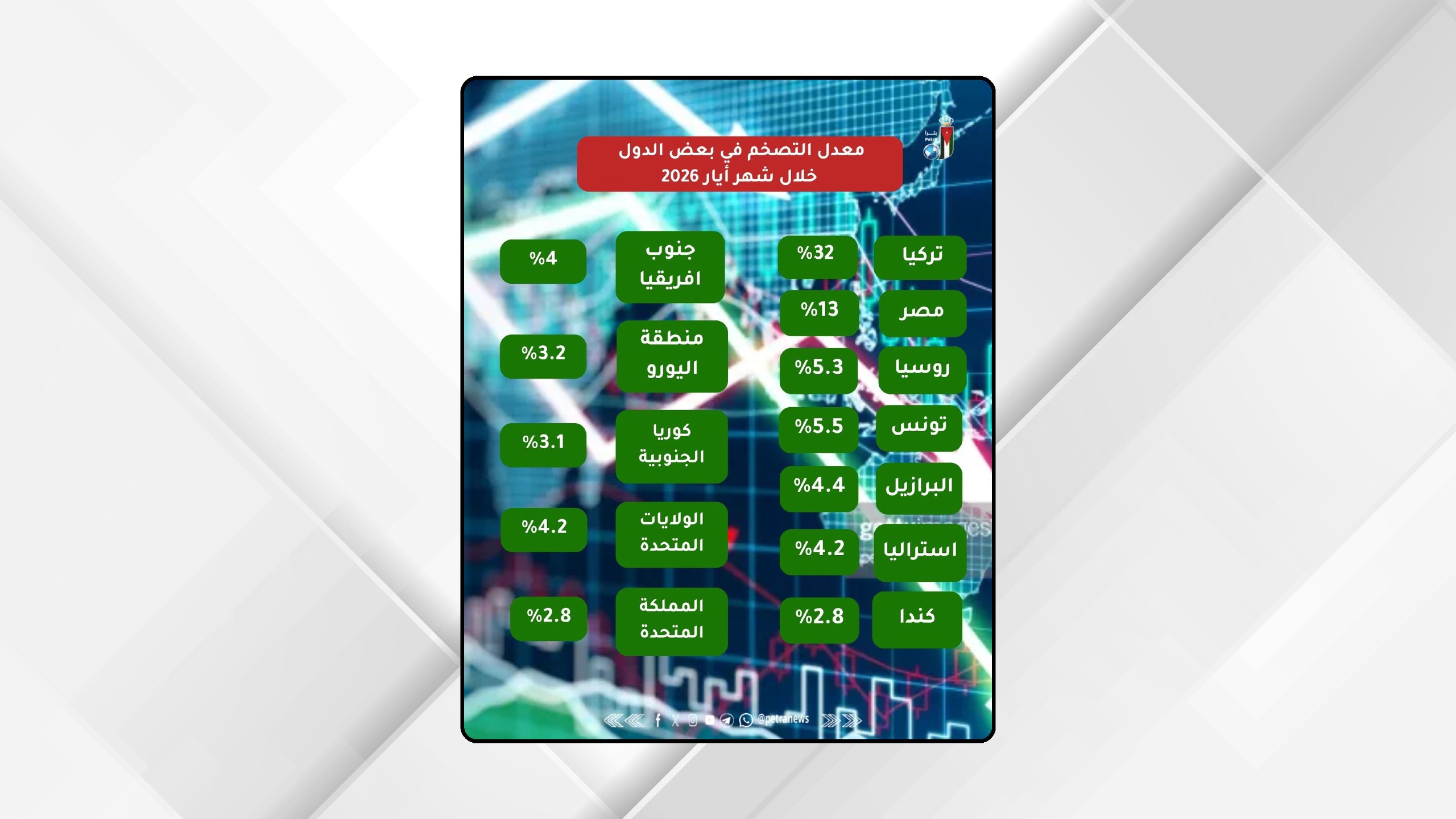
Amman, June 29 (Petra) – Jordan has kept inflation under control in
recent years, with rates remaining below global levels despite
economic and geopolitical pressures, supported by government measures
and flexible monetary policies by the Central Bank of Jordan (CBJ).
Official data showed inflation averaged 1.88% during the first five
months of 2026, compared with 1.97% in the same period last year.
Over the past five years, Jordan’s average inflation rate stood at
2.198%, compared with 5.194% globally.
Economists attributed the stability to coordinated fiscal and
monetary policies, strategic food and energy reserves, improved
supply chain resilience, and measures aimed at limiting price
pressures. They noted that maintaining stable prices has helped
protect purchasing power and strengthened investor confidence.
The CBJ supported price stability through interest rate adjustments,
liquidity management, and maintaining foreign currency reserves to
safeguard the dinar’s exchange rate. Reducing mandatory reserve
requirements also provided additional liquidity to support economic
activity.
Experts told the Jordan News Agency (Petra) that Royal directives to
strengthen food security and increase investment in the food industry
have helped ensure the continued availability of essential goods in
markets amid disruptions to global transportation, shipping, and
trade.
Financial and banking sector representative at the Jordan Chamber of
Commerce (JOCC) Firas Sultan said government economic and financial
policies helped protect purchasing power and maintain price stability
despite global market volatility.
He said coordination between fiscal and monetary policies, market
monitoring, and strategic reserves of essential goods strengthened
economic stability and supported consumer and private sector
confidence.
National Society for Consumer Protection (NSCP) President Mohammad
Obeidat said government measures during regional tensions, including
managing fuel costs, reducing shipping expenses, and maintaining
supplies, helped limit price increases on essential goods.
Economic expert Munir Deh said continued operation of key sectors,
including agriculture and industry, helped maintain adequate supplies
of food products and stabilize markets. He noted the role of ports,
airports, and border crossings in ensuring uninterrupted supply
chains.
Economist Hossam Ayesh said the Kingdom’s inflation rate remained
below global averages over the past five years, noting it peaked at
4.23% in 2022 compared with around 7.19% globally before declining.
He attributed the stability to strategic reserves of essential goods
and energy, diversified supply sources, and the CBJ’s role in
maintaining exchange rate stability and investor confidence.
Ayesh added that reducing the mandatory reserve ratio injected around
JD760 million in additional liquidity into the market, supporting the
private sector. He pointed to the growth of local industries, social
protection programs, and improved government spending efficiency as
factors contributing to economic resilience.
He stressed that Jordan’s foreign currency reserves provide strategic
capacity to finance imports and secure essential needs, helping
protect consumers and maintain market stability during regional and
global uncertainty.
//Petra// HA