Jordan’s Q2 2026 GDP Expands 3.0%, Outperforming Regional Headwinds, International Forecasts
ENV-KUWAIT-SUSTAINABLITYKuwait strengthens environmental sustainability through strategic initiativesBy Zahra Al-Kadhmi

HLT-KUWAIT-SURGERYKuwait advances health sector with robotic, remote surgeryBy Mohammad Al-Moseb

Saudi Arabia’s Voluntary Carbon Market Fuels the Shift to a Low-Carbon

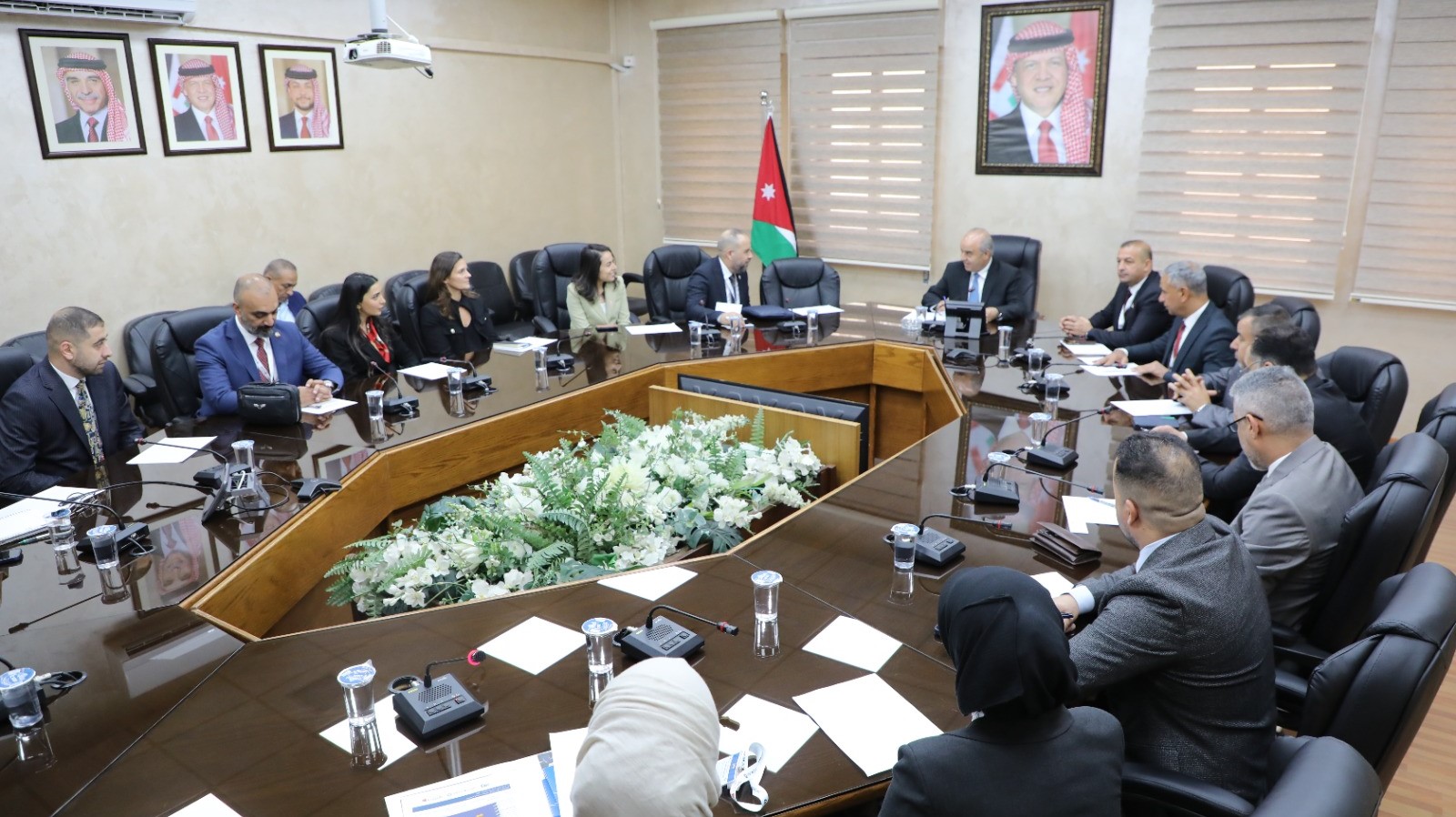
Amman, Oct. 11 (Petra) — Minister of Education and Human Resources
Development Azmi Mahafzah met on Sunday with a high-level Iraqi
delegation comprising presidents of Iraqi technical universities and
officials from Iraq’s Ministry of Higher Education and Scientific
Research to expand bilateral academic, scientific, and vocational
training cooperation.
During the meeting, Mahafzah commended the historical ties between
Jordan and Iraq and highlighted the academic achievements of Iraqi
universities. He provided an overview of Jordan’s higher education
system, noting that it includes 10 public universities, 21 private
universities, and 78 higher education institutes, serving
approximately 470,000 enrolled students across 644 academic programs.
Mahafzah outlined Jordan’s strategic shift toward applied and
technical education to align learning outcomes with dynamic labor
market demands, detailing the establishment of the Ministry of
Education and Human Resources Development as part of Jordan’s
Economic Modernization Vision and public sector reform roadmap.
The Iraqi delegation, led by President of Middle Technical University
Waddah Hatem alongside presidents from Southern, Northern, and
Al-Furat Al-Awsat technical universities, commended the advanced
standing of Jordanian higher education institutions in applied
learning. They presented ongoing reforms in Iraq’s technical and
vocational education and training (TVET) sector aimed at modernizing
curricula and addressing labor market requirements.
Discussions focused on facilitating student and faculty exchanges,
joint research initiatives, mutual university admissions, and
expanding scholarship frameworks such as the “Study in Iraq” program.
Both sides also explored collaboration in quality assurance, academic
accreditation, female empowerment in technical fields, and curriculum
development in high-demand disciplines, including artificial
intelligence and cybersecurity.
The two parties agreed to form a joint committee to coordinate future
cooperation, activate existing academic memorandums of understanding
into practical initiatives, and maintain continuous engagement with
Jordan’s Higher Education Accreditation and Quality Assurance
Commission (HEAC).
The visit was facilitated by the Tawasal project, which supports the
development of Iraq’s technical and vocational training ecosystem by
fostering regional knowledge transfer and institutional capacity
building.
//Petra// AF