Saudi Arabia’s Voluntary Carbon Market Fuels the Shift to a Low-Carbon

Under UAE President’s directives, UAE launches urgent relief response for Ghana flood victims

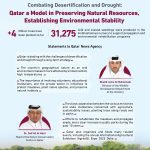
Combating Desertification and Drought: Qatar a Model in Preserving Natural Resources, Establishing Environmental Stability
UAE allocates US$30 million for emergency humanitarian response in El Obeid, calls for civilian protection, safe humanitarian aid access in Sudan

Amman, Sept. 16 (Petra) — Total exports grew by more than 14 percent
in the first half of 2026, extending last year’s gains as the
government moves to open new markets in Africa and Central Asia and
advance a $10 billion pipeline of public-private partnership
projects.
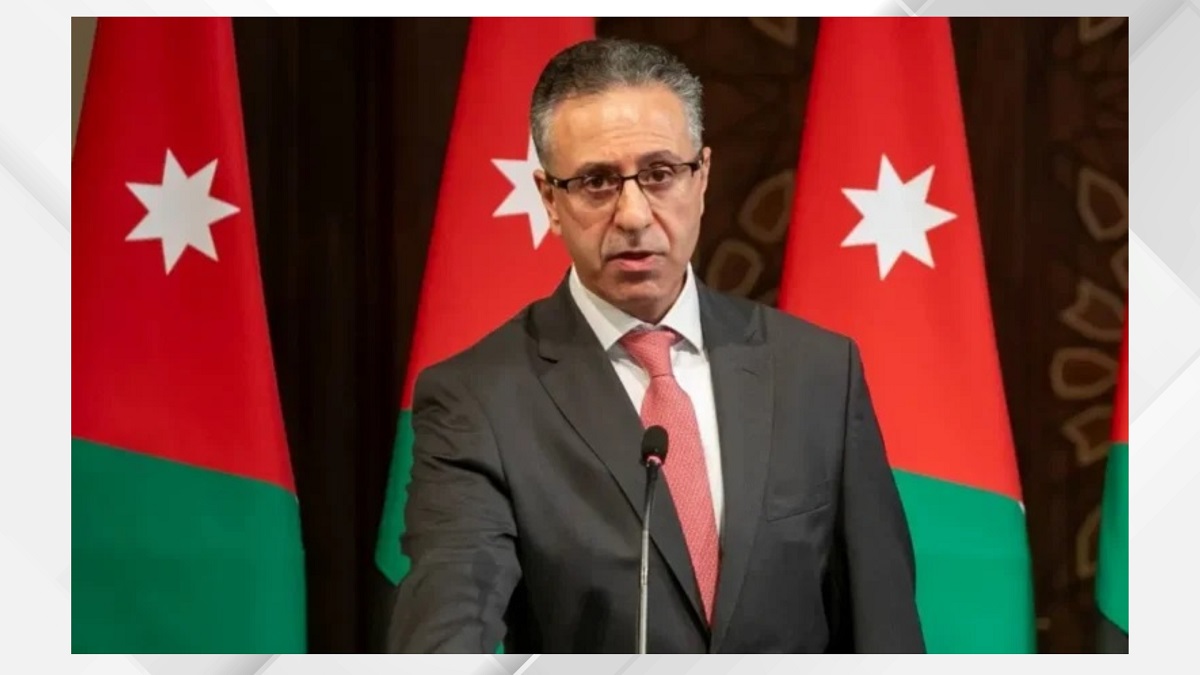
Industry, Trade and Supply Minister Yarub Qudah said the figures
point to continued economic growth despite regional disruptions and
wider pressures on the global economy.
Speaking at a business meeting organized by the Jordanian Businessmen
Association, Qudah said export growth has maintained momentum for a
second consecutive year after total exports increased by around 11.5
percent in 2025 compared with 2024.
National exports rose 6.2 percent in the first half of this year,
while re-exports jumped 44 percent, he said.
Qudah said the rise in locally produced goods sold abroad reflects
stronger export activity, while growth in re-exports reinforces the
Kingdom’s role as a regional trade and logistics hub.
Export gains were spread across more than 12 industrial sectors,
helping diversify the country’s export base and reduce exposure to
fluctuations affecting individual products or markets.
The performance came despite regional conditions that have disrupted
supply chains, transport and logistics, as well as increasing
competition in international markets, Qudah said.
Aqaba Port also recorded a more than 5 percent increase in container
handling during the first nine months of the year compared with the
same period in 2025.
The government is now seeking to broaden access to overseas markets
through preferential trade arrangements alongside its existing free
trade agreements with the United States, European Union, United
Kingdom, Arab countries and Canada.
Qudah said two preferential trade agreements are expected to be
signed before the end of the year, one with Rwanda to expand access
to East and Central African markets and another with Uzbekistan to
provide a gateway to Central Asia.
The government has also opened talks with the Eurasian Economic Union
on a preferential trade agreement aimed at improving access for
locally produced goods to markets across the bloc.
Qudah said the trade strategy focuses on both expanding the number of
export destinations and increasing the diversity and domestic value
added of products sold overseas.
Alongside its trade push, the government plans to launch major
projects worth around $10 billion in partnership with the private
sector over the next three to four years.
The investment pipeline covers water, energy, transport,
infrastructure and public services, with projects intended to
stimulate private investment and generate employment.
Among them are the National Water Carrier and a natural gas pipeline
linking the Risha gas field with different parts of the Kingdom.
Qudah said the pipeline, coupled with continued exploration around
Risha, is expected to help raise natural gas self-sufficiency to
around 80 percent by 2028.
He also cited Airport City as a strategic development intended to
create an integrated urban and economic hub for housing, employment
and investment while accommodating urban expansion and easing
pressure on Amman.
Qudah said the government aims to sustain the positive economic
trajectory by expanding exports, attracting investment and
strengthening private-sector participation under the Economic
Modernization Vision.
//Petra// RZ