Saudi Arabia’s Voluntary Carbon Market Fuels the Shift to a Low-Carbon

Under UAE President’s directives, UAE launches urgent relief response for Ghana flood victims
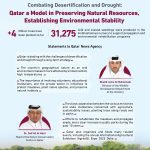
Combating Desertification and Drought: Qatar a Model in Preserving Natural Resources, Establishing Environmental Stability
UAE allocates US$30 million for emergency humanitarian response in El Obeid, calls for civilian protection, safe humanitarian aid access in Sudan

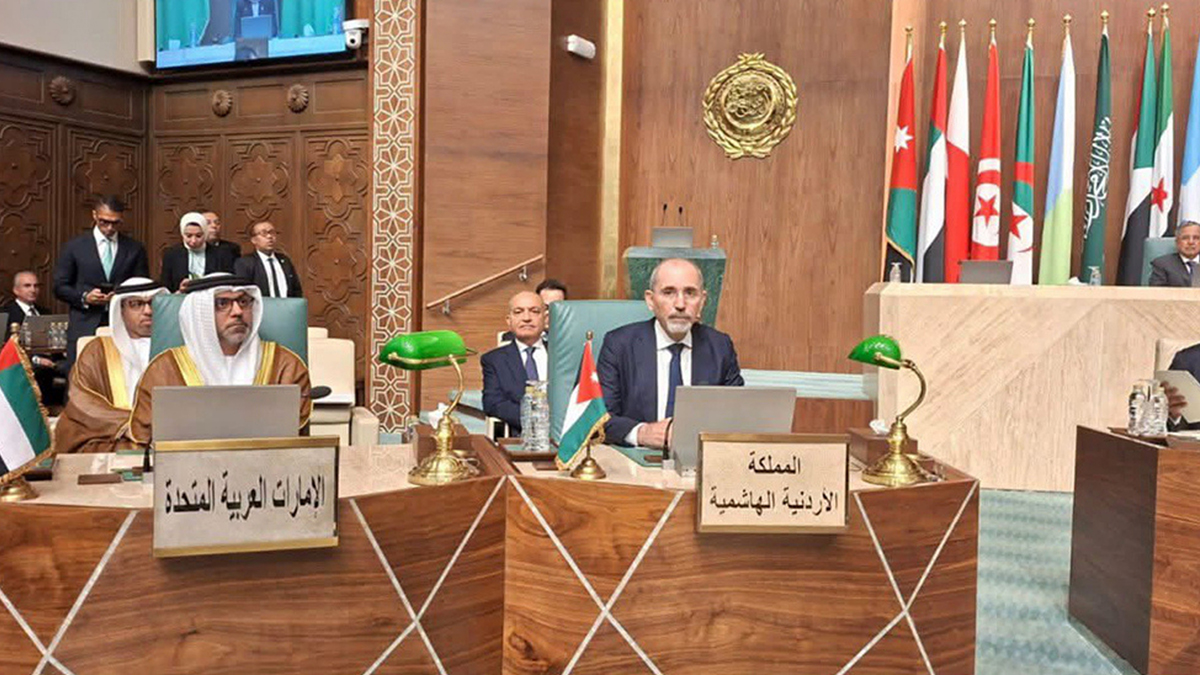
Cairo, Sept. 7 (Petra) — The Arab Ministerial Committee tasked with
international action against illegal Israeli policies in occupied
Jerusalem on Monday called for stronger political, diplomatic, and
economic action to halt Israeli violations in the city and protect
its Islamic and Christian holy sites.
Deputy Prime Minister and Minister of Foreign and Expatriate Affairs
Ayman Safadi chaired the committee meeting as part of the 166th
regular session of the Arab League Council at the ministerial level.
Safadi briefed the committee on ongoing Israeli violations and
measures in Jerusalem and its Islamic and Christian holy sites, as
well as efforts to counter attempts to alter the city’s historical
and legal status quo and its Arab Islamic and Christian identity.
He also outlined Jordan’s efforts to confront illegal Israeli
violations in occupied Jerusalem, protect Islamic and Christian holy
sites, and preserve the historical and legal status quo under the
Hashemite Custodianship.
The committee is chaired by Jordan and groups Iraq, as current chair
of the 34th Arab Summit, as well as Tunisia, Algeria, Saudi Arabia,
Palestine, Qatar, Egypt, Morocco, Bahrain as the Arab non-permanent
member of the UN Security Council, Somalia as a Security Council
member, and the Arab League secretary-general.
Today’s meeting was the committee’s 11th since its establishment
under a 2021 Arab League resolution on Israeli actions in occupied
Jerusalem, including Al-Aqsa Mosque/Al-Haram Al-Sharif and the Sheikh
Jarrah neighborhood.
Palestinian Minister of Foreign Affairs and Expatriates Varsen
Aghabekian Shahin briefed the committee on Israeli policies that seek
to undermine Palestinian presence in Jerusalem through annexation,
settlement expansion, land confiscation, home demolitions, forced
displacement, withdrawal of identity cards, changes to school
curricula, closure of Palestinian institutions, and measures against
the United Nations Relief and Works Agency for Palestine Refugees
(UNRWA).
She also warned against the E1 settlement project, which would
isolate Jerusalem and separate the northern West Bank from the south,
urging coordinated Arab diplomatic action as well as political,
economic, and legal measures to support Jerusalem and its residents.
Committee members condemned an unprecedented escalation of Israeli
violations against Al-Aqsa Mosque/Al-Haram Al-Sharif and measures
aimed at altering the historical and legal status quo, including
attempts to impose temporal and spatial division of the compound.
They strongly denounced recurrent incursions by settlers, Israeli
ministers, and officials into Al-Aqsa under Israeli police
protection, as well as Jewish prayers and rituals, the raising of
Israeli flags, inflammatory statements, and calls by extremist groups
for further incursions and the slaughter of sacrifices inside the
compound.
The committee also decried restrictions imposed on Muslim worshippers
trying to access Al-Aqsa, including closures, checkpoints, physical
assaults, age and geographic restrictions, and impediments to
restoration and maintenance work by employees of the Jerusalem Awqaf
Department.
Members further condemned measures targeting the historic Christian
presence in Jerusalem, including the seizure of land belonging to the
Greek Orthodox Patriarchate in Silwan, attacks on churches,
monasteries, clergy, nuns, worshippers, and Christian property, and
restrictions on worshippers entering the Church of the Holy Sepulchre
during religious holidays.
They warned that such measures threaten the Christian presence in the
Holy Land and violate international humanitarian law and freedom of
religion and worship.
The committee called for political, diplomatic, and economic measures
against any state that recognizes Jerusalem as Israel’s capital,
moves its embassy to the city, or takes steps that affect Jerusalem’s
legal status.
It also welcomed the outcomes of an Aug. 5 ministerial meeting
convened by Jordan to launch coordinated Arab and Islamic action in
support of Jerusalem and its Islamic and Christian holy sites.
The committee condemned Israeli measures aimed at altering the
demographic composition and historical and religious character of
Jerusalem and the status of Palestinian territories occupied since
1967.
They also strongly condemned Israeli tenders for 1,234 settlement
units under the E1 plan east of occupied Jerusalem, arguing that the
project would sever geographic contiguity between the northern and
southern West Bank, isolate East Jerusalem from its Palestinian
surroundings, and undermine the prospects for an independent and
viable Palestinian state.
The committee additionally condemned escalating settler violence
against Palestinians and their property, land, and holy sites.
It also denounced the Israeli authorities’ raid on and evacuation of
UNRWA’s Qalandia Training Centre in occupied Jerusalem, describing
the action as a serious escalation and a violation of international
law and the privileges and immunities of United Nations
organizations.
They reaffirmed their rejection of Israeli measures targeting UNRWA,
stressing the agency’s role in providing services to Palestinian
refugees across its five fields of operation under its UN mandate.
The committee reiterated that Israel has no sovereignty over
Jerusalem or its Islamic and Christian holy sites and reaffirmed its
position that East Jerusalem is the capital of the State of
Palestine.
It called for an independent, sovereign, geographically contiguous,
and viable Palestinian state with East Jerusalem as its capital along
the June 4, 1967 lines, based on the two-state solution,
international law, the Arab Peace Initiative, and relevant
international references.
It also stressed the importance of implementing UN resolutions on the
Palestinian issue, including relevant Security Council resolutions,
as well as UNESCO Executive Board and World Heritage Committee
decisions recognizing the entire 144-dunum Al-Aqsa Mosque/Al-Haram
Al-Sharif compound as a place of worship exclusively for Muslims.
The committee reaffirmed the importance of the historical Hashemite
Custodianship over Islamic and Christian holy sites in Jerusalem and
stated that the Jordanian-run Jerusalem Awqaf and Al-Aqsa Mosque
Affairs Department has exclusive authority to administer all affairs
of Al-Aqsa Mosque/Al-Haram Al-Sharif and regulate entry to the
compound.
The committee welcomed a Qatari initiative to establish a permanent
institutional mechanism, including a media platform, to monitor,
document, and publicize Israeli violations against holy sites and
worshippers.
It tasked the Arab League General Secretariat, in coordination with
member states, with developing the mechanism, identifying financing
options, and preparing a coordinated Arab and international
diplomatic and media campaign on Israeli actions in Jerusalem and the
occupied Palestinian territories.
The committee also agreed to strengthen coordination with the
Organisation of Islamic Cooperation, including through a planned
joint OIC-Arab League ministerial meeting on Jerusalem during the
high-level week of the UN General Assembly in New York this month.
It called for intensified international pressure, particularly
through the UN Security Council, to compel Israel, as the occupying
power, to halt illegal measures against Islamic and Christian holy
sites, respect freedom of worship, and preserve the historical and
legal status quo.
They further urged stronger Arab diplomatic engagement with
influential international parties to pursue restrictive and deterrent
measures against attacks on holy sites and settler violence, ensure
accountability for Israeli violations in occupied Jerusalem, and
support the resilience of Palestinians and Palestinian institutions
in the city.
//Petra// AO