Saudi Arabia’s Voluntary Carbon Market Fuels the Shift to a Low-Carbon

Under UAE President’s directives, UAE launches urgent relief response for Ghana flood victims
Combating Desertification and Drought: Qatar a Model in Preserving Natural Resources, Establishing Environmental Stability
UAE allocates US$30 million for emergency humanitarian response in El Obeid, calls for civilian protection, safe humanitarian aid access in Sudan

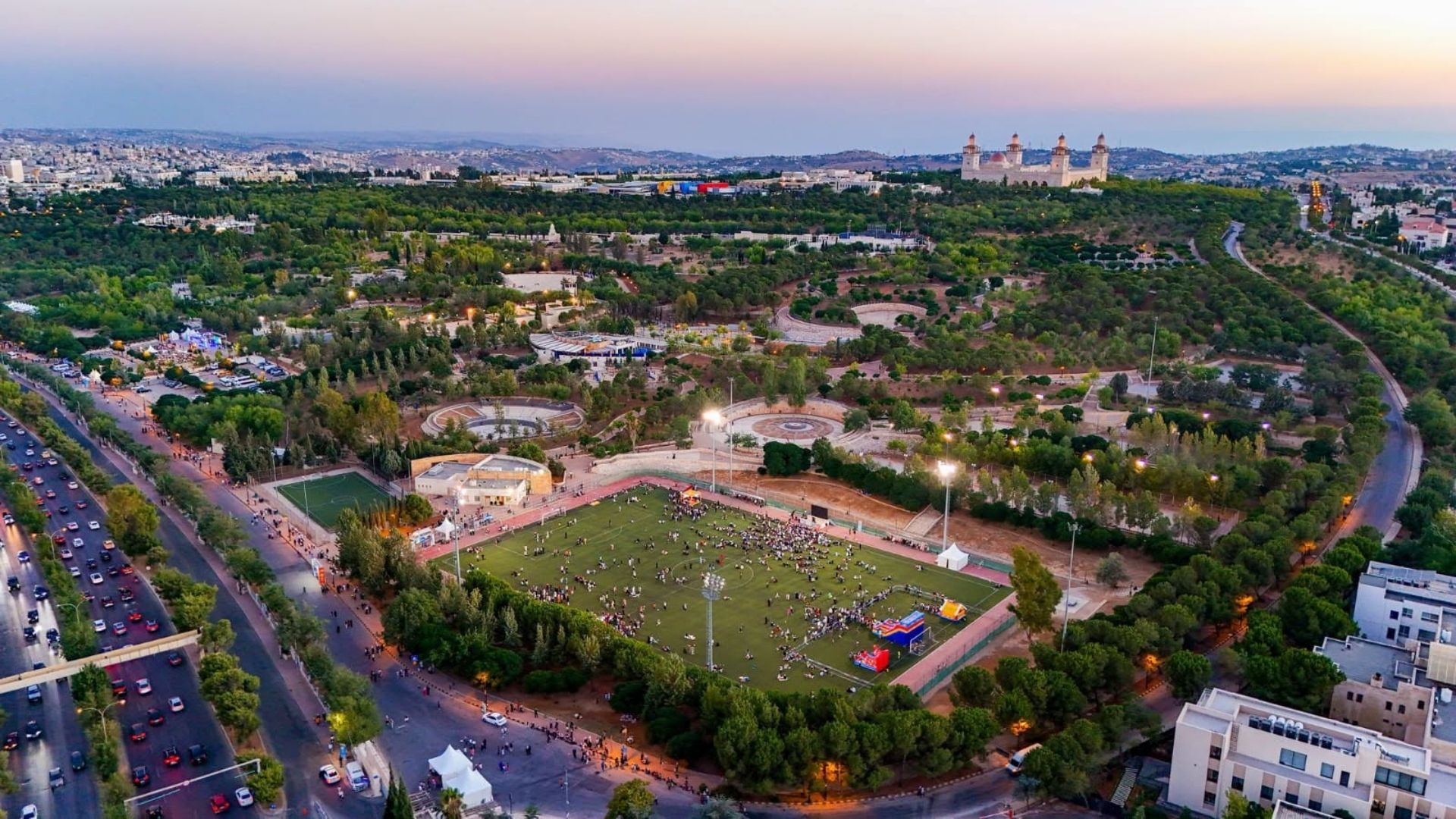
Amman, July 18 (Petra) — The Greater Amman Municipality (GAM) has
expanded the capital’s total green space to over 19,000 dunams,
raising the per capita share of green areas to 4.25 square meters.
The development is part of GAM’s long-term environmental strategy to
mitigate urban heat, reduce vehicle emission pollution, and adapt to
climate change within the city’s mountainous topography.
GAM’s 2022–2026 agricultural and forestry strategy focuses on
accelerating urban afforestation, maintaining existing parks, and
managing landscape expansion despite rapid population growth and
dense real estate construction.
According to Mueen Zureikat, GAM’s Executive Director of Agriculture,
the municipality has increased the number of neighborhood parks from
134 to 145, with the final stages of the Eskan Al-Dakatrah park in
Shafa Badran currently nearing completion.
The municipality has also expanded its network of larger public parks
from 11 to 15, while rehabilitating three existing locations,
including the Uhud park in the Uhud district. The expansion includes
major recreational projects, notably Al-Nashama Park, which was
inaugurated earlier this year by Prime Minister Jafar Hassan.
Strategic metrics reveal that Amman’s total managed green areas grew
from 13,000 dunams to 19,800 dunams over a four-year period,
representing a total target expansion of 1,500 dunams beyond initial
baselines. This growth raised the per capita green space from
approximately 3.4 square meters in 2022 to the current 4.25 square
meters.
Concurrently, the proportion of public green space relative to the
city’s total land area rose from 1.7 percent to 2.44 percent. To
support this logistical expansion, municipal nurseries have achieved
80 percent self-sufficiency in producing forest trees, ornamental
plants, and saplings for urban placement.
Urban planning specialists emphasize that public parks function as
essential health, social, and environmental infrastructure rather
than optional urban landscaping. In complex topographies like Amman,
organized green networks help regulate local microclimates, lower
surface temperatures, and improve air quality.
To maintain the quality of these spaces, the municipality operates
five dedicated agricultural regional centers across the capital:
South Amman (Al-Muqabalayn), North Amman (Al-Jubaiha), West Amman
(Tla’ Al-Ali), Central Amman (Prince Hussein Street), and East Amman
(Al-Mahatta). These facilities oversee regular infrastructure
maintenance, safety operations, and seasonal replanting across street
islands, intersections, and public squares.
//Petra// AA