Saudi Arabia’s Voluntary Carbon Market Fuels the Shift to a Low-Carbon

Under UAE President’s directives, UAE launches urgent relief response for Ghana flood victims
Combating Desertification and Drought: Qatar a Model in Preserving Natural Resources, Establishing Environmental Stability

UAE allocates US$30 million for emergency humanitarian response in El Obeid, calls for civilian protection, safe humanitarian aid access in Sudan

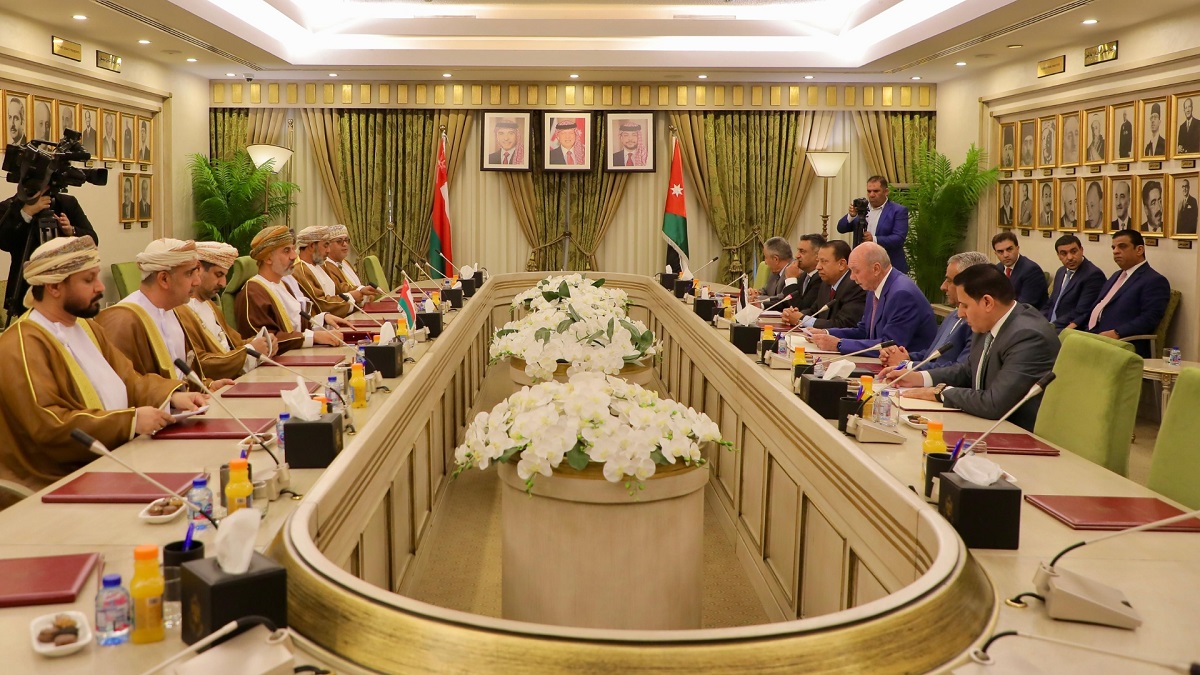
Amman, Sept. 9 (Petra) — The security and stability of Oman and the
Gulf states are an integral part of the Kingdom’s national security,
Senate President Faisal Fayez said Wednesday, calling for stronger
Arab political, economic and defense cooperation to address regional
challenges.
Speaking during a meeting with Oman’s Shura Council Chairman Sheikh
Khalid Al Mawali and an accompanying delegation, Fayez said the
Kingdom rejects any interference in the affairs of Oman or other Gulf
states.
He said Jordanian-Omani relations are built on longstanding
historical ties and have continued to develop under His Majesty King
Abdullah II and Sultan Haitham bin Tariq, with cooperation expanding
across multiple sectors.
Addressing regional developments, Fayez said the Kingdom faces
economic and security challenges stemming from instability in the
region and stressed the need for a unified Arab position.
He reiterated the Kingdom’s condemnation of Iranian attacks on Jordan
and Gulf states and pointed to King Abdullah’s diplomatic efforts to
secure clear security guarantees as part of any future settlement.
Fayez called for an integrated Arab framework encompassing political,
economic and military cooperation, alongside stronger mechanisms for
joint Arab security and defense. He said greater economic integration
has become essential to strengthening Arab countries and safeguarding
their interests.
He praised Oman’s support for the Kingdom and for King Abdullah’s
efforts to advance peace and a two-state solution to the Palestinian
issue, as well as its support for the rejection of forced
displacement and the Hashemite Custodianship over Islamic and
Christian holy sites in Jerusalem.
Fayez also called for closer parliamentary cooperation between the
two countries, particularly through exchanges between specialized
committees and the sharing of legislative experience and expertise.
Al Mawali, for his part, said Jordanian-Omani relations are rooted in
deep historical and fraternal ties and continue to advance across
various fields.
He highlighted the contribution of Jordanians to the development of
education and the building of the modern Omani state, while noting
the two countries’ convergence on a range of Arab issues.
Al Mawali called for expanded economic and investment cooperation and
greater use of agreements already signed between the two countries,
alongside stronger parliamentary ties and exchanges of expertise.
He also praised the Kingdom’s positions on Arab issues, particularly
the Palestinian cause, and King Abdullah’s rejection of forced
displacement and support for Palestinian rights.
Al Mawali stressed the importance of continued coordination among
Arab parliaments and a stronger parliamentary role in promoting
regional security and stability and addressing common challenges.
The meeting was attended by members of the Omani Shura Council
delegation and representatives of the Senate and House of
Representatives.
//Petra// RZ