Saudi Arabia’s Voluntary Carbon Market Fuels the Shift to a Low-Carbon

Under UAE President’s directives, UAE launches urgent relief response for Ghana flood victims

Combating Desertification and Drought: Qatar a Model in Preserving Natural Resources, Establishing Environmental Stability
UAE allocates US$30 million for emergency humanitarian response in El Obeid, calls for civilian protection, safe humanitarian aid access in Sudan

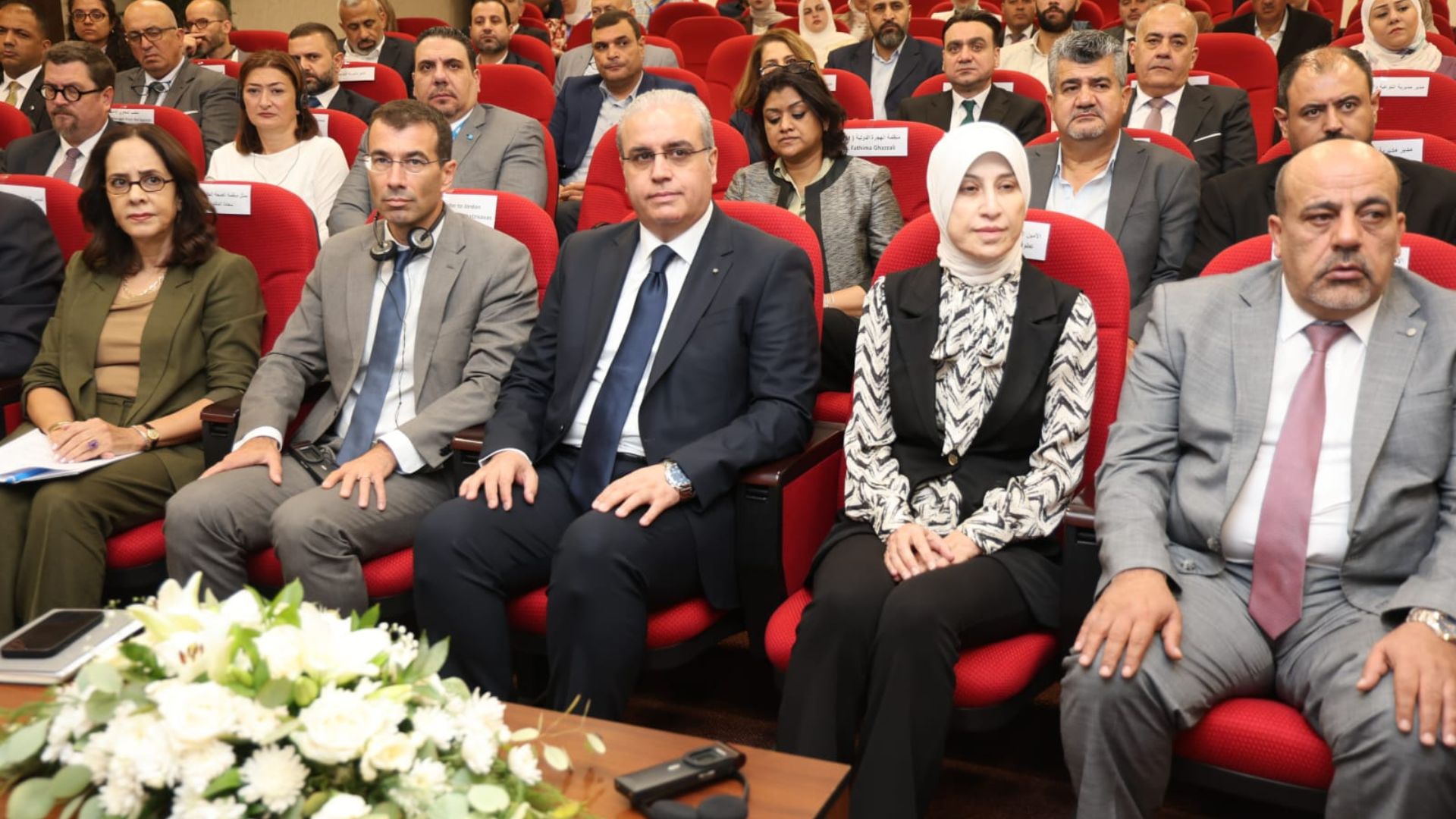
Amman, Sept. 3 (Petra) — Health Minister Ibrahim Bdour on Thursday
announced completion of rehabilitation and development works at 16
comprehensive and primary health centers across Amman, Zarqa, Madaba,
Irbid and Ramtha.
Carried out by the World Health Organization (WHO), the project was
funded by the European Union at a total cost of about JD4.1 million.
During the ceremony held to announce the project’s completion, Bdour
said the ministry’s focus on primary health care stems from the
conviction that health centers serve as citizens’ first point of
entry into the health care system, adding that strengthening their
role “directly” improves care quality and system efficiency.
He said the ministry is developing Jordan’s health centers as part of
an integrated system spanning prevention, health promotion and early
detection through diagnosis, treatment, follow-up and, when needed,
more specialized care.
Bdour said the enhanced role of health centers this year has helped
ease overcrowding in emergency departments at several government
hospitals by expanding their capacity to handle cases that can be
managed within primary care system, which help hospitals focus on
emergency and specialized cases.
He described investment in primary health care and infrastructure as
a ministry priority for improving system efficiency and integrating
care across all levels.
The 16-center project reflects the ministry’s model for cooperation
with international partners, particularly the EU and WHO, Bdour said,
adding that project success is measured by its impact on the quality
of care citizens receive.
He said the ministry will continue expanding and upgrading the health
center network to strengthen its ability to meet citizens’ needs,
ensuring timely, appropriate care and more efficient use of health
sector resources.
In turn, EU Ambassador to Jordan Pierre-Christophe Chatzisavas said
the EU supports the Jordanian government’s efforts to achieve
universal health coverage by 2030, describing primary health care as
a cornerstone of prevention, screening, early detection and initial
treatment. He said the rehabilitation of the 16 centers delivers
concrete results under the EU-Jordan partnership, valued at $100
million over the past decade.
WHO Representative in Jordan Iman Shankiti said completing the
project marks an important step toward strengthening primary health
care as the foundation for universal health coverage.
Investing in health facility rehabilitation improves service quality
and safety and ensures more equitable, sustainable access to
essential health services for all residents of Jordan, including
refugees and host communities, she said.
As for its scope, the project rehabilitated 8 comprehensive health
centers and 8 primary health centers, aimed to strengthen
infrastructure, improve operational efficiency and enhance the
quality and safety of health services.
Work featured comprehensive infrastructure upgrades covering
electrical, mechanical and civil works, improved air conditioning and
ventilation systems, updated water and sanitation networks, and
stronger backup power systems, alongside architectural improvements
to enhance accessibility for people with disabilities. Centers were
also equipped with furniture, essential medical equipment and
information technology systems.
The project also provided capacity-building for health and
administrative staff through training programs in leadership,
governance, service quality and patient safety, along with support
for implementing treatment protocols for chronic and childhood
diseases and reactivating community committees to boost public
participation in health care.
Implemented under the partnership between the Health Ministry and
WHO, the project is part of the “Enhancing Access to Quality Primary
Health Care Services for Syrian Refugees and Host Communities in
Jordan” initiative, funded by the EU, aimed at improving access to
high-quality primary health care and enhancing the efficiency, safety
and sustainability of health care facilities.
//Petra// NQ