Saudi Arabia’s Voluntary Carbon Market Fuels the Shift to a Low-Carbon

Under UAE President’s directives, UAE launches urgent relief response for Ghana flood victims
Combating Desertification and Drought: Qatar a Model in Preserving Natural Resources, Establishing Environmental Stability
UAE allocates US$30 million for emergency humanitarian response in El Obeid, calls for civilian protection, safe humanitarian aid access in Sudan

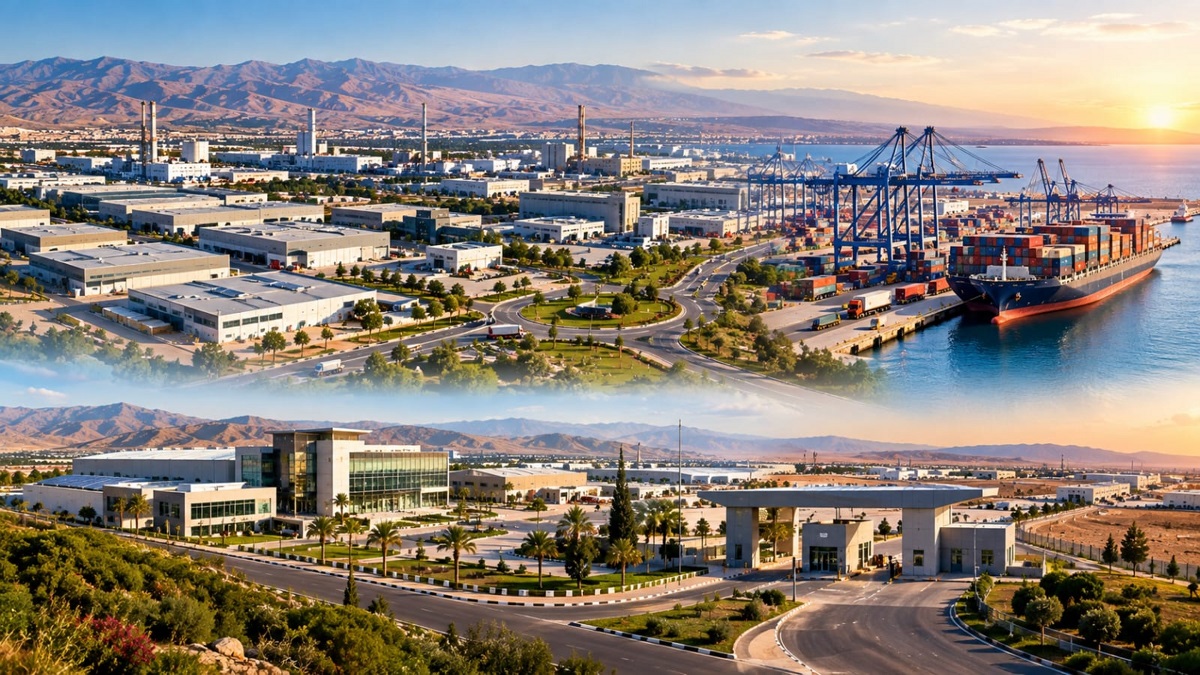
Amman, Sept. 15 (Petra) — The Kingdom is seeking to strengthen
economic development across its governorates by expanding the role of
industrial, development and free zones in attracting investment,
supporting productive activity and creating jobs.
Economic officials told the Jordan News Agency (Petra) that these
zones have developed beyond serving as locations for investment
projects and now provide a range of infrastructure, services and
incentives aimed at supporting industrial activity, increasing
exports and contributing to local economic development.
They stressed the need to raise occupancy levels in some of the newer
zones, attract investments with higher added value and export
potential, and strengthen links with the national economy by
increasing the use of locally produced inputs and domestic supply
chains.
During a visit to the Ministry of Investment and a meeting of the
Investment Council, Prime Minister Jafar Hassan said developmental,
industrial and free zones should be viewed as development tools that
support the national economy, contribute to development in the
governorates and create employment opportunities for local
communities.
Sakhr Al-Ajlouni, Chairman of the Board of the Jordan Free and
Development Zones Group, said free and development zones have become
an important part of Jordan’s investment and economic activity
through their contribution to trade, investment and employment.
He said trade through the free zones reached approximately JD6.5
billion in 2025, comprising JD3.4 billion in exports and JD3.1
billion in imports. The number of investment agreements reached about
2,800.
According to Al-Ajlouni, public free zones provide around 15,000
direct jobs, while private free zones provide approximately 10,000.
They also support indirect employment in activities including
transportation, customs clearance, banking, insurance, foreign
exchange, trade and other services.
He said investment in the Dead Sea Development Zone reached about
JD995.7 million, while investment in the Al-Souan Development Zone
stood at approximately JD16.3 million. More than 220 investment
opportunities have been developed in the two areas.
Existing projects and investments in the development zones have
generated around 3,678 direct jobs and supported activity in tourism,
hospitality, services, transportation and trade. Al-Ajlouni also
noted that the Ajloun Cable Car has received more than 1.5 million
visitors since it began operating, contributing to economic activity
in the governorate and surrounding areas.
He said the group is continuing to develop the development zones
through infrastructure and public-facility projects, as well as
tourism and investment sites in the Dead Sea and Ajloun, with the aim
of attracting further investment.
The group is also planning to expand geographically, including
through the establishment of a new free zone at the dry port in the
Mafraq Development Zone and the expansion of the Al-Muwaqqar Free
Zone. Work is also continuing on digital transformation, electronic
services and operational efficiency.
Al-Ajlouni said reconstruction needs in Syria and Iraq, together with
changes in regional supply chains, could provide opportunities for
Jordan to strengthen its position in logistics and industry,
particularly through free zones connected to transit and cross-border
trade.
He also identified the free zone at Queen Alia International Airport
as an investment opportunity for specialized industries, including
semiconductor-related activities, as well as transit, re-export and
regional logistics services.
Al-Ajlouni said the Al-Karamah Free Zone also has potential to
attract fertilizer-related industries because of its proximity to the
Risha field. He added that a proposed ammonia and urea production
project, in cooperation with Nitrogen Jordan Fertilizers, could
provide at least 2,000 jobs if implemented.
Meanwhile, Oday Obeidat, Director General of the Jordan Industrial
Estates Company, said the expansion of industrial estates across the
Kingdom has contributed to investment and economic activity in the
governorates.
He said the industrial estates provide investors with industrial
facilities, land and infrastructure, in addition to services and
incentives intended to support the establishment, expansion and
continued operation of industrial projects.
Obeidat said the company’s nine industrial estates now host 1,000
industrial companies, with total investments exceeding JD3 billion
and around 62,000 jobs.
He said the company’s next phase will involve a change in the way
industrial estates operate, as it moves from a real estate
development approach toward developing integrated industrial systems.
The company will focus on attracting investments with higher added
value, particularly in technology, food, pharmaceutical and
engineering industries, while also supporting export-oriented
industries and their access to regional and international markets.
Obeidat said the industrial estates face challenges including
regional competition for investment, higher energy, transportation
and financing costs, and the need for further improvements in
infrastructure and logistics services.
At the same time, he pointed to opportunities arising from Jordan’s
strategic location, trade agreements, investment incentives and
Jordanian human resources.
He said the company’s focus in the coming period would extend beyond
attracting investors to ensuring the sustainability and expansion of
their investments, increasing exports and creating additional jobs.
The aim is for Jordan’s industrial, development and free zones to
become modern, effective engines of economic growth and development
and key drivers of the national economy.
//Petra//WH