Saudi Arabia’s Voluntary Carbon Market Fuels the Shift to a Low-Carbon

Under UAE President’s directives, UAE launches urgent relief response for Ghana flood victims

Combating Desertification and Drought: Qatar a Model in Preserving Natural Resources, Establishing Environmental Stability
UAE allocates US$30 million for emergency humanitarian response in El Obeid, calls for civilian protection, safe humanitarian aid access in Sudan

Amman, Sept. 15 (Petra) — Director-General of the Jordan Food and
Drug Administration (JFDA) Rana Obaidat said the agency was
continuing efforts to develop food safety standards in school
canteens, with the aim of creating a safe and healthy school food
environment.
She said ensuring students’ health was the main driver of efforts to
provide safer, higher-quality school food.
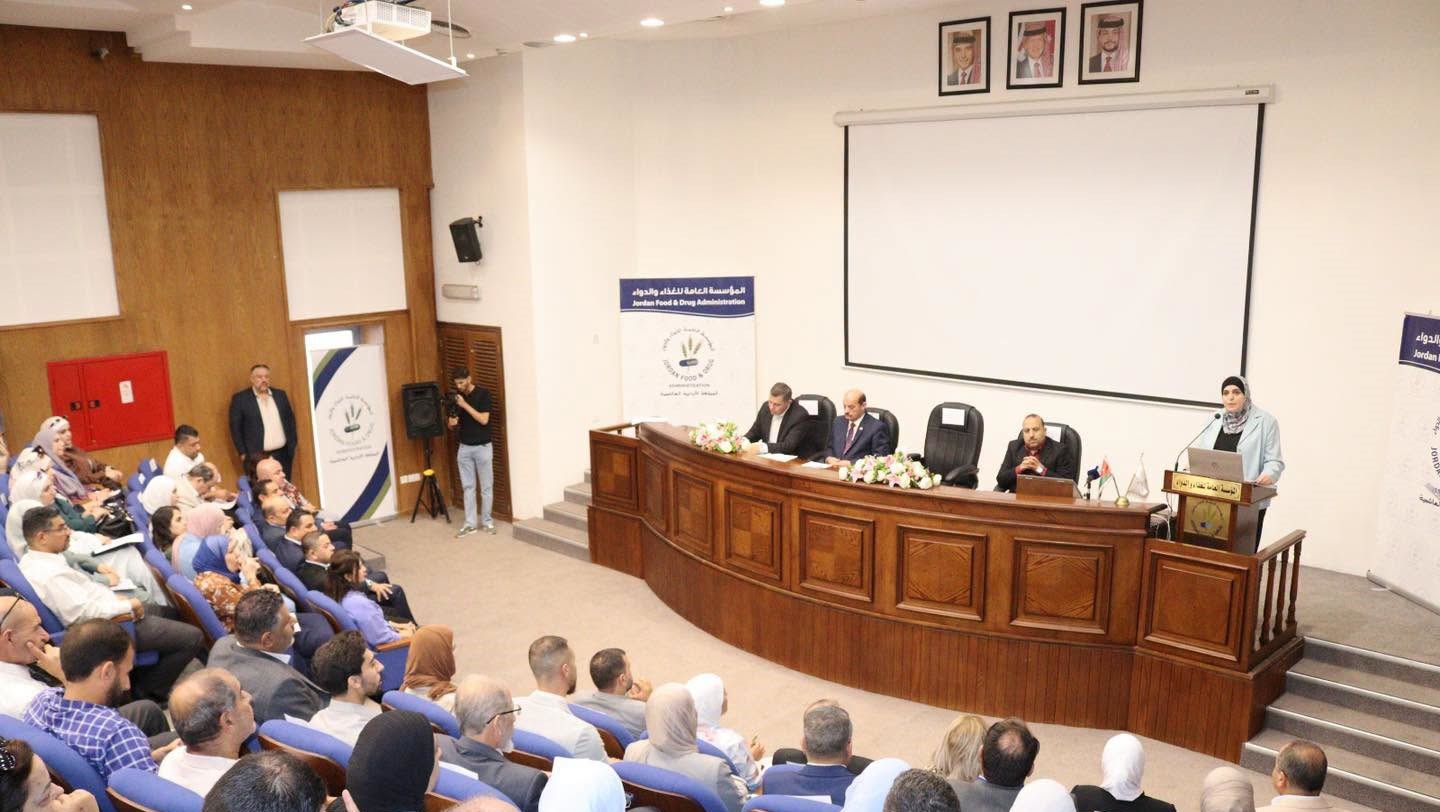
Obaidat made the remarks during the launch of a workshop on
requirements for school canteens and production kitchens, along with
the opening of an exhibition featuring a range of locally produced
healthy products in support of domestic production.
The workshop was attended by Director of the General Education
Department at the Ministry of Education and Human Resources
Development Ahmad Al-Masafa, Director of Primary Health Care at the
Ministry of Health Mohammad Bani Nasr, Chairman of the Supreme
Committee for the “My Health at My School” initiative and member of
the Parliamentary Health and Food Committee MP Shaher Al-Shatnawi, as
well as representatives of several schools.
Obaidat said intensive inspection campaigns and field surveys of
school canteens were continuing, given their vital role in promoting
healthy dietary behaviors and habits, as well as providing food that
meets safety and quality requirements.
She stressed the importance of coordinated efforts and integrated
roles among all relevant authorities to ensure compliance with
applicable health and technical requirements.
Al-Shatnawi said schools are environments where health, behavioral,
and dietary habits are formed, adding that the “My Health at My
School” initiative was launched as part of a national vision based on
this understanding.
He described health requirements for school canteens as a unified and
integrated national effort, saying all parties share responsibility
for ensuring that food reaching students inside schools is safe,
sound, and healthy.
Bani Nasr said school canteens can help change dietary culture and
encourage healthy eating habits. He noted the launch of the findings
of the Global School-based Student Health Survey in Jordan, which was
conducted in 57 schools.
The survey found that 32.9% of students in the surveyed age group
were overweight or obese, with 12.1% classified as obese. It also
found that only 12% of students in the age group engaged in more than
60 minutes of physical activity a day on weekdays.
The ministry is taking a number of concrete steps to improve the
health and nutritional environment in schools, he said.
The workshop featured a series of lectures supervised by Ruwayda
Abdullah, the JFDA’s representative on the School Canteens Committee.
The sessions covered production kitchens and the procedures for
obtaining their licenses, presented by Iman Khlaifat; health
requirements for school canteens, presented by Mohammad Al-Mahasis,
head of the School Health Department at the Capital Health
Directorate; and “Their Food, Their Safety: Celiac Disease and the
School Canteen,” presented by Abida Al-Qaisi, head of the Charity
Association for Celiac Disease Patients.
The workshop also featured a lecture on food choice architecture in
school canteens by Ola Hannoun, head of the JFDA’s Factories
Division, and a session on preventing food poisoning by Hala
Al-Khazali, head of the Food Safety Epidemiology Division.
The workshop concluded with a discussion session, during which school
representatives shared their observations and recommendations, and
future steps were presented as part of ongoing efforts to develop the
food safety system in school canteens.
//Petra// AF