Saudi Arabia’s Voluntary Carbon Market Fuels the Shift to a Low-Carbon

Under UAE President’s directives, UAE launches urgent relief response for Ghana flood victims

Combating Desertification and Drought: Qatar a Model in Preserving Natural Resources, Establishing Environmental Stability

UAE allocates US$30 million for emergency humanitarian response in El Obeid, calls for civilian protection, safe humanitarian aid access in Sudan

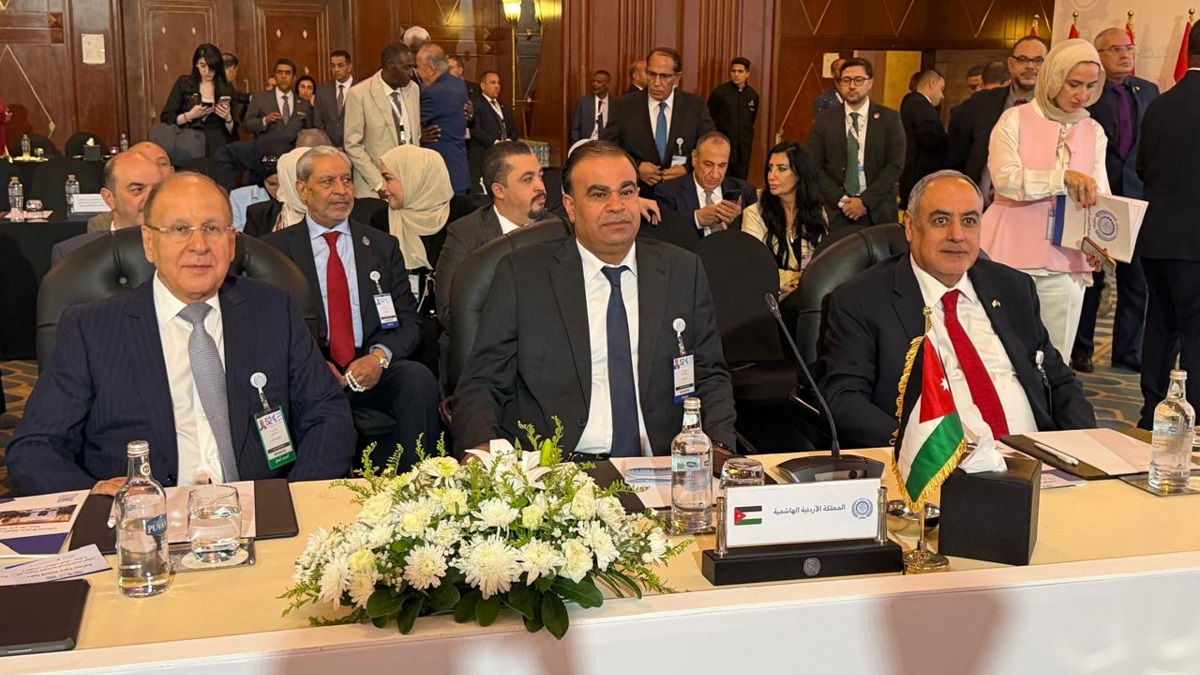
Cairo, Sept. 14 (Petra) — Jordan is chairing the 52nd Arab Labor
Conference in Cairo as governments, employers and workers examine how
Arab labor markets can respond to economic shifts, digital
transformation and climate change while expanding employment and
strengthening worker protection.
The Jordanian delegation called for closer regional coordination on
employment, vocational training and social protection, alongside
updated labor policies and legislation capable of keeping pace with
changes reshaping workplaces and skills demand.
It also stressed the need for stronger dialogue among governments,
employers and workers and greater exchange of expertise in vocational
training, occupational safety and health, and social protection.
Lower House Labor Committee Chairman Andre Hawari said Jordan’s
presidency of the conference reflects its engagement in regional
labor issues and its efforts to develop legislation that protects
workers while responding to changing labor-market requirements.
He said the gathering comes amid rapid regional and international
developments that are creating new challenges for workers and
employers, expressing hope that its decisions would strengthen
coordination among the three parties to the labor market.
The conference is examining sustainable economic growth as a pathway
to broader and more equitable development across Arab countries,
according to lawmaker Jamil Dhaisat.
Its agenda also covers implementation of previous Arab Labor
Organization decisions and recommendations, the organization’s plan
and budget, and the outcome of the 114th International Labour
Conference in Geneva.
Other discussions focus on the impact of climate change on the
working environment and the challenges facing startups amid digital
transformation.
Dhaisat said the Lower House has addressed labor-market issues
through legislation governing labor, social security and vocational
training, with a focus on occupational safety, workers’ rights and
the relationship between employees and employers.
Jordan Chamber of Industry representative Mohammad Jitan, meanwhile,
linked labor-market resilience to broader Arab economic integration,
arguing that stronger regional trade could generate additional
investment and employment opportunities.
He called for further implementation of the Greater Arab Free Trade
Area and the removal of tariffs and other obstacles to trade between
Arab economies.
Jitan said the economic and political crises affecting the region
have increased pressure on businesses, adding that measures taken in
the Kingdom to support private-sector resilience have included
reducing customs duties and introducing incentives for economic
activity.
Greater economic and trade integration, he said, would give Arab
economies more capacity to withstand external shocks while creating
wider opportunities for investment and employment.
//Petra// RZ