
ENV-KUWAIT-SUSTAINABLITYKuwait strengthens environmental sustainability through strategic initiativesBy Zahra Al-Kadhmi

HLT-KUWAIT-SURGERYKuwait advances health sector with robotic, remote surgeryBy Mohammad Al-Moseb

Saudi Arabia’s Voluntary Carbon Market Fuels the Shift to a Low-Carbon

Under UAE President’s directives, UAE launches urgent relief response for Ghana flood victims

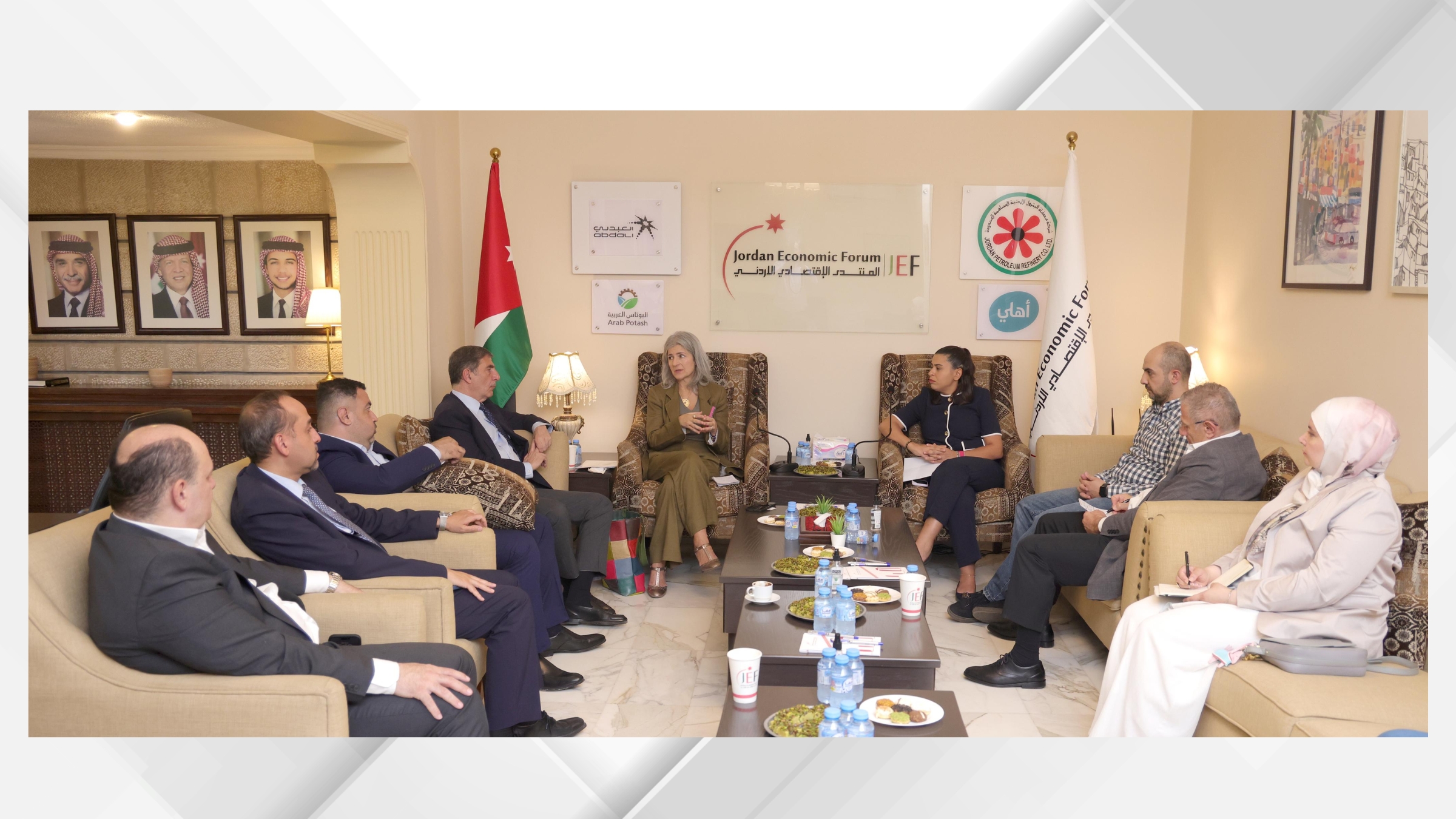
Amman, Aug. 2 (Petra)–The Jordan Economic Forum held a session as
part of its “Economic Salon” program titled “Refugees in Jordan:
Between Economic Impact and the Responsibility of International
Partnership,” hosting UNHCR Representative to Jordan Maria
Stavropoulou.
According to a statement issued by the forum, the session was
attended by Forum Deputy Chairman Mazen Hamoud, members of the board
of directors and the general assembly.
The forum said Jordan has carried significant economic, social and
service-related responsibilities over the years as a result of
hosting refugees. It called on donor countries and organizations to
meet their commitments toward refugees in the Kingdom and support a
more sustainable and balanced international partnership that assists
host communities and enables Jordan to continue providing
humanitarian support, while contributing to conditions for the
voluntary, safe and organized return of refugees to their countries.
Stavropoulou said Jordan has played an important role in receiving
refugees and providing protection, particularly in recent decades,
adding that the Kingdom has demonstrated values related to
humanitarian protection, dignity and respect for human rights.
She said Jordan’s approach reflects the values emphasized by His
Majesty King Abdullah II on several occasions, noting the importance
of the country’s role in refugee protection at a time when
international commitment to asylum and humanitarian protection is
facing challenges.
Stavropoulou said Jordan integrated refugees into public education,
healthcare services and some social services at an early stage,
instead of establishing separate humanitarian systems that are costly
and difficult to sustain in the long term. She added that several
policies adopted by Jordan have contributed to improving refugees’
living conditions.
She said Jordan’s experience has provided the international community
with lessons that were later shared with other refugee-hosting
countries.
Regarding education, Stavropoulou said refugee children registered
with UNHCR and holding the required documents can enroll in Jordanian
public schools. She added that issues arising in this area are
usually limited and local, and in some cases are related to unclear
procedures or instructions at some school administrations.
In the healthcare sector, she said refugees have access to the same
level of services available to uninsured Jordanian citizens. She
explained that these services are not entirely free but are supported
through multi-donor funds involving international partners, helping
the Jordanian health system manage additional pressures.
Stavropoulou described the decline in humanitarian and development
assistance as one of the main current challenges, noting that reduced
funding has affected UN agencies and humanitarian organizations and
impacted the level of services and assistance provided to refugees.
She stressed that assessing the economic impact of refugees should
not focus only on pressures on water resources, infrastructure,
schools and hospitals, but should also consider their contributions
to production, consumption and the labor market.
Hamoud said Jordan’s experience in hosting refugees has become a case
that can be studied by other countries, as it combines international
support, employment opportunities, increased exports and efforts to
enhance refugees’ ability to rely more on themselves.
//Petra// WH