Jordan’s Q2 2026 GDP Expands 3.0%, Outperforming Regional Headwinds, International Forecasts

ENV-KUWAIT-SUSTAINABLITYKuwait strengthens environmental sustainability through strategic initiativesBy Zahra Al-Kadhmi

HLT-KUWAIT-SURGERYKuwait advances health sector with robotic, remote surgeryBy Mohammad Al-Moseb

Saudi Arabia’s Voluntary Carbon Market Fuels the Shift to a Low-Carbon

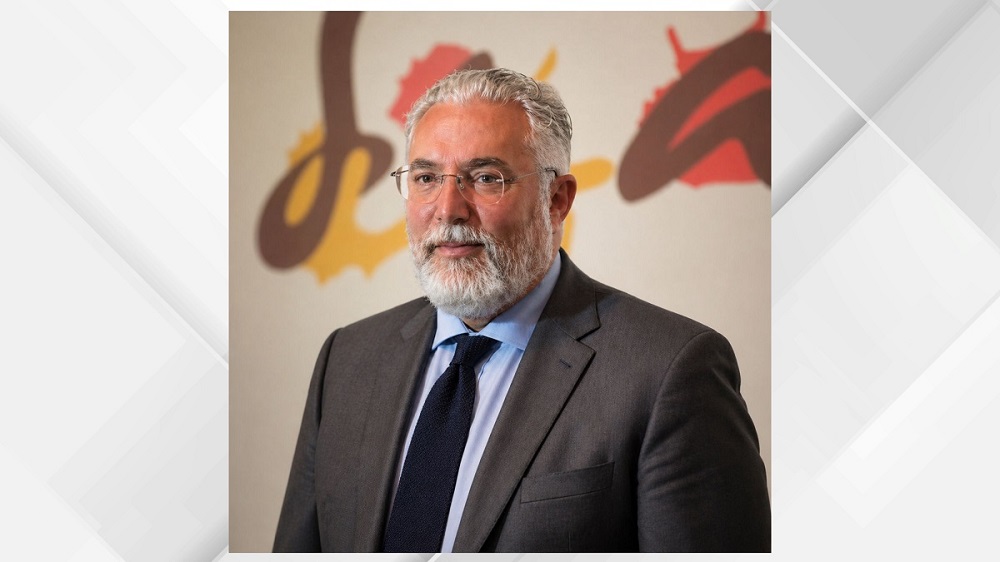
Amman, Oct. 12 (Petra) — The Jordan-EU Investment Conference,
scheduled for Nov. 19 at the Dead Sea, offers an important
opportunity to attract greater interest in investment opportunities
in the Kingdom, said Spanish Ambassador to Jordan Jose Luis Pardo.
In an interview with the Jordan News Agency (Petra), Pardo said
Jordan and Spain are working together to prepare a new Partnership
Framework for Cooperation for 2026-2030, identifying four priority
areas: improving access to quality primary healthcare, empowering
women, expanding infrastructure, and promoting social cohesion.
He noted that Jordan has been designated a priority country under
Spain’s International Development Cooperation Programme for decades,
implemented by the Spanish Agency for International Development
Cooperation (AECID).
On bilateral trade, Pardo said Spanish exports to Jordan have ranged
between 300 million and 400 million euros annually over the past
decade, while imports from Jordan have stood at between 40 million
and 80 million euros.
Since 2010, Spanish consultancy and engineering companies have
secured contracts in Jordan worth more than 840 million euros
cumulatively, he said, noting that most involve engineering,
procurement and construction (EPC) projects. Renewable energy
accounts for the largest share, with wind and solar projects
representing around 60 percent of the total value, alongside projects
in mining, industry, oil and gas, and water.
Pardo said Jordan and Spain are among the world’s most open
economies, creating significant potential to expand bilateral trade
in goods and services across a wide range of sectors. More than 700
Spanish companies maintain regular business relations with Jordanian
firms, he added.
On the Palestinian issue, the ambassador reaffirmed Spain’s
unwavering commitment to implementing the two-state solution in line
with the roadmap outlined in the New York Declaration, describing it
as the only way to achieve a just and lasting peace. The solution
would enable an independent Palestinian state and allow Palestine and
Israel to live side by side in peace and security within
internationally recognized borders.
Regarding Jerusalem, Pardo expressed deep concern over developments
in the holy city in recent years. He reiterated Spain’s support for
the historic role of the Hashemite Custodianship over Jerusalem’s
Islamic and Christian holy sites, praising the continued efforts of
His Majesty King Abdullah II to preserve the city’s historic and
legal status quo, identity and holy sites.
On Christian pilgrimage, Pardo said Jordan and Spain signed a
cooperation agreement last year between their respective pilgrimage
routes, the Camino de Santiago and the Camino de Egeria. The latter
is named after Egeria, a Spanish woman and pilgrim who visited holy
sites in Jordan in the fourth century AD.
He said the partnership provides an opportunity to raise Jordan’s
profile on the global Christian pilgrimage map and showcase its
religious and historical landmarks, which bear significant witness to
Christian history. The initiative is also expected to support
religious tourism, attract pilgrims and visitors from Spain and
Europe, and strengthen Jordan’s position as a leading Christian
pilgrimage destination.
Pardo stressed the importance of strengthening direct
people-to-people ties between Jordanians and Spaniards, saying such
exchanges play a key role in deepening bilateral relations and
expanding cooperation. Education and culture, he added, are priority
areas in the partnership between the two countries.
For decades, the Instituto Cervantes in Amman, alongside several
Jordanian universities, has contributed to teaching and promoting the
Spanish language, fostering cultural exchange and mutual
understanding. Spanish is among the most widely used languages
internationally, he noted.
The Spanish Embassy also organises an annual cultural programme
featuring music, cinema and the arts in cooperation with local
partners.
Pardo said hundreds of Jordanian students have studied medicine and
engineering in Spain since the 1960s, contributing to the formation
of Jordanian-Spanish families that have become an important human and
cultural bridge between the two countries.
He added that this tradition continues, with hundreds of Jordanian
students travelling each year to public and private universities in
Spain to pursue further studies and advance their academic careers
through programmes taught in both Spanish and English.
//Petra//WH