Saudi Arabia’s Voluntary Carbon Market Fuels the Shift to a Low-Carbon

Under UAE President’s directives, UAE launches urgent relief response for Ghana flood victims
Combating Desertification and Drought: Qatar a Model in Preserving Natural Resources, Establishing Environmental Stability
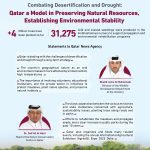
UAE allocates US$30 million for emergency humanitarian response in El Obeid, calls for civilian protection, safe humanitarian aid access in Sudan

Amman, Sept. 2 (Petra) — Wage equity is “not solely” a women’s
rights issue, but a fundamental labor right and a core element of
decent work, women’s economic participation, productivity and
sustainable development, Labor Ministry Secretary General Abdul Halim
Dougan said Wednesday.
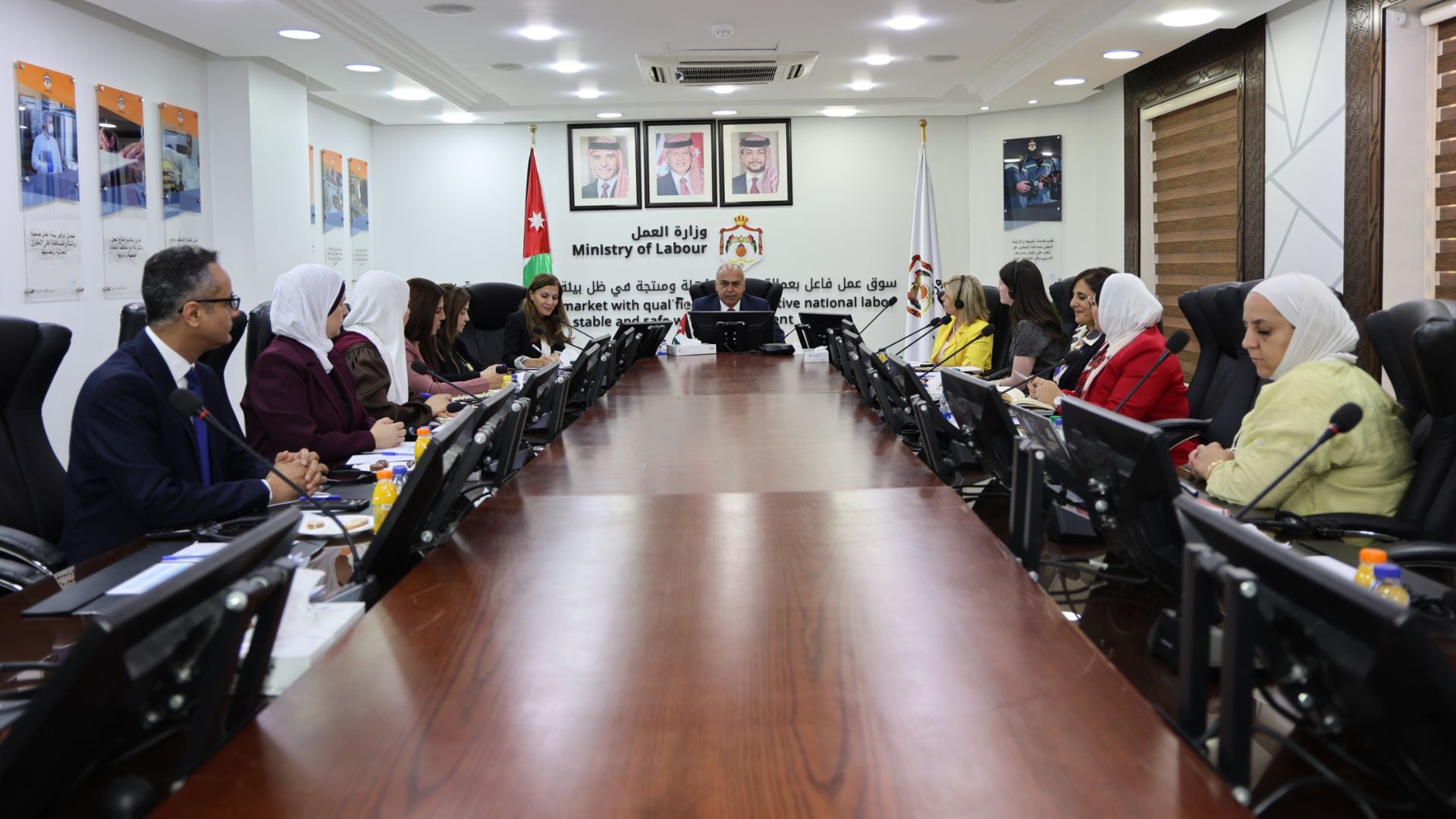
Dougan’s remarks came during a meeting of the Jordanian Pay Equity
Committee, co-chaired by Doughan and Jordanian National Commission
for Women Acting Secretary General Dima Jweihan, held at the Labor
Ministry with the International Labor Organization (ILO) and Irish
Ambassador to Jordan Nicole McHugh.
As for its agenda, the meeting discussed strengthening pay equity and
explored cooperation with Ireland ahead of the upcoming meeting of
the Equal Pay International Coalition (EPIC) in Dublin.
Talking at the meeting, Doughan congratulated the ambassador on
Ireland’s membership in EPIC in 2025, saying the step reflects a
“serious” commitment to translating the principle of equal pay into
concrete policies and practices.
Jweihan, speaking alongside ILO Jordan Country Coordinator Amal
Mowafy and the IOL Decent Work for Women Programme Manager Reem
Aslan, said Jordan is developing its approach to addressing wage gaps
by strengthening the use of data and practical tools, institutional
partnerships, awareness efforts and legislative reform, supporting
more precise, measurable policies.
She stated that bridging these gaps is a “key” pillar of women’s
economic empowerment, adding that achieving tangible results requires
moving from general principles to data-driven policy application.
She pointed to the committee’s role as a national framework for
coordination and dialogue, and the need for its continued work with
government, employers, workers and civil society.
McHugh said Dublin’s hosting of EPIC’s annual technical meeting
reflects Ireland’s firm commitment to advancing equality between
women and men, particularly the principle of equal pay for work of
equal value.
She said Ireland believes pay equity is key to achieve inclusive
economic growth and social justice, expressing her country’s desire
to exchange expertise and successful practices and contribute to
international efforts to remove structural barriers to full equality
in the world of work.
Bilaterally, Mowafy said Jordan and Ireland’s membership in the
alliance opens “broader” avenues for exchanging expertise and
successful practices and strengthening international cooperation to
address the structural causes of the gender wage gap and entrench the
principle of equal pay for work of equal value.
She said these efforts align with the priorities of Jordan’s National
Decent Work Program 2026-2027, a framework for cooperation between
the ILO, the government and social partners that emphasizes gender
equality, greater women’s economic participation, improved access to
decent work and a more equitable, inclusive work environment.
She said Jordan represents an international success story in
advancing pay equity, based on its commitment to the principles of
ILO Convention No. 100 on equal remuneration.
//Petra// NQ