ENV-KUWAIT-SUSTAINABLITYKuwait strengthens environmental sustainability through strategic initiativesBy Zahra Al-Kadhmi

HLT-KUWAIT-SURGERYKuwait advances health sector with robotic, remote surgeryBy Mohammad Al-Moseb

Saudi Arabia’s Voluntary Carbon Market Fuels the Shift to a Low-Carbon

Under UAE President’s directives, UAE launches urgent relief response for Ghana flood victims

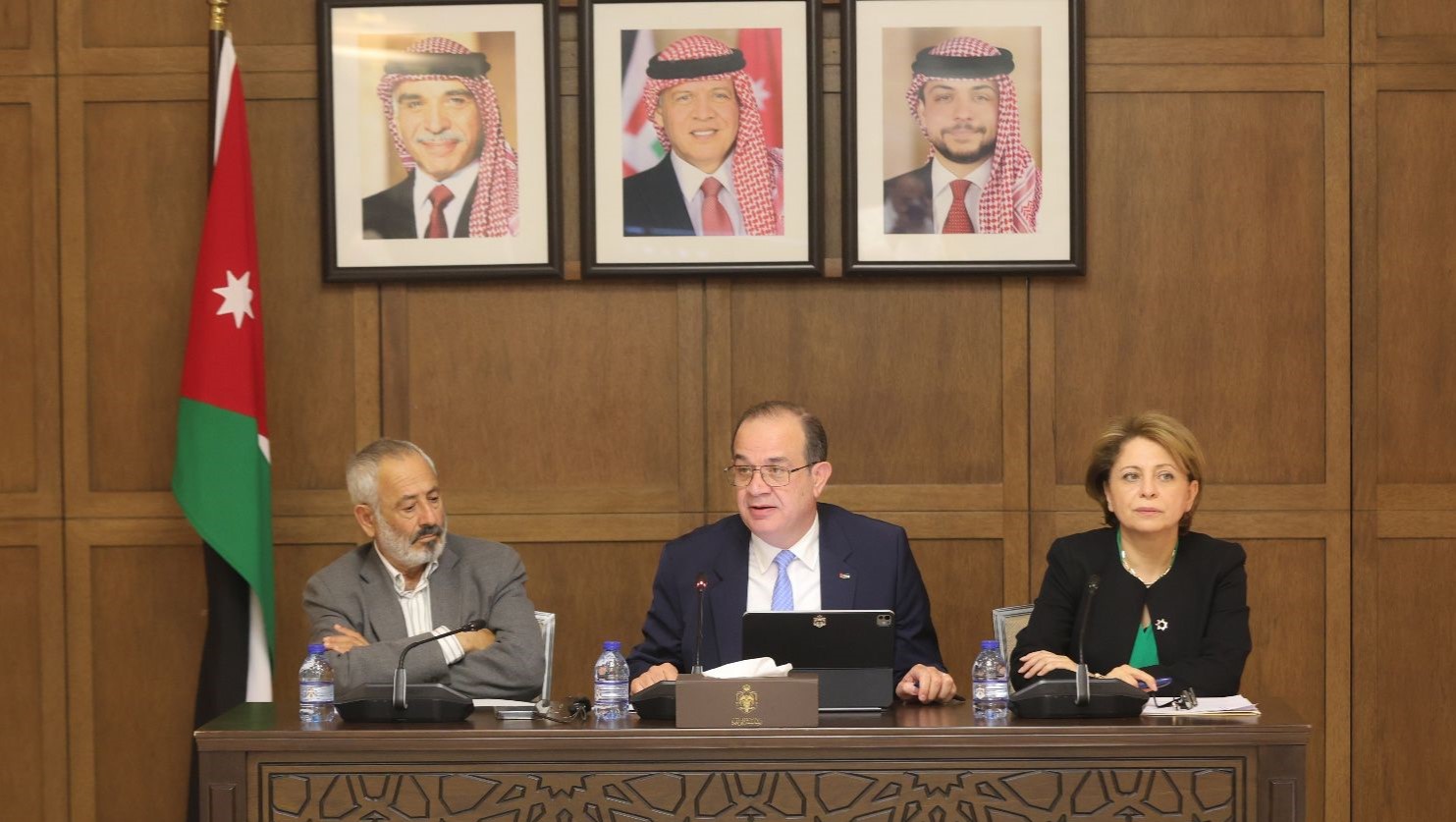
Amman, June 30 (Petra) — Minister of State for Public Sector
Development Badria Al Balbisi on Tuesday inaugurated the “AI for
Government Leaders” training program at the Prime Ministry, marking a
strategic step under the kingdom’s civil service modernization
roadmap. The launch ceremony was attended by Minister of Digital
Economy and Entrepreneurship Sami Smeirat and the President of the
Jordanian Academy for Government Administration (JAGA), Mustafa
Hamarneh.
The six-month executive program targets secretaries-general and
directors-general across key government bodies, including public
finance, digital transformation, cybersecurity, statistics, public
procurement, healthcare, social development, and regulatory oversight
authorities. The initiative is implemented by JAGA in partnership
with the “Entrepreneurship for Sustainable Economic Development and
Employment in Jordan (E4DE)” project, executed by the German Agency
for International Cooperation (GIZ) in collaboration with the
Ministry of Digital Economy and Entrepreneurship and GovCampus. The
program is co-funded by the German Federal Ministry for Economic
Cooperation and Development (BMZ) and the European Union (EU).
Al Balbisi stated that the government has incorporated a dedicated
emerging technology component into its second executive program for
the Public Sector Modernization Roadmap (2026–2029). She added that a
comprehensive reference framework and a competency matrix for
integrating AI into the public sector have been established to guide
administrative reform. Furthermore, the government is drafting a
long-term future skills strategy, noting that global studies indicate
that 60 percent of job roles will see transformed tasks within the
next two to five years.
Minister Smeirat emphasized that Jordan places artificial
intelligence at the forefront of its national priorities through the
National Council for Future Technology. He revealed that the Ministry
of Digital Economy and Entrepreneurship aims to train 15,000 civil
servants by 2027, having already trained over 9,000 employees from 90
government entities to lead digital transformation efforts. Smeirat
highlighted existing national AI milestones, such as the AI
educational assistant “Siraj,” which has surpassed 1.3 million users,
alongside ongoing applications in healthcare and digital civic
services. To support data-driven decision-making, the government is
actively strengthening its data ecosystem, processing over 2 million
geographic records and linking more than 2.5 million land records.
Hamarneh affirmed that JAGA serves as the government’s executive arm
for capacity building and knowledge transfer. He stated that the
academy’s newly structured programs aim to elevate leadership
capabilities in digitization, data systems, and the knowledge economy
to directly improve institutional performance and the quality of
public services.
The specialized curriculum spans six interconnected thematic pillars
covering AI fundamentals for policymakers, responsible AI governance,
institutional readiness, AI-powered government services, innovation
ecosystems and public-private partnerships, and the broad economic
impacts of artificial intelligence. The program aims to equip senior
officials with the strategic insights and practical tools necessary
to accelerate AI adoption, improve public service delivery, and build
a more efficient and data-driven public sector.
//Petra// AF