Saudi Arabia’s Voluntary Carbon Market Fuels the Shift to a Low-Carbon

Under UAE President’s directives, UAE launches urgent relief response for Ghana flood victims
Combating Desertification and Drought: Qatar a Model in Preserving Natural Resources, Establishing Environmental Stability
UAE allocates US$30 million for emergency humanitarian response in El Obeid, calls for civilian protection, safe humanitarian aid access in Sudan

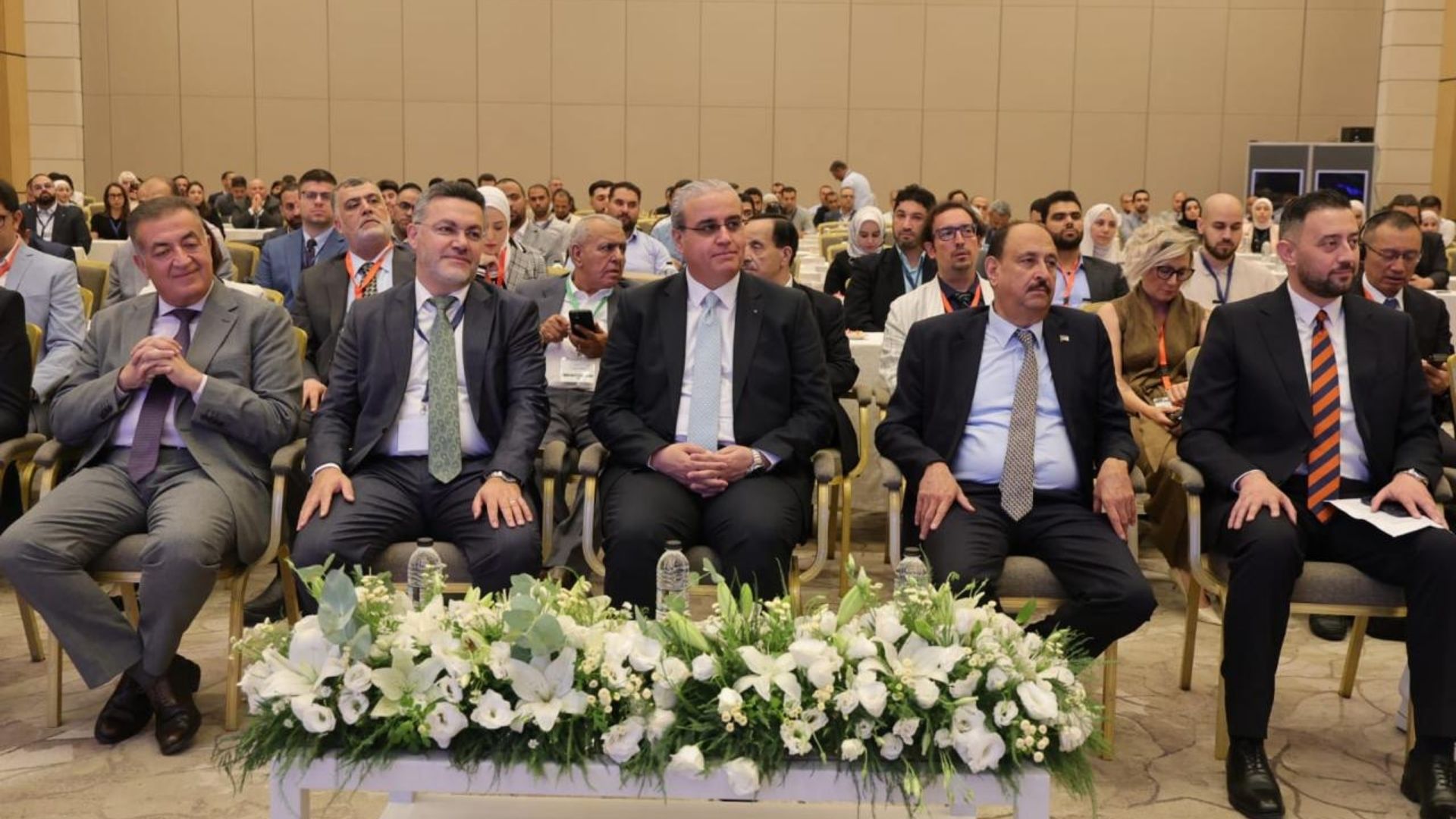
Amman, July 14 (Petra) – Minister of Health Ibrahim Bdour opened the
fifth annual conference of the Jordanian Society of Nuclear Medicine,
with the participation of more than 250 physicians, specialists,
medical physicists, pharmacists, and technicians from 14 countries.
The conference, organized by the society under the umbrella of the
Jordan Medical Association, highlights Jordan’s progress in nuclear
medicine and its growing role as a regional center for training,
research, and capacity building.
The three-day conference features more than 30 speakers and experts
from Jordan, the region, Europe, and the United States, as well as
representatives of the International Atomic Energy Agency (IAEA) and
the Jordan Atomic Energy Commission (JAEC). Its scientific program
covers the latest developments in molecular imaging, radionuclide
therapy, radiopharmaceuticals, nuclear medical physics, and research.
Bdour said nuclear medicine has become a pillar of precision medicine
by combining molecular imaging with targeted radionuclide therapy,
enabling more accurate and effective diagnosis and treatment and
improving patient outcomes and quality of life.
He said Jordan has made qualitative progress in nuclear medicine
services through cooperation among the King Hussein Cancer Center
(KHCC), the Ministry of Health, Royal Medical Services (RMS), and
other national institutions.
He noted that introducing modern PET/CT and SPECT/CT scanners at
Al-Bashir Hospitals, with support from the IAEA and the JAEC,
represents an important step toward expanding advanced diagnostic
services across the Kingdom.
Bdour said the Ministry of Health continues to support the
development of nuclear medicine services, enhance training, and
invest in modern technology. He also commended the launch of unified
national cancer treatment protocols, in which nuclear medicine plays
a key role, particularly in treating thyroid cancer, prostate cancer,
and neuroendocrine tumors.
President of the Jordan Medical Association, Issa Khashashneh, said
the conference addresses one of the most precise and advanced medical
specialties, noting that the association supports such conferences
for their pioneering role in continuing medical education, promoting
scientific research, and keeping up with the latest developments in
the nuclear field, which contributes to improving medical practice
and enhancing the quality of healthcare provided.
Jordanian Society of Nuclear Medicine President Akram Al-Ibraheem
said Jordan has become one of the region’s leading centers for
molecular imaging and radionuclide therapy, supported by close
partnerships among national institutions and continued support from
the IAEA.
He said the nuclear medicine department at KHCC has become a regional
and international center of excellence in training, research, and
radionuclide therapy. Over recent years, it has received more than
300 physicians, specialists, medical physicists, and technicians from
across the region through specialized training programs, and has
helped graduate generations of nuclear medicine specialists now
working in several Arab countries.
Al-Ibraheem said Jordan was among the first countries to introduce
modern nuclear medicine applications, helped establish the Arab
Society of Nuclear Medicine, and hosted the first Asia Oceania
Federation of Nuclear Medicine and Biology conference in West Asia.
He also highlighted Jordan’s growing role in research through
hundreds of published studies and participation in drafting and
leading several international recommendations.
The conference follows the conclusion of the IAEA’s ARASIA regional
training course, hosted by KHCC, reaffirming Jordan’s growing role as
a regional center for training and capacity building in nuclear
medicine.
//Petra// AO